Why a former Nara prison is becoming Japan’s most talked about stay
Walk up the quiet slope north of central Nara and the first thing you notice is the red brick, not the deer. The original prison architecture rises behind low walls in a perfect radial fan, a Meiji era statement of power that now anchors the story of a historic Nara prison reborn as a design led hotel. For travelers used to soft cedar and shoji screens, the idea of a prison hotel in Nara Japan sounds improbable yet strangely compelling.
This former Nara prison complex, long regarded as one of Japan’s important early modern penitentiaries, is being reimagined by Hoshino Resorts as Hoshinoya Nara Prison, a 48 suite luxury hotel that merges multiple former solitary cells into each room. The adaptive reuse project keeps the original layout and red brick shell while turning the interior into a ryokan style retreat, creating a new category between traditional inn and contemporary design focused resort. For couples planning a stay, it feels less like checking into a standard hotel and more like booking a night inside a living museum of Japanese cultural preservation.
The property stands on the northern edge of the city, a short ride from Nara’s temple district yet psychologically a world away from the tourist bustle. Hoshino Resorts has worked with Japanese architects and landscape designers to ensure the hotel respects the designated cultural status of the former prison while still delivering quiet luxury for hotel guests. According to the Agency for Cultural Affairs, the Former Nara Prison was designated an Important Cultural Property in 2017, and for travelers who read deeply about architecture and heritage, this Nara prison conversion is already a reference point for how adaptive reuse can feel both radical and respectful.
Inside the cells: how architecture, luxury and preservation meet
Step through the main gate and the architecture still feels strict, almost monastic. The original prison corridors radiate from a central watch point, a star shaped layout influenced by Western models that Hoshino Resorts chose to preserve rather than erase. This is where the adaptive reuse narrative becomes tangible for hotel guests walking toward their suites.
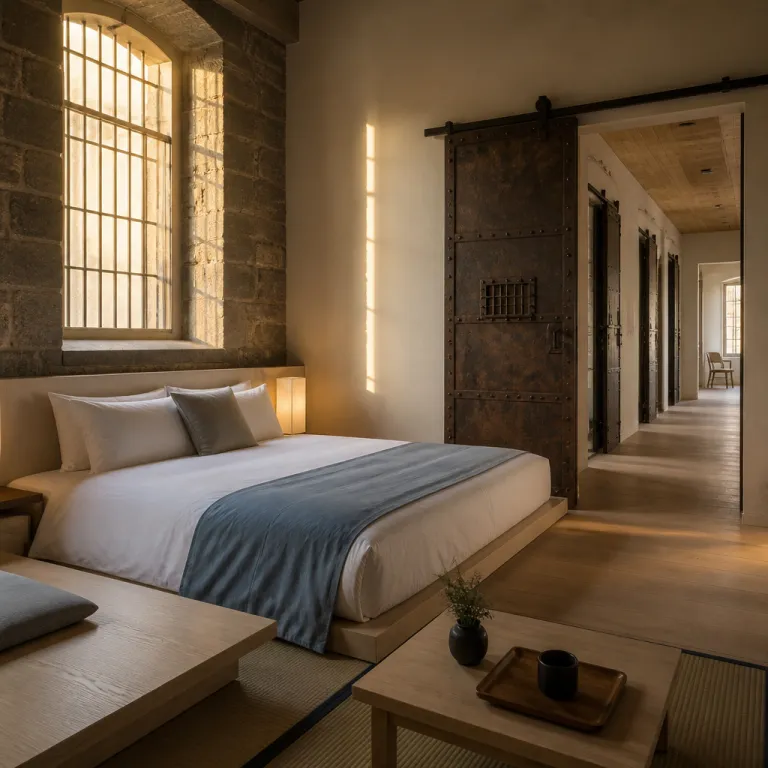
The design team approached the project as a careful study in what to keep and what to soften. Thick red brick walls, iron doors and barred windows remain visible, but they are now framed by natural materials such as cedar, stone and washi that introduce a ryokan style calm. The project uses contemporary design moves — hidden lighting, layered textiles, generous soaking tubs — to make each former cell feel like a private sanctuary rather than a prison themed luxury gimmick.
Rooms are configured by combining multiple original cells, so the proportions still whisper “historic detention block” even as the tatami, futon and low seating say “luxury hotel in Nara Japan”. For travelers who read architecture as closely as a menu, the tension between Japanese cultural preservation and modern comfort is the point. The property becomes a kind of prison museum you can sleep in, while the adjacent Former Nara Prison Museum next door offers a more formal museum experience for those who want to understand the penal history before or after their stay.
From punishment to pampering: what the experience will feel like
Once the gates close behind you, the atmosphere shifts from institutional to intimate surprisingly quickly. Courtyards once used for exercise are being replanted so that the hotel will feel more like a cloistered garden than a yard, with paths that encourage slow walks rather than head counts. For couples, this contrast between the original prison function and the new resort rhythm is part of the quiet thrill.
Inside, the ryokan style service model means you can expect kaiseki inspired dining, futon turned down while you bathe and staff who remember your tea preferences rather than your cell number. Hoshino Resorts plans Japanese French cuisine in one of the former prison wings, a gesture that turns a place of rationed meals into a destination restaurant for travelers staying both at Hoshinoya Nara Prison and at other luxury resorts in Nara Japan. The architecture frames the experience so that every corridor walk, every heavy door and every view of red brick becomes a reminder of how far the property has traveled from its past.
For some hotel guests, the idea of a prison themed Hoshinoya property might raise questions about taste, yet the designated cultural status of the original complex and the presence of the prison museum help anchor the project in preservation rather than spectacle. You are not staying in a theme park fantasy; you are participating in a carefully documented adaptive reuse where “What is adaptive reuse?” is answered in every detail. Questions such as “Why choose a former prison for a hotel?” and “What amenities does Hoshinoya Nara Prison offer?” are addressed through the mix of luxury suites, restaurant, lounge and museum access that the property itself quietly showcases as you move through it.
The wider wave: how adaptive reuse is reshaping Japanese luxury
Hoshinoya Nara Prison is not an isolated curiosity; it is the most visible example of a broader adaptive reuse movement that is reshaping how travelers sleep across the country. Japan has lost hundreds of ryokan over the past two decades, as family run inns in places like Nara struggle with succession, rising costs and changing expectations. In this context, existing buildings with strong stories — from a Meiji era prison to a Gion theater — suddenly look more viable than new builds.
Hoshino Resorts is one of several players leading this shift, alongside brands such as Capella, Imperial Hotel and 1 Hotel that are also betting on heritage properties. Capella Kyoto, designed by Kengo Kuma, turns a cluster of machiya townhouses in Miyagawa cho into a low rise luxury hotel with onsen suites, while Imperial Hotel Kyoto is restoring Yasaka Kaikan, a designated cultural asset in Gion, rather than replacing it. In Tokyo, 1 Hotel brings a biophilic, sustainability focused approach to an existing Akasaka property, showing how adaptive reuse can feel both urban and green.
Government policy is nudging the trend along; the Japan Tourism Agency and local authorities have introduced support programs that make it easier to redevelop aging inns and underused buildings, which in turn encourages operators like Hoshino Resorts and its peers to consider conversions. For travelers, this means more stays where the building’s past is as compelling as the onsen or the minibar, and more chances to read a property’s architecture as part of the itinerary. It also means premium pricing, as seen with new Ginza ryokan style properties targeting nightly rates that reflect not just service and design but the cultural preservation work embedded in every brick.
How to read and book these new heritage stays
For couples planning a trip to Nara Japan or Kyoto, the rise of projects like Hoshinoya Nara Prison and Capella Kyoto changes how you should read a hotel website. Do not just skim the room size and the spa menu; look for words like adaptive reuse, original prison structure, designated cultural asset and natural materials, because they signal that the architecture is part of the experience. A strong privacy policy and clear, report style descriptions of preservation work also indicate that the operator treats the property as more than a backdrop.
When you compare a standard luxury hotel with a heritage conversion such as this prison hotel in Nara, ask yourself what you want the stay to feel like. If you prefer a neutral canvas, a new build may suit you better, but if you want to sleep inside a story, a project like the Nara prison Hoshinoya or a machiya based resort will be more rewarding. Reading beyond the marketing language to understand how Japanese cultural preservation, contemporary design and ryokan style service intersect will help you choose the right property for your own travel narrative.
Food is another lens; properties that take architecture seriously often take regional cuisine seriously too, as explored in depth in our guide to regional ryokan kitchens serving food you will not find in Tokyo. At Hoshinoya Nara Prison, the Japanese French restaurant in the former prison wing will likely become as much of a draw as the red brick itself, especially for travelers who plan their days around meals. As more Hoshino Resorts properties and other resorts embrace this adaptive reuse approach in Japan, expect a new generation of stays where architecture, dining and landscape design feel inseparable.
FAQ
What is adaptive reuse in the context of Hoshinoya Nara Prison?
Adaptive reuse means repurposing an existing building for a new function while retaining its essential structure and character. At Hoshinoya Nara Prison, adaptive reuse turns the original Nara prison complex into a luxury hotel, preserving the red brick Meiji era architecture and radial layout. Guests sleep in suites formed from former cells, experiencing both contemporary comfort and visible layers of Japanese cultural preservation.
Why did Hoshino Resorts choose a former prison for a luxury hotel?
Hoshino Resorts selected the Nara prison because of its powerful architecture, intact condition and status as a rare surviving example of early modern Japanese prison design. The building is a designated cultural property, which makes it an ideal candidate for a preservation focused project rather than demolition. Transforming it into Hoshinoya Nara Prison allows travelers to engage with a complex chapter of Japanese history through a carefully designed hospitality experience.
What will hotel guests experience at Hoshinoya Nara Prison?
Hotel guests can expect 48 suites created by combining multiple former cells, with interiors that blend ryokan style elements, natural materials and contemporary design. The property will include a Japanese French restaurant in a converted prison wing, a lounge and access to the adjacent Former Nara Prison Museum. The overall experience is designed to feel tranquil and luxurious while still acknowledging the building’s original prison function.
How does Hoshinoya Nara Prison compare with traditional ryokan stays?
Traditional ryokan in Nara and across Japan usually occupy wooden buildings with tatami rooms, communal baths and a strong focus on kaiseki dining. Hoshinoya Nara Prison offers many of the same service elements, such as attentive staff and multi course meals, but sets them inside a monumental red brick Meiji era structure. It sits between a classic ryokan and a design forward luxury hotel, with the architecture and preservation story playing a central role in the stay.
Is it necessary to book in advance for a stay at Hoshinoya Nara Prison?
Given the limited number of suites and the international attention on this high profile adaptive reuse project, booking in advance is strongly recommended. Travelers planning to explore Nara’s temples, nearby museums and the Former Nara Prison Museum will find that aligning dates can be challenging if they wait too long. Early reservations also give couples more choice among room types, especially if they prefer particular layouts or views within the historic property.