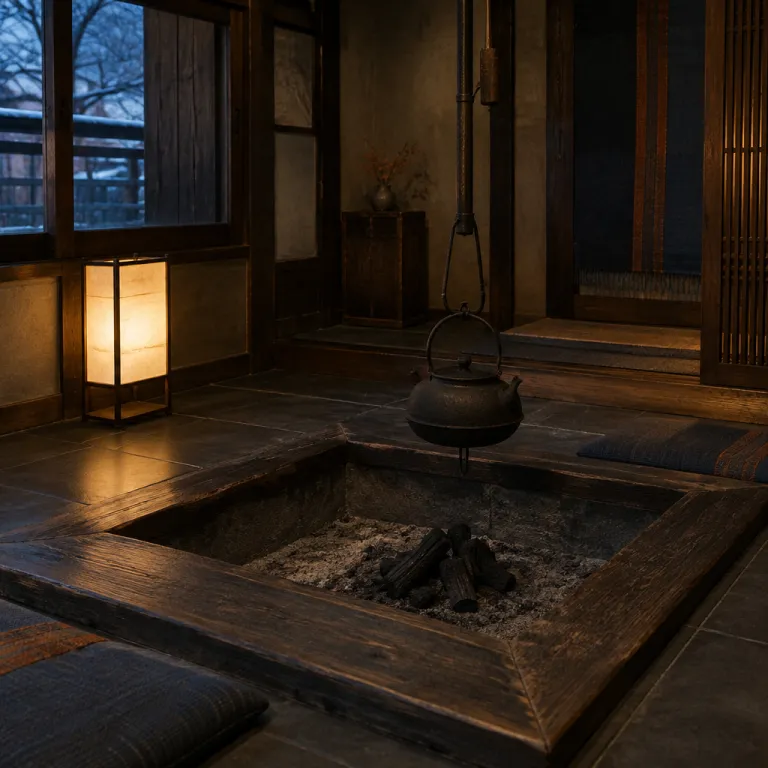
Winter ryokan design and the quiet power of the irori hearth
Winter is when a traditional Japanese inn reveals its true architecture. In a season built on long nights and deep cold in rural Japan, the sunken irori hearth becomes the quiet engine of comfort and the emotional center of the house. Step into a main room in Miyama or a gassho village in Shirakawa-go, and you feel how ancient Japanese builders shaped every surface around that glow.
An irori is a square, sunken fireplace cut into the floor of a traditional Japanese house, usually around 90 cm across in a classic minka, with smaller versions near 45 cm in intimate tea spaces, and it anchors both heat and hospitality. Conservation guides from places like the Gokayama gassho settlements still define it clearly: a sunken hearth in the floor used for heating, cooking, and gathering, with a jizaikagi—an adjustable pot hook over the irori—to raise and lower kettles. When you book a premium stay in Japan, ask whether the property maintains a functioning Japanese irori in the shared salon or in a private suite, because that single design choice will shape your winter experience more than any thermostat.
In a refined traditional Japanese house converted into a ryokan, the classic irori layout pulls guests inward. Tatami mats frame the Japanese fireplace, low zabuton cushions ring the irori table, and the ceiling hook suspends an iron kettle that perfumes the air with steam. This is winter design thinking at its most distilled, where the architecture assumes you will sit low, linger long, and let the fire slow your pace.
Luxury properties now reinterpret this ancient hearth culture with glass-walled enclosures that keep smoke controlled while preserving the view of embers. Some owners in Niigata and Kitakaruizawa commission craftsmen to rebuild an irori traditional core inside contemporary villas, pairing underfloor heating with the visual drama of a Japanese fireplace. For travelers, the key is to explore which inns still treat the irori as a living room rather than a museum piece, because that is where winter nights feel genuinely intimate.
Fire, table, and conversation: irori and kotatsu as winter social stages
Gathering around fire changes how strangers share a room. In a ryokan that understands how a Japanese irori shapes winter hospitality, the main dining salon often orbits a central flame rather than a chandelier, and guests naturally cluster at the irori table or slide under a thickly quilted kotatsu. The result is a social choreography that feels both traditional and surprisingly relaxed for solo travelers.
At dinner, many traditional Japanese inns still serve at least one course around the hearth, turning the sunken fireplace into a slow theatre of grilling river fish, toasting mochi, or simmering nabe. Staff move with small, precise gestures as they adjust the jizaikagi hook, and the proximity to the Japanese fireplace makes even a simple broth taste richer. This is where you feel Japan traditional hospitality most clearly, not in scripted speeches but in the way a host notices your chilled hands and nudges a charcoal ember closer.
Kotatsu tables extend that warmth into private rooms, especially in older Japanese house conversions where insulation remains modest. Slide your legs under the heated table, pull the futon quilt close, and you understand why thoughtful winter design always pairs vertical fire with horizontal warmth. The contrast between the cold tatami edge and the hot kotatsu core is deliberate, a reminder that comfort in traditional Japanese architecture comes from gradients rather than uniform temperature.
For design-focused travelers, this is also the moment to explore how light and fire interact across a stay. Read the inn’s room guide or digital review section carefully, and when you enter the booking form, look for notes about shared hearth dining or private kotatsu setups. Properties that highlight their winter hearth rituals with the same pride as their kaiseki menus usually deliver a more coherent seasonal experience, much like the inns featured in our piece on how ryokan design moon viewing rooms for tsukimi season.
Designing for darkness: lamps, shoji, and the art of low winter light
Step into a ryokan lounge on a January afternoon and you may think the lighting is too dim. Stay one night, and you realize the low glow is not a flaw but a deliberate strategy that lets your eyes rest after the white glare of snow. Traditional Japanese architects understood that darkness could be as luxurious as light when handled with care.
Shoji screens filter the short winter sun into a soft, even wash, while paper lamps and the Japanese fireplace add warmer points of focus. The result is a layered atmosphere where the irori traditional flame becomes a visual anchor and the rest of the Japanese house recedes into shadow. This is especially striking in ancient Japanese farmhouses converted into inns, where thick beams catch just enough light to feel sculptural rather than rustic.
Modern luxury ryokan owners often balance this mood with discreet LEDs, but the best properties keep the hierarchy clear. Your eye should go first to the irori table or to a single floor lamp, not to a bright ceiling panel, and the room should invite you to explore touch rather than stare at screens. When you read our guide on how flooring in a ryokan shapes your traditional Japanese stay, you will notice the same principle: surfaces are designed to be felt underfoot and underhand, not just seen.
For guests booking online, photographs can mislead because camera sensors flatten this subtle play of light. Pay attention to how shadows fall around the Japanese irori in gallery images, and look for reviews that mention evening ambiance rather than just room size. If a property highlights its lamps, shoji, and hearth in equal measure, you can expect a winter stay where darkness feels curated, not neglected.
Warmth by design: engawa, gradients, and the old ways of insulation
Traditional Japanese inns were never meant to feel like sealed Western chalets. Instead, winter comfort relies on gradients of temperature, using architecture to slow the cold rather than block it completely. The engawa, that narrow wooden corridor between room and garden, is the first line of defense.
On a snowy morning in Niigata, you slide open a shoji and step onto the engawa, and the air hits sharper but not brutal. This buffer zone lets the Japanese house breathe while keeping the core around the Japanese fireplace relatively stable. Layered paper screens, fusuma doors, and thick futon mattresses complete the system, creating pockets of warmth that feel intentional rather than improvised.
In this context, the irori hearth is not just a decorative feature but a central heating logic. Heat rises from the sunken fire, warms the low table and your legs, then drifts toward the rafters, drying beams and preserving the structure with a trace of smoke. That is why the same design that favors soft lamps, hearth glow, and minimal artificial lighting also hints at a thermal strategy, because less open ceiling light often means fewer drafts and a more controlled envelope.
Renovated luxury properties now add discreet insulation under tatami, double-glazed shoji, or radiant floors, but the best still respect the original gradient. When you book, ask how the inn handles winter comfort in both public and private spaces, and read guest feedback with an eye for comments on night-time warmth. A ryokan that explains its engawa, hearth, and futon layering with pride is usually one that has thought deeply about how you will actually feel at three in the morning when the wind moves through the valley.
From ancient hearths to digital bookings: how to choose a winter ryokan
Choosing the right inn for a cold-season stay now starts long before you smell wood smoke. On a luxury booking platform, device users scroll through images of irori tables and lamps, and the interface itself can either highlight or hide the winter story. Pay attention to how the site lets users explore these details, because thoughtful digital design often mirrors thoughtful on-site hospitality.
On japaneseinnstay.com, we treat the irori and the Japanese fireplace as core filters, not afterthoughts. When users explore options across rural Japan, they can select touch-friendly image carousels that focus on hearth-centric rooms, and swipe gestures make it easy to compare different traditional Japanese layouts. For touch device travelers, this matters: a platform that assumes touch swipe navigation usually invests more in visual storytelling, which helps you read subtle cues like soot-darkened beams or the placement of a low table near the fire.
Keyboard-based guests are not forgotten either. Clear arrows review controls, logical autocomplete arrows in the search bar, and an explore autocomplete function that suggests phrases like “irori traditional suite” or “Japanese house with hearth” help you enter select criteria without friction. When you press review enter on a property page, look for detailed descriptions of ancient Japanese features, from jizaikagi hooks to engawa corridors, rather than generic luxury language.
Once you arrive, the analog experience should feel as considered as the digital path that led you there. A nakai-san who seats you at the irori table for welcome tea, explains the safety rules around the Japanese irori, and times your kaiseki so that grilled fish reaches you at peak heat is delivering the same clarity you felt when you used select touch filters online. For more context on how urban inns translate this ethos, our piece on Osaka’s ryokan scene and inn culture shows how even city properties can honor Japan traditional hearth logic in compact spaces.
What winter reveals: details you only notice in the cold season
Some of the most memorable aspects of a ryokan only surface when the temperature drops. Winter details sharpen your senses, making you aware of how cold air, hot water, and hot food interact in a single evening. The walk from an outdoor onsen back to the lounge, hair steaming in the night air, becomes part of the architecture as much as any beam or tile.
In this season, the Japanese house soundtrack changes. You hear the faint crackle from the Japanese fireplace through a fusuma door, the soft slide of shoji as staff move with practiced gestures, and the muffled crunch of snow beyond the engawa. Ancient Japanese carpentry details, like slightly raised thresholds or thick lintels, suddenly feel less aesthetic and more practical as they block drafts and frame pools of warmth.
Light behaves differently too. The irori glow throws longer shadows across tatami, and the low angle of the sun makes even simple paper lamps look sculptural. You notice how the irori table is positioned to catch both firelight and the reflection from a garden of snow, and how the room’s darkest corners become quiet retreats for reading or reflection.
For travelers who care about design, this is the season to return to a favorite inn and see it anew. Compare your winter impressions with any summer stay, and you will understand why the best properties design for darkness and heat rather than fight them. The reward is a kind of comfort that feels earned, layered, and deeply tied to place.
FAQ
What is an irori and how is it used in a ryokan stay ?
An irori is a sunken hearth built into the floor of a traditional Japanese room, historically used for both heating and cooking. In a ryokan, it often serves as a social center where guests sit on cushions around the fire for tea, light grilling, or casual conversation. Many luxury inns now treat the irori as a design focal point that anchors their winter ambiance.
Is it safe to stay in a room with a working japanese fireplace ?
Licensed ryokan with active hearths follow strict ventilation and fire safety rules, often adding glass surrounds, modern detectors, and trained staff supervision. Guests are usually guided on how close to sit, where to place clothing, and when staff will manage the charcoal or wood. If you have concerns, ask the inn directly about their safety measures and whether the irori is decorative or fully operational.
How does winter lighting in a ryokan differ from Western hotels ?
Ryokan lighting tends to be lower and warmer, relying on shoji-filtered daylight, paper lamps, and the glow of the hearth rather than bright ceiling fixtures. This approach is meant to rest the eyes, highlight natural materials, and make the irori or kotatsu the visual center of the room. Travelers used to strong overhead lighting may find it dim at first but usually appreciate the calm after a night or two.
What should I look for when booking a ryokan for a winter stay ?
Focus on whether the property explains its heating strategy, from irori hearths and kotatsu tables to underfloor systems and insulation upgrades. Read reviews that mention winter comfort, especially at night, and check photos for signs of active hearth culture such as soot-darkened beams or kettles hanging over a fire. If the inn describes specific seasonal rituals around the hearth, that is usually a good sign of thoughtful design.
Are irori hearths common in city ryokan, or only in rural Japan ?
Working irori hearths are more common in rural regions like Miyama, Niigata, and gassho villages, where traditional farmhouses have been converted into inns. Urban ryokan sometimes include symbolic hearths or electric interpretations, but space and regulations limit full-scale installations. If a live fire experience is important to you, prioritize rural properties and confirm details with the inn before booking.