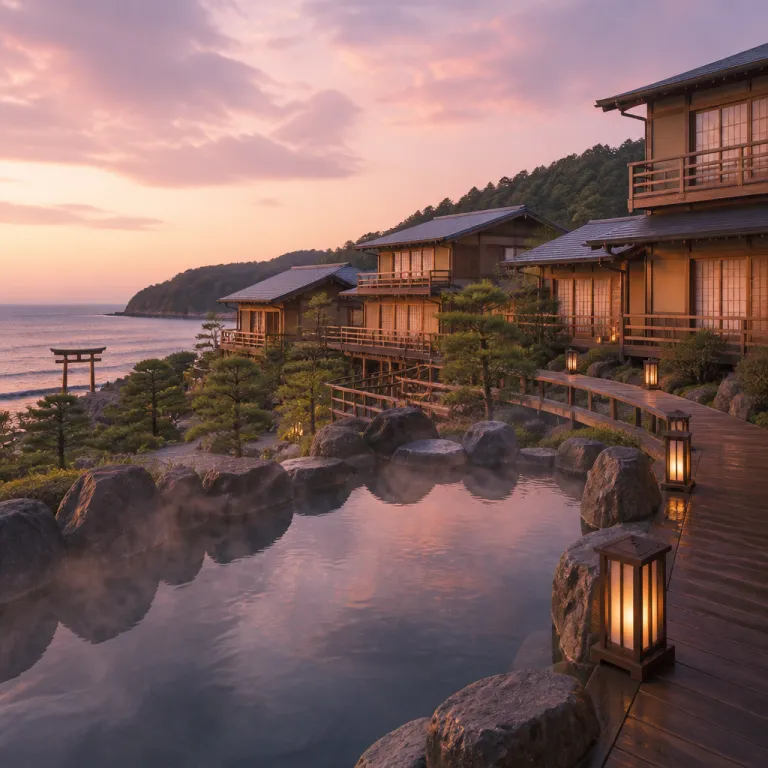
KAI Miyajima hoshino onsen ryokan 2026 and the coastal ryokan question
KAI Miyajima hoshino onsen ryokan 2026 arrives as a coastal ryokan built around one promise; every guest room faces the Seto Inland Sea. The new KAI Miyajima property sits at Miyajimaguchi Onsen in Hiroshima Prefecture, looking across to Miyajima Island and the vermilion gate of Itsukushima Shrine, and it is designed as a quiet counterpoint to the day trip crowds. For travelers used to anonymous city towers in Tokyo or Hiroshima, the scale here feels almost intimate, with rooms oriented not to a skyline but to the slow traffic of ferries and the changing colour of the inland sea.
The KAI brand has always tied each address to one hot spring and one local story, and KAI Miyajima hoshino onsen ryokan 2026 follows that script with its Umigiri, or Sea Mist, rooms. These rooms are conceived as low framed stages for watching the sea fog roll across the Seto Inland waters, while the onsen baths draw from the Miyajimaguchi hot spring source that has quietly served locals for generations. According to Hoshino Resorts’ official announcement, the coastal ryokan is scheduled to open in 2026 with around 60 guest rooms, all certified as using natural hot spring water under Japanese onsen regulations.1 You come for the hot springs and the open air bath, but you stay because the ryokan understands that a coastal resort must choreograph the sea, the bath, and the tatami as one continuous experience.
Hoshino Resorts positions this Hiroshima Prefecture retreat within a wider network of coastal and inland onsen resorts, from the volcanic waters of KAI Kusatsu to the mountain air bath terraces planned at KAI Zao. The same Hoshino Resorts group also runs the more contemporary Risonare and the urban OMO brand, yet here the focus is firmly on the heritage site narrative of Itsukushima Shrine and the quiet evenings after the last ferry leaves Miyajima. As one Hiroshima tourism official put it in a recent local interview, “Sea views are nothing new here, but KAI Miyajima is expected to keep visitors in the area longer, especially after sunset.” For guests comparing different prefecture options, Hiroshima Prefecture KAI properties like this one offer a rare combination of sea facing rooms, a genuine hot spring, and direct access to one of Japan’s most photographed shrine gates.
The KAI formula: one spring, one craft, one story
Hoshino Resorts has been explicit about its KAI brand philosophy; each property is anchored to a specific onsen town and a single cultural motif. In practice that means KAI Kusatsu leans into silk inspired rooms and Kusatsu’s famously hot springs, while KAI Miyajima hoshino onsen ryokan 2026 builds its identity around the inland sea and the ritual of crossing to a sacred island. The company describes this approach simply in its own materials: “Each KAI property integrates local cultural elements and designs.”2
For travelers, that philosophy translates into very different rooms and public bath layouts from one prefecture to another, even under the same KAI brand umbrella. At KAI Miyajima, the Umigiri Sea Mist rooms are designed as ocean facing tatami suites, where the bath is positioned to frame the Seto Inland Sea rather than a garden wall, and the open air decks function almost like private viewing platforms. Compare that to a landlocked KAI in Nagano Prefecture near Karuizawa, where the same brand might emphasise forest views, snow, and a deeper contrast between hot spring water and cold mountain air.
This is where the KAI Miyajima hoshino onsen ryokan 2026 story becomes interesting for coastal resort seekers who usually default to Western style resorts. You still get the structure of a brand, the booking ease of Hoshino Resorts, and the reassurance that rooms will meet a certain standard, yet the onsen and the sea remain the protagonists. The question is whether this formula, now being rolled out from Hiroshima Prefecture to future sites like KAI Ureshino in Saga Prefecture, can scale without flattening the very local textures that make an onsen ryokan feel different from a themed hotel.
Choosing a refined coastal onsen stay in Atami or elsewhere along Japan’s shores offers a useful comparison point when you evaluate how KAI Miyajima positions itself among sea facing ryokan resorts.
From Karuizawa to Miyajima: how Hoshino’s brands shape expectations
Long before KAI Miyajima hoshino onsen ryokan 2026 appeared on booking engines, many international guests met Hoshino through Hoshinoya or Risonare in places like Karuizawa. Those brands, along with the urban OMO series in Tokyo, Kyoto, and Yokohama, have trained travelers to expect a certain design literacy and a willingness to reinterpret Japanese hospitality for a global audience. When those same guests arrive at a coastal ryokan under the KAI brand, they bring expectations shaped by polished resorts rather than by small family run inns.
That brand ladder matters when you are deciding between a stay at a Hoshinoya resort, a Risonare beach property, or a KAI onsen ryokan facing the sea. Hoshinoya tends to feel like a fully articulated resort world, Risonare leans into family friendly design, while KAI, including KAI Miyajima hoshino onsen ryokan 2026, promises a more distilled onsen and kaiseki experience with fewer distractions. The OMO properties, such as OMO Tokyo, OMO Kyoto, and OMO Yokohama, sit in yet another category, acting as city bases that funnel guests out to regional prefecture KAI locations for longer hot spring stays.
For coastal resort hunters, that ecosystem can be an advantage because it allows you to pair an urban OMO Tokyo stay with a sea focused retreat at KAI Miyajima hoshino onsen ryokan 2026 in Hiroshima Prefecture. You might fly into Tokyo, spend two nights at an OMO branded hotel, then ride the Shinkansen to Hiroshima and transfer to the ferry bound for Miyajima Island, where your room and bath both face the Seto Inland Sea. The consistency of the Hoshino Resorts booking platform makes that multi stop itinerary easier, but it also raises the question of how much individuality remains once a ryokan is folded into a national brand network.
Travelers who have stayed at independent coastal ryokan in Atami or along the Noto Peninsula will notice the difference immediately; KAI properties, including KAI Miyajima, are more likely to feature carefully lit corridors, sculpted public bath spaces, and a clear narrative about the local hot spring source. That does not make them less authentic, but it does mean you are entering a curated version of onsen culture, one that sits somewhere between a traditional inn and a design forward resort.
Standardisation versus soul: what KAI Miyajima means for independent ryokan
Hoshino Resorts currently operates more than twenty KAI properties and has publicly targeted thirty by the end of the next planning horizon, with KAI Miyajima hoshino onsen ryokan 2026 as one of the key coastal openings. That scale gives the group leverage with local governments and tourism boards in Hiroshima Prefecture and beyond, especially when it promises to revitalise onsen towns and support regional economies. It also means that when a new prefecture KAI project is announced, independent ryokan owners in that area pay close attention.
For them, the arrival of a KAI branded property on Miyajima Island or near another heritage site can feel like both a threat and an opportunity. On one hand, KAI Miyajima will likely draw international guests who might otherwise have booked a smaller inn with fewer rooms but deeper family history, especially as overseas stays at the KAI brand have surged compared with pre pandemic levels. On the other hand, the marketing weight of Hoshino Resorts tends to lift the entire destination, putting the local hot spring, the inland sea views, and the cultural assets like Itsukushima Shrine onto more travel wish lists.
The deeper question for travelers is whether KAI Miyajima hoshino onsen ryokan 2026 still feels like a ryokan in the traditional sense, or whether it edges closer to a themed hotel with tatami. You will still find futons laid out while you bathe, multi course kaiseki dinners, and a public bath where the etiquette is non negotiable, but you will also notice brand wide design cues that echo KAI Kusatsu or future projects like KAI Ureshino. If you value idiosyncrasy above all, an independent inn may still be your first choice; if you want a reliable standard of comfort with a strong sense of place, KAI Miyajima occupies a middle ground that many solo explorers find appealing.
How to book KAI Miyajima as a coastal onsen base
Planning a stay at KAI Miyajima hoshino onsen ryokan 2026 starts with understanding its geography; you are not on Miyajima Island itself but at Miyajimaguchi Onsen on the mainland side of Hiroshima Bay. That position gives you direct views of the Seto Inland Sea and the floating torii, while keeping you close to the rail connections that link Hiroshima Prefecture with Tokyo and other major cities. For many travelers, this makes KAI Miyajima an efficient coastal base, combining easy access with the slower rhythm of an onsen town.
When you book, pay attention to room categories, because not all rooms in every KAI property are created equal, even if they share the same brand name. At KAI Miyajima, the Umigiri Sea Mist rooms are the ones that fully exploit the inland sea setting, with layouts that frame the water from both the sleeping area and the bath, sometimes including semi open air bath spaces that blur the line between room and terrace. If you are sensitive to heat, remember that coastal Hiroshima summers can be hot, so look for rooms where the air bath concept is balanced by good ventilation and shaded balconies.
Solo travelers weighing KAI Miyajima against other coastal resorts should also consider how they want to structure their wider Japan itinerary. One option is to pair this stay with a mountain or lake onsen retreat, using resources like this guide to serene onsen in Hokkaido to contrast sea facing baths with highland hot springs. Another is to build an onsen themed route that links an urban OMO Tokyo base, a night in Kyoto at an OMO Kyoto property, and then several nights at KAI Miyajima, before perhaps heading to a different prefecture KAI such as KAI Kusatsu for a more intense hot spring experience.
Reading the wider map: OMO, KAI, and the future of onsen travel
Looking beyond KAI Miyajima hoshino onsen ryokan 2026, the broader Hoshino Resorts portfolio sketches a map of how Japanese hospitality is evolving. The OMO line in Tokyo, Kyoto, and Yokohama captures urban energy, while KAI focuses on onsen towns and Hoshinoya explores more immersive resort concepts, often in remote or historically charged locations. Risonare fills in the family friendly, activity heavy segment, leaving KAI to refine the balance between traditional ryokan rituals and the expectations of a global audience.
Future projects such as KAI Ureshino in Saga Prefecture, which will emphasise skin beautifying hot springs, and the panoramic rooftop air bath concept at KAI Zao, show how the brand is experimenting with new ways to stage the relationship between body, water, and landscape. At the same time, cultural projects like the adaptive reuse of Nara Prison into a heritage site hotel underline how Japanese hospitality groups are rethinking what counts as a stay worth crossing a prefecture for. In that context, KAI Miyajima’s focus on the Seto Inland Sea and the ritual of visiting Itsukushima Shrine feels less like a one off and more like part of a national conversation about how to present Japan’s coastal and inland heritage to both domestic and overseas guests.
For travelers, the practical takeaway is clear; you can now plan an entire Japan journey around onsen and design forward ryokan style stays, moving from sea to mountains to cities without ever leaving the Hoshino ecosystem if you choose. Yet the most rewarding itineraries often mix a KAI property like KAI Miyajima with smaller independent inns, allowing you to feel the difference between a carefully calibrated brand experience and the looser, sometimes rougher charm of a family run ryokan. That contrast, more than any single hot spring or sea view, is what will help you understand where Japanese hospitality is heading in the years ahead.
FAQ
What is an onsen ryokan and how does KAI Miyajima fit that definition ?
An onsen ryokan is a traditional Japanese inn built around natural hot spring baths, usually featuring tatami rooms, futon bedding, and kaiseki style dinners. KAI Miyajima hoshino onsen ryokan 2026 fits this definition by centering its design on the Miyajimaguchi hot spring source and offering both private and public bath facilities. The difference is that it operates under the KAI brand of Hoshino Resorts, which adds a layer of design consistency and storytelling across multiple properties.
Where exactly is KAI Miyajima located and how do I reach it ?
KAI Miyajima is located at Miyajimaguchi Onsen in Hiroshima Prefecture, facing Miyajima Island and the Seto Inland Sea. You typically reach it by taking the Shinkansen to Hiroshima, then a local train or tram to Miyajimaguchi Station, followed by a short walk or transfer to the ryokan area near the ferry terminal. This location allows easy day trips to Itsukushima Shrine on Miyajima Island while still enjoying quieter evenings on the mainland side.
How does KAI Miyajima compare with other KAI properties like KAI Kusatsu ?
KAI Miyajima focuses on sea views and the coastal atmosphere of the inland sea, while KAI Kusatsu is built around the intense volcanic hot springs of a mountain onsen town. Both share the KAI brand emphasis on local culture and carefully designed rooms, but the bathing experience and surrounding landscapes are very different. Travelers who enjoy variety often combine a stay at KAI Miyajima with a night or two at another prefecture KAI property to experience contrasting hot spring traditions.
Is KAI Miyajima a good choice for solo travelers interested in coastal resorts ?
KAI Miyajima hoshino onsen ryokan 2026 works well for solo travelers who value quiet, design conscious spaces and want easy access to both sea views and cultural sites. The Umigiri Sea Mist rooms, the structured kaiseki meals, and the clear etiquette in the public bath can all feel reassuring if you are navigating Japanese hospitality alone. Pairing a stay here with time in an OMO Tokyo or OMO Kyoto property creates a balanced itinerary that mixes city exploration with restorative onsen time.
What etiquette should I follow in the public baths at KAI Miyajima ?
In the public bath areas at KAI Miyajima, you should always wash thoroughly at the shower stations before entering the shared hot spring pools, keep towels out of the water, and speak quietly to maintain a calm atmosphere. Bathing is usually done nude and separated by gender, with clear signage in both Japanese and English. If you have tattoos, it is best to check the current policy with Hoshino Resorts before booking, as rules can vary between properties and over time.
1. Opening year, room count, and onsen certification are based on Hoshino Resorts’ official press materials for KAI Miyajima.
2. Brand philosophy quotation adapted from the KAI section of the official Hoshino Resorts website.