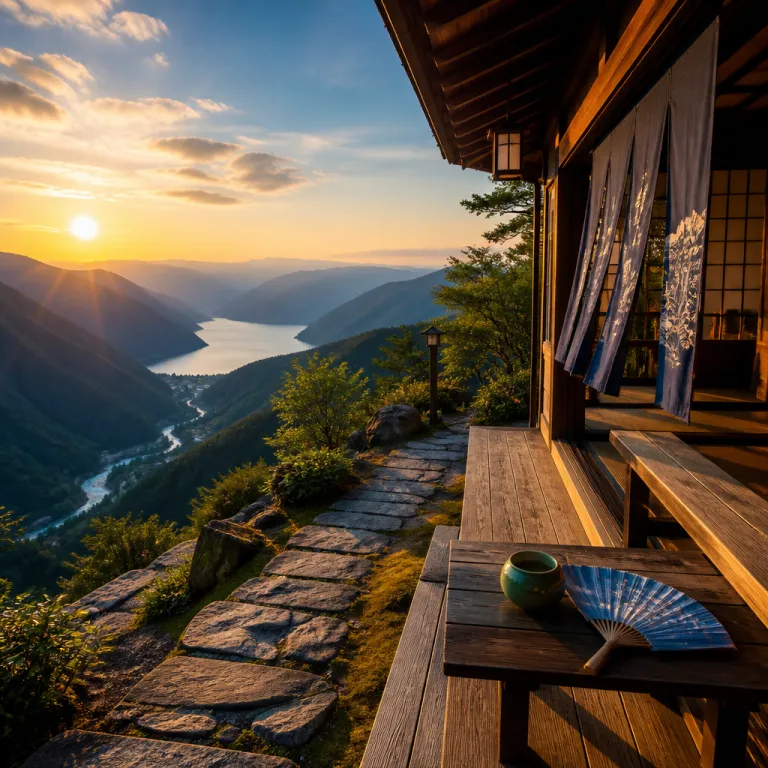
Highland mountain ryokan in Japan for a naturally cool summer
Highland mountain ryokan in Japan offer a summer that feels closer to early autumn than peak August. At around 1,000 metres the air typically sits near 22–26 °C, while Tokyo and Osaka push toward 33–36 °C with heavy humidity. This is the essence of a cool highland ryokan escape in Japan, where you sleep with windows open instead of relying on air conditioning and wake to birdsong rather than compressor noise.
These traditional Japanese inns lean on altitude, not machinery, to keep rooms comfortable in Japan’s summer. Many highland ryokan are built in classic Japanese style with shoji screens, raised wooden decks and cross ventilation that channels mountain air through tatami rooms. According to the Japan Meteorological Agency’s summer climate statistics for central Tokyo, average daytime highs often reach around 35 °C, while representative inland mountain observatories at roughly 1,000 metres record averages closer to 27 °C, and that gap is exactly what families feel when they slide open a balcony door at night.1
Guests come for the coolness but stay for the onsen culture that defines mountainside retreats in Japan. A highland onsen ryokan pairs crisp night air with mineral rich hot spring baths, so you can enjoy steaming water while wrapped in a breeze that smells of cedar and wet stone. This contrast between onsen hot pools and cool air is what makes a summer stay in the Japanese highlands so compelling for travellers who usually associate hot springs with winter only.
Many of these properties sit above small spring town communities that have grown around hot springs over centuries. A typical onsen town in the mountains will have a main street of wooden façades, a few public spring baths and a cluster of family run ryokan that share the same source of hot spring water. When you walk through such a spring town on a clear day, you see yukata clad guests shuffling between Japan onsen houses, the steam rising while the surrounding mountains hold the heat at bay and shopkeepers chat on doorsteps.
From a planning perspective, think of these highland retreats as your summer base camp rather than a one night stop. Families increasingly book three to five nights in a single onsen area, using the ryokan as a hub for day trips to nearby national park trails, river valleys and small cultural sites. This slower rhythm suits the traditional Japanese pace of hospitality very well, and it turns a stay at a mountain ryokan into a restorative chapter rather than a quick photo opportunity; one parent might slip out for a dawn soak while the rest of the family still sleeps, returning to a breakfast tray of grilled fish and seasonal mountain vegetables.
Where altitude works hardest: Nagano highlands, Karuizawa and Kamikochi
Nagano Prefecture is the quiet powerhouse of highland ryokan, with the highest concentration of eco minded inns that rely on natural cooling rather than compressors. Around Karuizawa, a historic resort town at roughly 1,000 metres, the air feels almost alpine by mid afternoon even when lowland Japan swelters. This is where the idea of a highland summer retreat first took hold for Tokyo families seeking relief, and where long established properties such as Mampei Hotel and Hoshino’s pioneering hot spring resort helped define the modern mountain holiday.
Karuizawa’s onsen area is spread between forested slopes and a compact town centre lined with cafés, galleries and cycling paths. Several onsen ryokan here pipe hot spring water into both indoor hinoki tubs and open air rotenburo, so you can enjoy long soaks followed by cool evening walks under larch trees. Because the town sits on a plateau, the breeze moves well, and many properties can comfortably operate without air conditioning even on the hottest day of Japan’s summer; newer retreats such as Hoshinoya Karuizawa also showcase how insulation, shading and careful orientation reduce the need for mechanical cooling.
Further into the Japanese Alps, Kamikochi sits around 1,500 metres inside the Chūbu Sangaku National Park, and the temperature drop is immediate when you step off the shuttle bus at Taisho Pond. Here, traditional Japanese lodgings are fewer and more rustic, but several ryokan style properties offer simple tatami rooms, hearty regional cuisine and access to riverside hot springs. Early morning hikes followed by onsen hot spring baths become a daily ritual, and the combination of cold river water, hot springs and thin mountain air makes sleep come easily after a day on the trails.
On the Nagano plains below, the castle town of Matsumoto acts as a transport and culture hub for these highland areas. Travellers often arrive by limited express train from Shinjuku in about 2.5 to 3 hours, spend a day exploring Matsumoto’s black walled castle and museums, then transfer by shuttle bus or local line to their chosen onsen town in the surrounding mountains. This pattern works especially well for families who want both urban culture and a cool mountain ryokan stay within a single itinerary, balancing gallery visits and castle climbs with quiet nights in tatami rooms.
South of Matsumoto, the onsen town of Togura Kamiyamada offers a different kind of highland experience along the Chikuma River. While not as high as Kamikochi, the surrounding mountains create a basin of cooler air, and many onsen ryokan here feature open air baths that look directly onto terraced fields and river bends. For travellers interested in new generation hot spring resorts, it is worth reading about contemporary openings such as Hoshino’s latest onsen retreat in Kusatsu or the renewal of long running inns like Ryokan Sansaitei, which show how springs in Japan are being reimagined with sustainability, family comfort and local community in mind.
Hakone heights, Nikko forests and Yufuin’s mountain ringed microclimate
Closer to Tokyo, Hakone’s upper elevations offer a gentler version of the cool mountain ryokan experience. Around Gora and further up toward Sōunzan, the air is several degrees cooler than at Lake Ashi, and the slopes are dotted with ryokan that specialise in private open air baths. Here, a Japanese style room with a small terrace facing the mountain can feel almost like a treehouse when morning mist rolls through the cedars and the only sound is the distant rumble of the ropeway.
Hakone’s onsen area is complex, with multiple hot spring sources feeding different valleys and hamlets. Some properties sit near the ropeway and cable car, others hide along narrow lanes where only a small shuttle bus can pass, and this variety lets you choose between convenience and seclusion. For travellers who want a deeper dive into refined Hakone stays, our guide to a ryokan hotel in Hakone for authentic Japanese serenity outlines which hot springs and spring baths work best for families who value quiet nights and strong omotenashi.
Nikko, north of Tokyo, stretches from a temple town at around 600 metres up to lake and marshland plateaus above 1,200 metres. Down in the town, summer can still feel hot, but a short drive or bus ride into the national park brings you to cooler air, waterfalls and a scattering of onsen ryokan around Lake Chuzenji and Yumoto. Here, families can enjoy day hikes to marshlands, soak in sulphur rich hot springs at dusk and watch the sky darken quickly over the mountain ridges while the temperature drops enough for a light cardigan.
On Kyushu, Yufuin in Ōita Prefecture sits at a lower altitude of roughly 450 metres, yet its basin shaped geography and surrounding mountains create a microclimate that softens the worst of Japan’s summer heat. The onsen town spreads along a walkable main street leading toward Lake Kinrin, with steam rising from hot springs that feed both public baths and ryokan soaking pools. Many traditional Japanese inns here offer rooms with private open air baths, so parents can enjoy Japan onsen time while children sleep nearby, the night air drifting through half open windows and the silhouette of Mount Yufu visible in the distance.
These regions share a common logic even though their exact elevations differ. Each uses mountain geography, forest cover and flowing water to keep temperatures manageable, allowing ryokan to lean on natural ventilation rather than constant air conditioning. For families planning a highland itinerary, combining Hakone heights, Nikko forests and Yufuin’s softer climate can create a varied yet consistently comfortable journey, with each stop offering its own blend of hot springs, cool evenings and easy access to nature.
How to book a cool mountain base camp for the Japanese summer
Booking strategy matters more in the highlands than in many lowland resort areas. Because these properties offer a naturally cooler climate, they often fill before coastal resorts, especially for school holiday weekends. Aim to secure your preferred ryokan four to six weeks in advance for July and August, and consider June’s rainy season when rates can drop by 20 to 30 percent while the air already feels fresher at altitude and hydrangeas bloom along mountain roads.
Access is easier than many first time visitors expect, particularly from Tokyo. Shinkansen lines and limited express trains link the capital to gateways such as Karuizawa, Nagano, Nikko and Hakone in roughly one to two hours, and from there a shuttle bus or local train usually completes the journey into the mountains. This means you can land in Japan in the morning, ride a train by midday and still arrive at your onsen ryokan in time for a pre dinner soak in the hot springs before the evening breeze turns cool and cicadas give way to crickets.
Once you arrive, lean into the rhythm that traditional Japanese hospitality has refined over generations. Check in around mid afternoon, change into yukata, then move between spring baths and tatami rooms as the outside air shifts from warm to pleasantly crisp, a pattern that defines the appeal of a summer stay in the highlands. Many properties offer both indoor pools and outdoor open air tubs, so you can choose between the enveloping heat of an indoor hot spring and the contrast of onsen hot water against cool night air under the stars.
Families should look for Japanese style rooms that can comfortably accommodate futons for everyone without feeling cramped. When a ryokan is well designed, sliding doors, alcoves and verandas create flexible zones where children can play during the day while adults enjoy tea or a quiet Japan onsen break in a private bath. For inspiration on how multi generational stays can work in practice, our feature on refined ryokan stays on Miyajima Island shows how thoughtful room layouts and attentive staff turn a simple night’s lodging into a memorable family ritual, from shared kaiseki dinners to story time on futons laid out side by side.
Finally, remember the basics that seasoned travellers to springs in Japan always keep in mind. Pack light layers for cooler evenings, even in peak summer, and choose footwear that works both in town and on easy mountain trails so you can enjoy impromptu walks between baths and meals. As one concise definition puts it, “A traditional Japanese inn offering cultural experiences.” and “Why choose a highland ryokan in summer? To escape the heat and enjoy cooler temperatures.” and “Do highland ryokans have air conditioning? Many rely on natural cooling due to altitude.” — that is exactly the promise these mountain stays keep when the lowlands feel relentlessly hot.
FAQ
What is the main advantage of choosing a highland mountain ryokan in the Japanese summer ?
The main advantage is the naturally cooler climate created by altitude, which often keeps temperatures 6 to 10 degrees lower than major cities. This allows many ryokan to rely on fresh mountain air instead of constant air conditioning, making sleep more comfortable and the overall experience gentler on both guests and the environment. You also gain easy access to onsen baths, hiking trails and quieter towns that feel far removed from the urban heat.
How many nights should a family plan for a highland ryokan stay ?
For families, three to five nights at a single highland ryokan works well as a summer base camp. This duration gives you time to settle into the rhythm of baths, meals and short excursions without constant packing and unpacking. It also allows you to experience different times of day in the mountains, from misty early morning onsen sessions to cool evening walks through the onsen town.
Are highland onsen suitable for children ?
Most highland onsen are suitable for children as long as they can handle the hot water and follow basic bathing etiquette. Many ryokan provide family friendly facilities such as private baths or time slots where parents and children can bathe together more comfortably. Always check temperature information and depth before entering a pool, and start with shorter soaks so younger guests can enjoy the experience without feeling overwhelmed.
How do I reach highland ryokan from Tokyo without renting a car ?
You can reach most major highland areas by combining Shinkansen or limited express trains with local buses or shuttle services. Gateways such as Karuizawa, Nagano, Nikko and Hakone are all linked directly to Tokyo by rail, and many ryokan either operate their own shuttle bus or provide clear instructions for local connections. This makes it realistic to travel with children and luggage while still arriving in time for the standard mid afternoon check in window.
When is the best period in summer to avoid crowds at highland ryokan ?
The quietest period is usually late June to early July, during the rainy season, when demand is lower and rates can be 20 to 30 percent below August peaks. Showers tend to be intermittent rather than constant in the mountains, and the cooler air makes even damp days feel comfortable. If you prefer more stable weather but still want fewer crowds, aim for weekdays in early July or the last week of August outside major holiday dates.
1. Temperature comparison based on publicly available summer climate data from the Japan Meteorological Agency (JMA) for Tokyo and representative inland mountain observatories around 1,000 metres, as summarised in the agency’s long term statistics tables.