What “hidden” really means for a Tohoku onsen ryokan today
In the Tohoku onsen ryokan “hidden” conversation, “secret” no longer means empty. It now describes hot spring inns in the Tohoku region that welcome steady domestic crowds yet still see far fewer international guests than famous onsen areas near Tokyo. These are places where you enjoy a quiet air bath on a wooden terrace while hearing more Akita or Iwate dialect than English.
Tohoku holds around 600 onsen according to the Japan Spa Association’s regional breakdown, a modest share of Japan’s total hot springs yet spread across a vast region of mountains and coastlines. That scale keeps many onsen ryokan properties genuinely low profile, especially in Akita Prefecture, Iwate Prefecture and Fukushima Prefecture, where a single shuttle bus from the nearest station might serve just a handful of guest rooms. When travelers talk about lesser-known Tohoku onsen ryokan options, they usually mean inns where the image on the website still matches reality once you step into the lobby.
Hidden in this context also reflects how you reach these hot spring towns, because the journey often takes two to three hours beyond a major city like Sendai or Morioka. You ride the Shinkansen to a regional station, then transfer to a local line or a free shuttle that winds into cedar forests and narrow valleys. By the time you slide open the door to your tatami room, the distance from more popular hotel districts in Tokyo or Kyoto feels measured less in kilometres and more in mental space.
Key Tohoku onsen towns that still feel under the radar
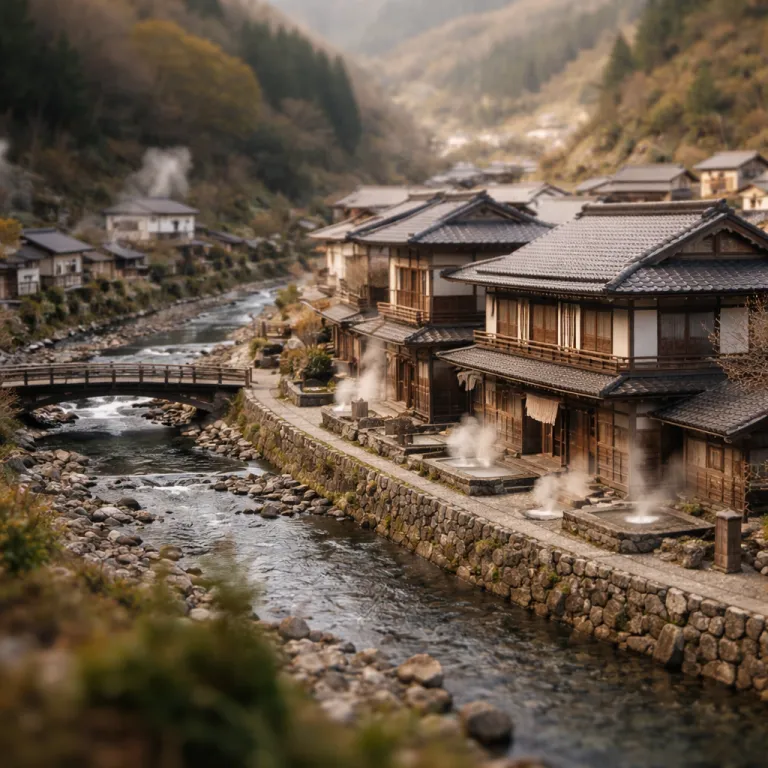
Several hot spring towns in the Tohoku region have become popular on Japanese Instagram feeds, yet they remain surprisingly calm for overseas visitors. Ginzan Onsen in Yamagata Prefecture is the clearest example, where historic wooden ryokan line a narrow river and gas lamps cast a soft view at night. Notoya Ryokan sits here with private hot spring baths and a handful of guest rooms, and it still feels like a living inn rather than a film set.
Further north in Akita Prefecture, Nyuto Onsen and nearby Hikage Onsen offer a different kind of secluded Tohoku onsen ryokan experience, with milky hot springs steaming in open air pools surrounded by beech forest. Hikage Onsen in particular feels remote, its hot water slightly opaque and mineral rich, with nature pressing right up against the outdoor baths. These are places where a public onsen might be shared by a dozen people at most, and where the ryokan staff still have time to talk about the local spring source or the mountain weather.
Hanamaki City in Iwate Prefecture adds another layer with Namari Onsen Fujisan Ryokan, which is known locally for Japan’s deepest natural rock bath carved directly into the ground, a feature highlighted on the property’s own materials. Here the onsen ryokan balances a dramatic indoor cavern bath with quieter open air tubs that look out toward the valley. For travelers curious about how these traditional inns fit into Japan’s wider hospitality story, the broader context of onsen towns and even abandoned properties is explored in depth in an analysis of onsen ghost towns and the government’s plan to clear them on JapaneseInnStay, which helps frame why some ryokan thrive while others fade.
Reaching remote hot springs by train, station transfer and shuttle bus
Access is the main filter that keeps many Tohoku onsen ryokan retreats off casual itineraries. You rarely step off a Shinkansen and straight into an onsen ryokan lobby, because the last stretch usually involves a local train, a shuttle bus or a short taxi ride. That extra hour or so of travel beyond a major station is exactly what preserves the quiet.
For Ginzan Onsen in Yamagata Prefecture, you typically travel via Oishida Station on the Yamagata Shinkansen, then continue about 40 minutes by bus or ryokan transfer into the valley where Notoya Ryokan and its neighbours sit along the river. Reaching Hikage Onsen in Akita Prefecture or the cluster of hot springs at Nyuto often means a combination of regional rail to Tazawako Station and a free shuttle arranged at the time of booking, which is why confirming transport details in advance matters as much as choosing your rooms. In Iwate Prefecture, Namari Onsen Fujisan Ryokan is accessed from Hanamaki Station or Shin-Hanamaki, with buses that run at specific times and sometimes pause in front of other onsen ryokans in the area.
Fukushima Prefecture adds another layer with Higashiyama Onsen and the Aizu Higashiyama district near Aizu-Wakamatsu City, where ryokan cluster along a river gorge yet still rely on buses from the main station. Koriyama Station acts as a Shinkansen gateway for several Fukushima hot spring areas, and from there you branch out by local line or shuttle bus into quieter valleys. If you are used to the seamless transfers between Kyoto ryokan and urban stations, this Tohoku pattern feels more improvised, though resources like JapaneseInnStay’s refined stays in traditional Japanese inns guide for Kyoto help you compare how rural and urban ryokan logistics differ.
Solo traveler advantages in a tohoku onsen ryokan hidden retreat
Traveling alone through the Tohoku region changes how you experience an onsen ryokan. Single travelers often find it easier to secure one of the limited guest rooms at a popular hot spring inn, especially midweek outside national holidays. You also move more flexibly between public onsen baths, slipping into quieter time slots when groups are still at dinner.
In places like Hikage Onsen or Namari Onsen Fujisan Ryokan, staff may speak limited English, yet the rhythm of onsen etiquette is clear enough that you quickly relax into it. A solo guest can enjoy long soaks in open air baths, then return to their room to find futons already laid out and kaiseki trays waiting, the silence broken only by river sounds. This is where the difference between a costume version of Japan and genuine omotenashi becomes obvious, because the nakai-san who remembers your tea preference from the booking form is not performing for an image but simply doing their work.
For those used to more internationalised hotel environments in a city like Kyoto or Tokyo, the Tohoku onsen ryokan “hidden” experience feels more intimate and occasionally more demanding. You may need to confirm meal times in simple Japanese, or ask at the front desk about the schedule for the free shuttle back to the station. Yet the reward is a level of calm that is hard to find in larger onsen ryokans near major tourist hubs, similar in spirit to the quieter ryokan stays on Miyajima described in JapaneseInnStay’s guide to refined stays and onsen experiences on the sacred island.
Seasonal timing, hot spring moods and the art of the air bath
Choosing when to visit a Tohoku onsen ryokan tucked into the mountains shapes everything from your packing list to your mental state. Late spring and early autumn are the sweet spots for many travelers, when the weather is stable and the region’s landscapes are at their most photogenic. Cherry blossoms frame riverside ryokan in April, while fiery foliage wraps open air baths in October.
Winter has its own appeal, especially in Ginzan Onsen where snow piles on wooden balconies and the hot springs feel almost theatrical against the cold. Yet deep snow can complicate shuttle bus schedules and extend travel time from the station, so solo travelers who value predictability often prefer the shoulder seasons. Summer brings lush greenery and warm nights, though some guests find the combination of hot and humid air with very hot spring water more intense than relaxing.
Whatever the season, the ritual remains the same across onsen ryokans in Akita Prefecture, Yamagata Prefecture, Iwate Prefecture and Fukushima Prefecture. You wash carefully before entering the hot spring, then move between indoor pools and open air baths, sometimes stepping out onto a terrace for a brief air bath to cool your skin. As one standard explanation used by tourism bodies such as the Japan National Tourism Organization puts it, “A traditional Japanese inn featuring natural hot spring baths” is what defines an onsen ryokan, and that simple formula still underpins the most memorable stays in the Tohoku region.
How to choose and book the right hidden onsen ryokan in Tohoku
Finding the right Tohoku onsen ryokan hidden among hundreds of options starts with clarifying your priorities. Decide whether you care more about the quality of the hot springs, the style of the guest rooms or the ease of access from a major station. Then look closely at how each ryokan describes its baths, its cuisine and its transport links.
Properties like Hikage Onsen in Akita Prefecture emphasise milky hot water and nature views, while Notoya Ryokan in Ginzan Onsen highlights historic architecture and private baths. Namari Onsen Fujisan Ryokan in Iwate Prefecture focuses on its unusually deep rock bath, which appeals to travelers who enjoy distinctive bathing experiences as much as refined kaiseki dinners. When you compare these onsen ryokans, pay attention to whether they offer a free shuttle or a paid shuttle bus, how many guest rooms they have and whether they provide both public onsen facilities and private options in the rooms.
For booking, many Tohoku ryokan still rely on a mix of Japanese language websites and third party platforms, so using a specialist guide like JapaneseInnStay can save time. Look for clear information on check in times, meal inclusions and the exact departure time of the last shuttle from the station, especially in smaller city hubs like Aizu-Wakamatsu or Hanamaki City. Remember that “Book in advance, especially during peak seasons”, “Check for private bath availability”, “Respect onsen etiquette”, “Prepare for varying weather conditions” and “Are private baths available in these ryokan?” are not abstract tips but practical filters that will shape how much you enjoy your stay.
Key figures behind Tohoku’s hidden onsen ryokan culture
- The Tohoku region hosts around 600 onsen according to the Japan Spa Association, which means travelers can choose from hundreds of hot spring sources spread across multiple prefectures rather than a few concentrated resorts.
- Onsen in Tohoku welcome roughly 5 million visitors per year based on Japan National Tourism Organization summaries of regional travel, a modest figure compared with Kanto and Kansai that helps keep many ryokan relatively quiet.
- Year round seasonality shapes demand, with spring cherry blossoms, summer greenery, autumn foliage and winter snow each creating distinct images that influence booking patterns for both domestic and international guests.
- Key onsen towns such as Ginzan Onsen, Nyuto Onsen and Higashiyama Onsen remain accessible within a few hours of major stations by a combination of Shinkansen, local trains and shuttle buses, which balances remoteness with practicality.
FAQ about hidden onsen ryokan stays in Tohoku
What is an onsen ryokan and how is it different from a regular hotel ?
An onsen ryokan is defined in tourism glossaries as “A traditional Japanese inn featuring natural hot spring baths”, which means the property is built around its hot spring source and bathing facilities. Unlike a regular hotel, an onsen ryokan usually offers tatami guest rooms, futon bedding and kaiseki meals served in room or in a dining hall. The focus is on slow bathing, seasonal cuisine and Japanese style hospitality rather than urban amenities.
Are private baths available in these ryokan for solo travelers or couples ?
Yes, many Tohoku onsen ryokans offer private baths either as reservable family baths or as open air tubs attached to specific rooms. The dataset confirms that “Are private baths available in these ryokan?” is a common question, and the answer is that “Yes, many offer private onsen baths in rooms or separate facilities.” When booking, check whether the private baths use the same hot spring source as the public onsen and whether there is an extra fee.
Is it necessary to book in advance for a tohoku onsen ryokan hidden stay ?
It is strongly recommended to secure your booking in advance, especially for weekends, holidays and peak foliage or cherry blossom periods. Smaller ryokan in Akita Prefecture, Iwate Prefecture and Fukushima Prefecture may have fewer guest rooms, so they fill quickly even if the town itself feels quiet. Advance reservations also help you coordinate shuttle bus times from the nearest station.
What should I bring to an onsen ryokan in the Tohoku region ?
Most ryokan provide yukata, towels and basic toiletries, so you can travel with minimal luggage. The reference guidance that “What should I bring to an onsen ryokan?” is answered with “Minimal luggage; yukata and toiletries are usually provided” holds true across Tohoku. In colder months, pack warm layers for walking between buildings or exploring the city streets around the hot springs.
Are meals usually included in the room rate at Tohoku onsen ryokans ?
In many traditional properties, dinner and breakfast are bundled into the room rate, often featuring regional ingredients such as river fish, mountain vegetables and local sake. The dataset notes that “Are meals included in the stay?” is often answered with “Typically, kaiseki meals are included, showcasing local cuisine.” When comparing options, check whether the plan is room only, breakfast only or two meals, as this significantly affects both price and the overall experience.