Why japanese herbal tea belongs at the heart of your ryokan stay
Stepping into a traditional Japanese inn, you enter a world where every tea gesture is intentional. In this setting, Japanese herbal tea becomes more than a drink; it turns into a quiet ceremony that frames your arrival, your bath, and your sleep. Guests who love refined flavors quickly realise that these infusions shape the rhythm of a stay just as much as the onsen waters or the kaiseki cuisine.
Many luxury ryokan now curate a dedicated Japanese herbal selection alongside matcha, sencha, and other green tea classics, allowing you to explore both herbal blends and leaf tea infusions that are naturally caffeine free. This is especially valuable for travelers who want the best sleep possible, because Japanese herbal teas such as Amacha, Yomogi cha, and Kuromoji tea offer aromatic depth without the stimulation of black tea or strong coffee. When you choose a premium tea Japan experience, you are not only tasting something excellent, you are participating in a traditional Japanese wellness practice that has evolved over centuries.
For guests comparing Japanese tea options before booking, it helps to understand how Japanese green infusions differ from Japanese herbal blends in both flavor and effect. Japanese teas made from the Camellia sinensis plant, such as organic sencha, organic genmaicha, and ceremonial grade matcha, contain varying levels of caffeine and suit daytime enjoyment very well. Japanese herbal infusions, by contrast, are crafted from other plants and are usually caffeine free, making them perfect companions for evening baths, slow reading sessions, or quiet moments on a tatami mat while you watch the garden lanterns glow.
From welcome tray to midnight sip: how ryokan stage japanese herbal tea
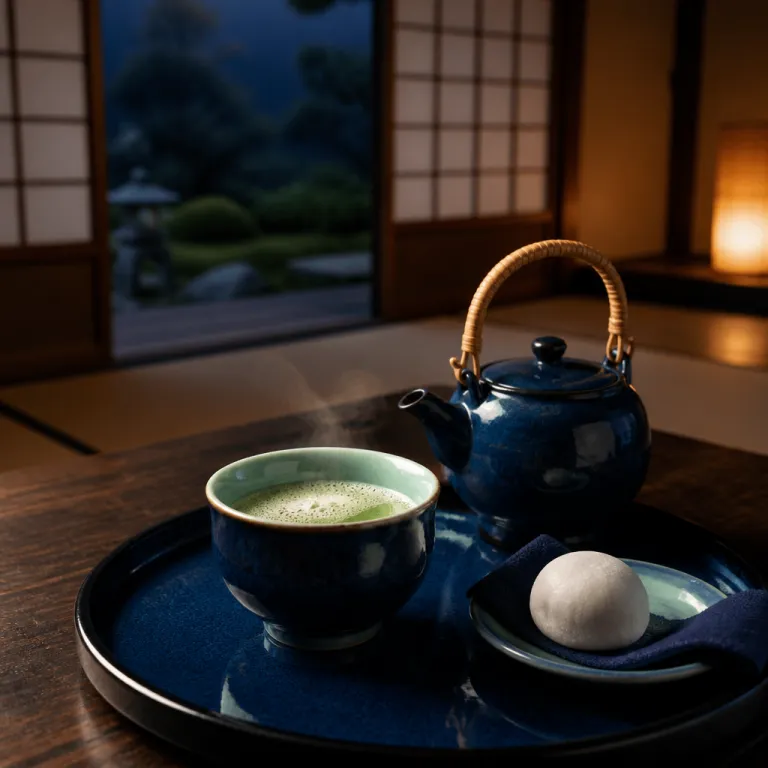
Luxury and premium ryokan treat tea as a narrative that starts the moment you slide open the shōji door. On the lacquered welcome tray, you might find a small pot of Japanese herbal tea beside a sweet, while a separate tin of Japanese green sencha waits for later in the afternoon. This careful staging lets you move between herbal teas and classic Japanese teas as your energy and mood shift throughout the day.
Many high quality inns now offer a tea menu in English, listing both green tea and herbal tea options with tasting notes, brewing times, and suggested food pairings. You may see organic sencha for breakfast, organic genmaicha with its toasted rice aroma for mid morning, and a caffeine free Japanese herbal infusion such as Kuromoji tea for late evening relaxation. Some properties even highlight which tea Japanese farmers supplied each batch, turning a simple cup into a story of region, altitude, and seasonal harvesting methods.
Digital booking platforms for traditional Japanese inns increasingly showcase these tea programs as a star feature, because travelers love tangible, sensory experiences. When you browse a luxury ryokan listing, look for photos of the tea ceremony corner, descriptions of herbal teas served in room, and notes about whether the inn can arrange private tastings. For guests interested in more adult oriented content and couples experiences, some premium platforms also link to curated cultural stories, and you may encounter this when exploring a specialist collaboration article that sits alongside more traditional hospitality features.
Pairing kaiseki cuisine with japanese herbal tea and classic brews
Fine kaiseki dinners at a ryokan are choreographed like theatre, and tea plays a quiet supporting role. While sake often takes center stage, a thoughtful progression of Japanese teas and Japanese herbal infusions can elevate each course without overwhelming delicate flavors. Guests who love nuanced pairings quickly notice how a well chosen herbal tea can frame a dish as elegantly as a wine pairing in a Western restaurant.
During the early courses, many chefs prefer a light green tea such as a gently brewed Japanese green sencha, whose grassy notes cleanse the palate between sashimi and seasonal vegetables. Later, a roasted organic genmaicha or even a mellow black tea might accompany grilled river fish or wagyū, while a caffeine free Japanese herbal infusion like Yomogi cha offers a soothing finish with dessert. Some inns now collaborate directly with local tea Japan producers and herbalists, aligning their menus with harvesting seasons and the specific character of each leaf tea or bark infusion.
When you browse a booking website, pay attention to how the property describes its beverage philosophy, including both sake and tea. A ryokan that explains its tea ceremony approach, lists several Japanese herbal teas by name, and mentions pairings with kaiseki courses is usually serious about quality and authenticity. For guests who want to deepen their understanding of regional drinks, it is worth reading a guide such as this detailed piece on how to read a local sake list at the ryokan, then applying the same curiosity to the Japanese tea and herbal tea offerings during your stay.
Wellness rituals: onsen, sleep, and the quiet power of japanese herbal infusions
For many travelers, the most memorable moments in Japan happen in silence, wrapped in a yukata after a long onsen soak. In these pauses, Japanese herbal tea becomes a wellness tool, helping the body transition from hot mineral water to deep, restorative sleep. Luxury ryokan understand this rhythm very well, and they design tea amenities to support it.
After evening bathing, staff may bring a tray with caffeine free herbal teas such as Amacha, whose natural sweetness needs no sugar, or Kuromoji tea, whose woody aroma encourages relaxation. Guests who prefer classic Japanese teas can still enjoy a lightly brewed green tea or even a small cup of matcha, though many choose herbal tea at night to avoid disrupting sleep. One Kyoto innkeeper describes the routine simply: “If a guest finishes the pot before bed, we quietly replace it with fresh hot water, so their last memory of the day is the scent of warm leaves.” Some inns also provide in room kettles, high quality leaf tea sachets, and clear brewing instructions, allowing you to prepare your own Japanese herbal infusion whenever you wake during the night.
Wellness focused booking platforms now highlight these details in their property descriptions, because travelers increasingly search for the best sleep and stress relief rather than only the best views. When comparing options, look for mentions of Japanese herbal amenities, descriptions of traditional Japanese wellness programs, and photos of tea trays beside futons. A ryokan that invests in excellent teas, thoughtful packaging, and staff training around tea ceremony etiquette is usually serious about overall guest care, from the first sip of green tea on arrival to the last cup of herbal tea before checkout.
From farm to futon: sourcing, quality, and ethical japanese herbal tea
Behind every cup of Japanese herbal tea at a ryokan stands a network of farmers, foragers, and tea producers who shape its character. In Japan, many of these artisans still harvest specific plant parts by hand, then dry or ferment them using methods refined over generations. Luxury inns that care about authenticity often work directly with such partners, rather than relying on anonymous bulk teas.
Guests increasingly ask where their Japanese teas come from, whether the leaves are organic, and how the herbs are processed. High quality properties respond by naming the region, explaining whether a tea is an organic sencha, an organic genmaicha, or a wild harvested Japanese herbal infusion, and sometimes even introducing the farmer during a tasting. This transparency builds trust, especially for travelers who love sustainable travel and want to support traditional Japanese agriculture rather than industrial scale plantations.
Online booking platforms can play a crucial role here by giving space to these stories, not only listing room sizes and check in times. When a property profile explains that its herbal teas are sourced from local cooperatives, that its green tea is shade grown, or that its black tea comes from a small experimental garden, you gain insight into both quality and ethics. For a deeper sense of place, some travelers also enjoy reading about how ceramics and serving ware reflect local identity, and a piece such as this guide to ryokan ceramics pairs beautifully with learning about the cups that hold your Japanese herbal infusion.
Practical booking tips: choosing the right tea focused ryokan online
When you search for a traditional Japanese inn online, the sheer number of options can feel overwhelming. Focusing on tea, especially Japanese herbal tea and green tea programs, gives you a precise lens for comparing properties. A ryokan that treats tea as a core part of hospitality usually excels in other details as well.
Start by reading room descriptions and amenities carefully, looking for explicit mentions of Japanese tea, Japanese herbal infusions, and in room tea ceremony sets. Check whether the property offers multiple Japanese teas, including matcha, sencha, and at least one caffeine free herbal tea, and whether staff can explain brewing methods or arrange tastings. Reviews that praise the quality of teas, the elegance of packaging, and the attentiveness of service often signal a star level commitment to guest experience, even if the inn is small and discreet.
For travelers who like to bring part of the experience home, it is worth checking whether the ryokan sells its own teas or collaborates with online shops that offer fast international shipping. Some partners provide free shipping on larger shipping orders, allowing you to stock up on Japanese herbal blends, Japanese green tea, and even ceremonial grade matcha without worrying about luggage space. As you plan, remember the verified guidance from expert tea associations and Japanese agricultural reports that most herbal infusions are naturally caffeine free and are prepared by steeping dried leaves in hot water for several minutes, and use this knowledge to choose the perfect mix of teas for both your stay and your return home.
Key figures on japanese herbal tea and traditional inns
- There is a wide range of recognised varieties of traditional Japanese herbal teas in Japan, according to overviews published by the Japanese Tea Association, giving luxury inns a broad palette for curated tasting flights.
- Domestic consumption of herbal tea in Japan reaches many hundreds of thousands of kilograms per year, based on data from the Ministry of Agriculture, Forestry and Fisheries, reflecting strong demand that supports small producers.
- Harvesting seasons for Japanese herbal plants vary by species, which means the specific herbal teas served at a ryokan in spring can differ markedly from those offered in autumn.
- Most Japanese herbal teas are naturally caffeine free, making them especially suitable for evening service in ryokan where restful sleep is a central part of the guest experience.
FAQ about japanese herbal tea at luxury traditional Japanese inns
What makes japanese herbal tea different from regular green tea at a ryokan ?
Japanese herbal tea is usually made from plants other than the tea tree, such as hydrangea, mugwort, or wild Lindera, while green tea comes from the Camellia sinensis plant. Herbal infusions are typically caffeine free and emphasise gentle aroma and wellness, whereas Japanese green teas like sencha or matcha provide more stimulation. At a ryokan, both styles are offered so guests can choose between alertness and relaxation at different times of day.
Are japanese herbal teas really caffeine free for sensitive sleepers ?
Most Japanese herbal teas are naturally caffeine free because they use leaves, flowers, or bark from non tea plants. This makes them particularly suitable for evening service after onsen bathing, when guests want to unwind without disturbing sleep. Sensitive travelers often choose herbal tea at night and enjoy green tea or black tea earlier in the day.
How are japanese herbal teas prepared in traditional Japanese inns ?
Ryokan staff usually brew Japanese herbal teas by steeping measured amounts of dried leaves in hot water for several minutes, adjusting time and temperature to each plant. Many properties use traditional teapots and cups, sometimes made by local ceramicists, to enhance the sensory experience. Guests may also receive written instructions or demonstrations so they can replicate the brewing method in their room.
Can I buy the same japanese herbal tea I tasted at the ryokan ?
Many luxury inns sell small packets of their signature Japanese herbal blends, often with elegant packaging that makes them suitable as gifts. Some also partner with online retailers that offer fast international shipping and sometimes free shipping above a certain order value. Asking staff about the producer and any available shipping orders is the best way to continue enjoying the teas after your trip.
Why do luxury booking websites highlight tea programs when promoting ryokan ?
Tea programs signal a ryokan’s commitment to detail, culture, and guest wellbeing, which are key factors for discerning travelers. When a property invests in high quality Japanese teas, thoughtful herbal tea selections, and knowledgeable staff, it usually reflects broader excellence in service and cuisine. Booking platforms highlight these elements because they help guests identify stays that offer a deeper, more authentic connection to Japan.
Trustful expert sources
- Japanese Tea Association
- Ministry of Agriculture, Forestry and Fisheries of Japan
- Japan National Tourism Organization
