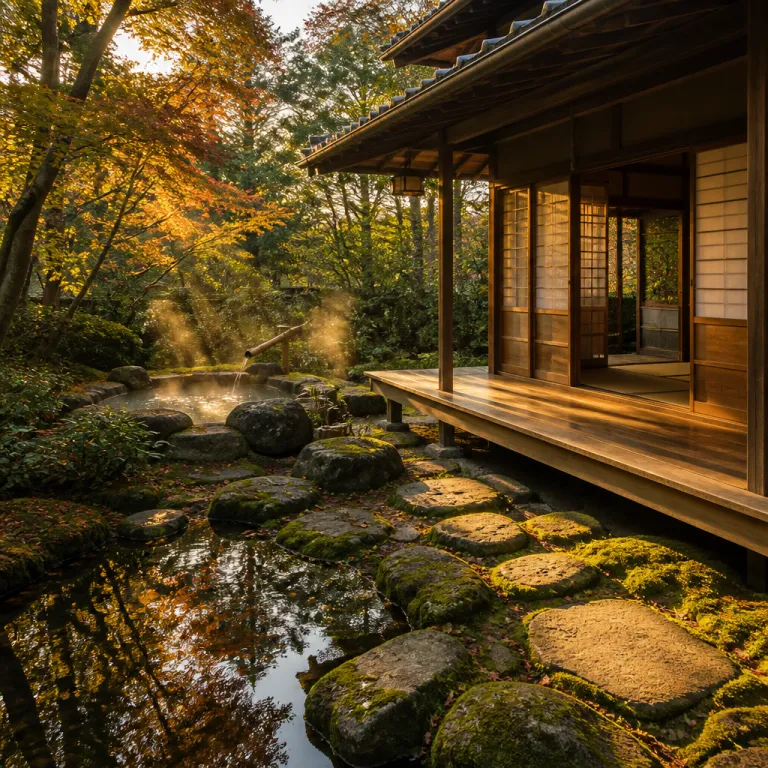
The koyo calendar and how autumn foliage ryokan Japan koyo booking really works
Autumn in Japan is a moving target, not a fixed holiday week. For a successful autumn foliage ryokan Japan koyo booking, you need to track where the leaves are turning and match that to your preferred region. The reward is seeing autumn colors from a steaming onsen rather than from a crowded station platform.
Japan autumn patterns run north to south and high to low, so fall foliage begins in Hokkaido and the northern Tohoku mountains in late September and early October. Color then slides into the Kanto and Kansai regions from mid October through early November, with Kyoto and Tokyo usually reaching peak around mid November. Kyushu and lower altitude hot spring towns often glow into late November and even early December, which gives you a long season to plan a ryokan trip.
Official guidance aligns with what ryokan owners quietly confirm to repeat guests. “When is the best time to see autumn foliage in Japan? Mid-October to early November, varying by region.” That window is perfect for a Kyoto koyo stay, while Hakone and other hot springs near Tokyo often hold their autumn leaves into late November.
For a focused autumn foliage ryokan Japan koyo booking, think in micro windows rather than a single month. Aim for mid October in Nikko and the Nagano Alps, late October for higher valleys above Kyoto, and early November for classic temple districts in the city itself. By mid late November, you can still chase autumn foliage in lower elevation onsen towns where maple leaves linger beside hot spring streams.
Real time foliage maps from the Japan Meteorological Agency help you refine dates. Pair those with ground reports from local tourism boards and ryokan associations, which often post daily photos of autumn colors in their gardens. This combination lets you adjust a November early or late November stay by a few days to catch the exact peak.
In Nikko National Park, for example, mid October usually brings peak foliage around Lake Chuzenji and the surrounding ridges. Okunikko Yuno-mori, a luxury ryokan with a private onsen, uses this timing to suggest ideal check in dates for guests who want to see autumn leaves reflected in the marshlands. Average October temperatures around 12 °C mean crisp evenings, perfect for slipping into an open air bath after a day of koyo walks.
Further west, the Nagano Alps around Shirahone Onsen tend to peak in late October. Awanoyu, a traditional ryokan there, sits in a valley where autumn colors wrap the slopes above its milky hot springs. Guests who time their trip for late October or early November can watch the last leaves fall into the outdoor pools while breathing cold mountain air.
For Kyoto and Tokyo, the sweet spot usually runs from mid November into late November, with some sheltered gardens holding color into early December. That means a couple can start their japan autumn journey in the north during mid October, then ride the wave of fall foliage southward, staying in different ryokans as the season progresses. Planning your itinerary around this gradient is the most reliable way to align your autumn foliage ryokan Japan koyo booking with the actual koyo peak.
What makes a true koyo ryokan and why the best rooms vanish first
A genuine koyo focused ryokan is designed around foliage, not just blessed with a few maple trees. Architects and gardeners have shaped these properties so that autumn leaves frame every key moment of your stay, from the first tea in your room to the last soak in the onsen. That is why the most coveted suites and open air baths sell out months before the season.
Look first at the garden plan when you consider any autumn foliage ryokan Japan koyo booking. Many Kyoto and Hakone properties were planted specifically for autumn colors, with layered maples, ginkgo and moss gardens that peak in mid November. In some ryokans, the best rooms sit slightly above the main garden, giving you a private theatre of foliage through shoji screens while you dine on kaiseki.
Dedicated koyo ryokan often feature viewing verandas and engawa corridors that run along the garden edge. These spaces let you watch autumn leaves drift into stone basins while remaining wrapped in a yukata between hot spring sessions. In the dining room, chefs echo the season with leaf shaped ceramics and garnishes that mirror the colors outside.
Menus shift decisively in japan autumn, and this is where serious travelers notice the difference between marketing and mastery. During mid October through early November, kaiseki courses highlight matsutake mushrooms grilled over charcoal, kuri chestnuts folded into rice, and sanma pike mackerel served with citrus that cuts through the cool air. By late November and early December, the focus moves toward richer broths and river fish, ideal after a long evening in hot springs.
On the bathing side, a koyo ryokan will prioritize views from both communal and private onsen. Expect at least one open air pool angled directly toward a maple grove, so you can watch autumn foliage fall onto the water surface. The most indulgent suites add a private onsen on the terrace, where couples can enjoy hot spring water and autumn colors without leaving their room.
Booking windows matter more here than in almost any other japan trip season. For Kyoto, Hakone and popular areas near Tokyo, you should secure koyo view rooms at least three to six months ahead, especially if you want a private onsen with guaranteed foliage views. In smaller towns such as Kurokawa Onsen, where capacity is limited, the best river facing rooms can vanish even earlier.
Luxury brands have noticed this demand and are investing heavily in high end ryokan experiences. For a deeper look at how global groups are shaping the premium hot spring landscape, see this analysis of the Hyatt and Kiraku investment in luxury ryokan. Understanding this shift helps you read between the lines of marketing language and identify properties that still prioritize traditional omotenashi during koyo season.
When you compare options, focus less on star ratings and more on foliage intent. A ryokan that publishes a detailed koyo calendar, shares daily garden photos in late October and early November, and explains how its kaiseki menu changes with the season is usually serious about autumn. Those are the places where your autumn foliage ryokan Japan koyo booking translates into real, room level experiences rather than generic fall foliage slogans.
Kyoto retreats: choosing the right ryokan for peak koyo evenings
Kyoto remains the emotional center of koyo in Japan, and the ryokan you choose determines how you experience that autumn glow. Some properties place you beside temple gardens where autumn leaves fall into raked gravel, while others sit along rivers where mist rises around hot springs at dawn. For couples planning a once in a decade trip, these nuances matter more than proximity to a single famous shrine.
Timing is your first lever. Kyoto usually reaches peak autumn foliage from mid November to late November, though sheltered valleys can hold color into early December. If you prefer quieter streets and slightly cooler air, consider arriving in early November, when the first serious koyo appears in higher districts and crowds remain manageable.
Location is the second lever in any autumn foliage ryokan Japan koyo booking for Kyoto. Staying in the Higashiyama area gives you walking access to temple gardens that glow at night, while Arashiyama offers riverside views and easy escapes into the hills. Northern districts near Kurama and Ohara can show earlier autumn colors, making them ideal for a mid November stay that still feels intimate.
Within the city, look for ryokans that emphasize garden design and hot spring access. Some Kyoto inns pipe in hot spring water from outside the city, creating small open air baths where you can soak while maple leaves drift overhead. Others focus on indoor hinoki tubs with framed views of inner courtyards, which can be just as atmospheric on a chilly late November night.
Room selection is where many travelers underinvest. The premium you pay for a garden facing tatami room often buys you a private theatre of autumn leaves at dawn and dusk, when day trippers have gone back to their hotels in central Kyoto. For couples, that quiet hour with tea and wagashi beside the window can become the defining memory of the entire japan autumn journey.
Food should be non negotiable. During koyo season, serious Kyoto ryokans build kaiseki menus around local harvests, from matsutake and chestnuts to river fish and persimmons, echoing the autumn colors outside. Ask directly how the menu changes between early November and late November, and choose properties that can explain those shifts with confidence.
For a structured overview of neighborhoods and property styles, the Kyoto ryokan guide for an elegant traditional stay is a useful starting point. Cross reference that with current koyo forecasts and your own priorities, whether that is a private onsen, proximity to specific temples, or quieter backstreets. Then lock in your autumn foliage ryokan Japan koyo booking early, especially if you are targeting weekends in mid November.
Remember that Kyoto is only one chapter in a broader fall foliage itinerary. Many couples pair a few nights in the city with time in Hakone, Nikko or Kurokawa Onsen, where larger hot spring complexes and open air baths offer a different angle on autumn leaves. This combination of urban temple walks and rural hot springs gives you a complete view of the season without feeling rushed.
Beyond Kyoto: onsen towns and booking strategies for a multi stop koyo trip
Once you have anchored your japan autumn plans around Kyoto, it is worth extending your trip to at least one classic onsen town. Hakone, Nikko and Kurokawa Onsen each offer distinct ways to pair hot springs with autumn foliage, and the right sequence can stretch your koyo experience from early October into early December. The key is to understand how altitude and geography shape the season in each place.
Hakone, sitting in the hills southwest of Tokyo, usually reaches peak autumn colors from early November to mid November. Many ryokans here feature large open air baths with direct views of wooded slopes, so you can watch autumn leaves swirl in the steam while soaking in mineral rich hot springs. For couples, a room with a private onsen on the balcony is worth the premium during this season.
Nikko, by contrast, tends to ignite earlier. Around Lake Chuzenji and the higher plateaus of Nikko National Park, fall foliage often peaks in mid October, then descends toward the town in late October. Properties such as Okunikko Yuno-mori use this staggered pattern to help guests choose dates that align with either high mountain color or more accessible riverside walks.
Further south, Kurokawa Onsen in Kyushu offers one of the most atmospheric autumn settings in Japan. The village is threaded with hot spring streams and rustic rotenburo, many of them surrounded by dense foliage that turns deep red and gold by late November. Because capacity is limited, an autumn foliage ryokan Japan koyo booking here should be made as early as possible, especially if you want a room with both a private onsen and strong river views.
Tokyo itself can serve as either a soft entry or a gentle landing for your koyo itinerary. City parks and temple grounds usually show autumn leaves from late November into early December, which means you can end your trip with a few urban days after more intense foliage in the mountains. Choose a ryokan style stay or a hotel with an onsen style spa to keep the hot spring thread running through the entire journey.
When planning a multi stop route, think in terms of descending altitude and latitude. Start in northern or higher regions such as Tohoku or Nikko in mid October, move through Hakone and Kyoto in early November and mid November, then finish in Kyushu or Tokyo around late November and early December. This approach maximizes your chances of meeting peak autumn foliage at least once, even if the season runs slightly early or late.
For travelers who fall in love with the rhythm of onsen towns, it is worth exploring other refined mountain stays beyond the classic koyo circuit. Our guide to elegant mountain stays in Nozawa Onsen shows how similar principles apply in winter focused resorts. The same attention to bath design, room orientation and seasonal cuisine will serve you well when evaluating any autumn foliage ryokan Japan koyo booking.
Finally, treat your reservations as living documents rather than fixed contracts. Use real time foliage forecasts, local tourism updates and direct communication with ryokan staff to fine tune dates within a flexible window. That willingness to adjust by a few days often makes the difference between seeing bare branches and bathing under a canopy of blazing autumn leaves.
FAQ
When is the best time to see autumn foliage in Japan for a ryokan stay ?
The prime window for koyo runs from mid October to late November, depending on region and altitude. Mountain areas in Tohoku and Nikko usually peak in mid October, while Kyoto, Hakone and Tokyo tend to reach their best autumn colors from early November to mid November. Lower altitude and southern regions such as parts of Kyushu can hold autumn leaves into late November and sometimes early December.
How far in advance should I make an autumn foliage ryokan Japan koyo booking ?
For popular koyo destinations such as Kyoto, Hakone and Kurokawa Onsen, you should aim to book three to six months ahead, especially if you want a room with a private onsen or a guaranteed garden view. Weekends in mid November sell out first, followed by late October and early November dates in higher altitude areas. More remote ryokans may have slightly better availability, but the best foliage facing rooms still disappear early.
What is a ryokan and why is it ideal for autumn leaves season ?
A ryokan is a traditional Japanese inn that typically offers tatami rooms, kaiseki dinners and access to onsen or other hot spring style baths. During autumn foliage season, many ryokans showcase gardens planted specifically for koyo, with open air baths and verandas oriented toward maple and ginkgo trees. This design lets you experience japan autumn from your room, the bath and the dining table, rather than only on daytime excursions.
How can I check real time foliage conditions before my trip ?
The Japan Meteorological Agency publishes national koyo forecasts that indicate when regions are expected to reach peak color. Local tourism boards, ryokan associations and city websites often share daily photos and updates from late September through early December, which give a more precise sense of current autumn foliage. Combining these sources with flexible travel dates helps you align your stay with the most vivid autumn leaves.
Is it possible to combine multiple regions in one autumn foliage trip ?
Yes, many travelers design a north to south or high to low itinerary that follows the progression of fall foliage. A common pattern is to start in Nikko or the Nagano Alps in mid October, move to Kyoto and Hakone in early November and mid November, then finish in Kyushu or Tokyo around late November. This approach increases your chances of experiencing at least one true peak koyo moment during your autumn foliage ryokan Japan koyo booking.