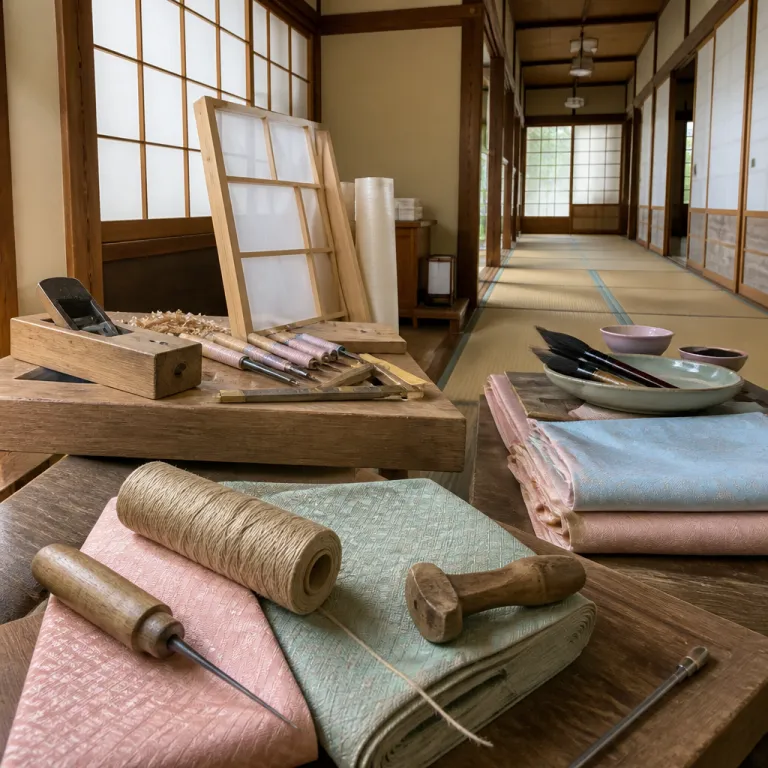
Japanese craftsmanship as the quiet luxury of a ryokan stay
Luxury in a traditional Japanese inn is written in materials and hands. Japanese craftsmanship is the cultural practice where “It is the traditional art of creating durable and aesthetic products with meticulous skill.” Every refined detail you notice in a traditional Japanese room, from the woven tatami to the ceramic tea cup, is part of this living craft story.
Across Japan, more than 240 officially recognized traditional crafts shape what you touch, wear, and use during a stay. According to the Ministry of Economy, Trade and Industry’s list of “Traditional Craft Products” and the Agency for Cultural Affairs, these designated crafts range from textiles and lacquerware to bamboo work and Japanese pottery, many of which trace their roots to the Edo period, when regional domains encouraged artisans to perfect techniques for both household use and ceremonial life. When you choose a premium ryokan, you are often choosing a curated gallery of traditional Japanese objects made by local artisans rather than anonymous factory ware.
Guests rarely realize how many crafts surround them in a single room. The paper in the shōji screens comes from traditional washi workshops, the wood pillars are planed by carpenters trained in classical Japanese joinery, and the ceramic tea bowl might be Hagi ware or Mashiko ware chosen to echo the local prefecture. A manager at a long‑running inn in Yamaguchi notes that “every object must have a maker’s name behind it,” and understanding this network of crafts helps you read the inn like a quiet gallery, where every woven mat, carved wood panel, and piece of cut glass has a maker and a place.
From tokonoma to tableware: reading a ryokan through its objects
When you enter a traditional Japanese guest room, the alcove called the tokonoma offers your first lesson in Japanese craftsmanship. A scroll, a single flower, and a piece of ceramic or lacquerware are arranged with deliberate restraint, and each object reflects both the season and the region of Japan. The choice between Hagi ware, Bizen ware, Mashiko ware, or Kutani ware is never random, because each ceramic tradition carries a distinct clay, firing method, and aesthetic philosophy.
High end inns often work directly with potters so that the tableware you use at dinner becomes a tactile map of the prefecture. A stay at Beniya Mukayu in Ishikawa might feature luminous Kutani ware paired with local lacquerware, while a visit to Ryokan Kurashiki in Okayama brings the iron rich surfaces of Bizen ware to your tray, and Yamaguchi properties near Hagi showcase soft, milky Hagi ware. One owner in Yamaguchi explains, “If the clay does not come from our hills, it does not belong on our table,” capturing how ceramics express place and help you choose properties where the craft story is central.
Even the glass on your table can speak of the Edo period. Edo kiriko, the cut glass tradition from Tokyo, uses precise hand cutting to create geometric patterns that catch candlelight during kaiseki dinners, and these pieces often sit beside bamboo crafts such as woven trays or chopstick rests made from finely worked bamboo. When you evaluate a luxury inn online, pay attention to photos of the tokonoma, the tea set, and the dining ware, because these details reveal whether the property treats crafts as decoration or as the soul of its hospitality.
Meeting the artisans: curated encounters through premium booking platforms
Many second generation ryokan owners now collaborate with Japanese artisans to create guest experiences that go beyond passive admiration. On specialized booking platforms for traditional Japanese inns, such as Relux, Ikkyu, or the Japan National Tourism Organization’s model itineraries, you increasingly find stay plans that include visits to local workshops, where you can watch handcrafting and speak directly with craftspeople about their methods. These encounters transform Japanese craftsmanship from a background detail into a personal memory.
Some properties in Ishikawa Prefecture, for example, arrange private visits to lacquerware studios in areas such as Wajima, where families have worked since the Edo period, and guests can see how layers of urushi sap are applied to wood to create heirloom household pieces. Other inns partner with textile studios producing Yuki tsumugi or Oshima tsumugi, two revered woven silk textiles officially recognized as traditional crafts, and they invite guests to try simple weaving steps on traditional looms. When you browse a luxury booking website, look for filters or stay plans explicitly mentioning traditional crafts, because these signals usually indicate a deeper relationship with local makers and help you identify properties where meeting Japanese artisans is part of the stay.
Renovation focused inns often share their craft philosophy openly. Articles about the renovation wave and how second generation owners are reinventing family ryokan explain how wood, paper, and bamboo are sourced from regional workshops, and how ceramic, cut glass, and textiles are commissioned directly from artisans. Choosing such a property means your room becomes a living craft gallery, your booking supports both cultural preservation and the economic sustainability of small studios across Japan, and your selection on the booking platform becomes a conscious way to sustain traditional techniques.
Textiles, paper, and bamboo: feeling Japanese craftsmanship on your skin
The first thing you feel after check in is often fabric. The cotton or silk of your yukata, the woven zabuton cushions, and the futon covers all reflect textile crafts that evolved over a long period in different parts of Japan. When an inn highlights Yuki tsumugi or Oshima tsumugi in its room descriptions, it signals a commitment to Japanese craftsmanship that you will literally wear.
Traditional Japanese paper, or washi, shapes the atmosphere of corridors and rooms through shōji screens and lanterns. Many ryokan source traditional paper products from villages where artisans still use mulberry bark, clear river water, and wooden frames to create sheets with subtle fibers, and this paper softens light in a way no synthetic material can match. Some properties even offer short paper craft workshops, where guests can make small dolls, bookmarks, or household stationery under the guidance of local makers.
Bamboo crafts are another quiet luxury often overlooked by travelers. Trays, baskets, and lamp shades made from finely split bamboo are not only beautiful but also sustainable, because bamboo grows quickly and has been used in traditional Japanese household items for centuries. When evaluating photos on a booking site, look for the presence of woven bamboo, carved wood, and hand finished textiles, because these clues show that the inn treats every surface as an expression of Japanese craftsmanship rather than generic décor.
Spiritual and everyday objects: buddhist, household, and play in craft form
Luxury ryokan often sit close to temples or shrines, and this proximity shapes the crafts you encounter. Buddhist altars, incense holders, and ritual objects in public spaces may be carved from wood, cast in metal, or finished in lacquerware by specialists whose skills have been passed down since the Edo period. Even if you are not religious, understanding these objects as part of Japanese craftsmanship deepens your appreciation of the inn’s cultural setting.
In guest rooms and corridors, you may notice small dolls, masks, or toys placed on shelves or in alcoves. These are not random decorations but references to regional crafts, such as kokeshi dolls in Tōhoku or clay figures in other prefectures, and they often echo local festivals or seasonal events. Asking staff about the origin of a particular doll or ceramic figure can open a conversation about the craft guilds and apprentices who keep these traditions alive.
Even the most ordinary household items in a ryokan can be expressions of traditional Japanese design. A simple ceramic rice bowl, a bamboo tea whisk, or a wooden tray called by a regional name all carry stories of material, technique, and place, and many inns now provide small gallery style corners explaining these backgrounds. When a booking website highlights such details, it signals that the property treats crafts as part of its identity rather than as interchangeable ware, which is a strong indicator of authenticity for discerning travelers.
How to choose a craft focused ryokan on a luxury booking site
Selecting the right inn begins with reading room and plan descriptions carefully. Look for explicit mentions of traditional craft partnerships, such as collaborations with Japanese pottery studios, bamboo craft workshops, or traditional paper makers in the surrounding prefecture. Properties that name specific traditions like Hagi ware, Bizen ware, Mashiko ware, Edo kiriko, Yuki tsumugi, or Oshima tsumugi usually have a genuine relationship with artisans rather than a superficial design theme.
High quality booking platforms for traditional Japanese inns often provide editorial content that explains how Japanese craftsmanship shapes each property. When you see references to the Edo period, to renovation projects using local wood and ceramic, or to guided visits to gallery style craft spaces in town, you can be confident that the inn invests in cultural heritage as part of its luxury offering. Reading guest reviews that mention meeting Japanese artisans, visiting workshops, or participating in craft classes is another reliable way to gauge the depth of these programs.
Finally, consider how your stay supports the long term survival of traditional crafts across Japan. Choosing an inn that commissions tableware, textiles, and household objects from local makers helps sustain both the craft economy and the cultural landscape you came to experience, and this aligns with national initiatives to preserve more than 240 recognized traditional crafts reported by organizations such as the Japan National Tourism Organization and the Ministry of Economy, Trade and Industry. When you book with this awareness, Japanese craftsmanship stops being a backdrop and becomes a central reason for your journey, enriching both your memories and the communities you visit.
Key figures on Japanese craftsmanship in traditional inns
- Japan counts around 240 officially recognized traditional crafts, according to the Ministry of Economy, Trade and Industry’s “Traditional Craft Products” designation and the Japan National Tourism Organization, and many of these appear in textiles, ceramics, lacquerware, and bamboo crafts used daily in high end ryokan.
- The historical span from the Edo period to the present has seen continuous refinement of Japanese pottery styles such as Hagi ware, Bizen ware, Mashiko ware, and Kutani ware, which now serve as regional signatures in luxury inn tableware.
- Nationwide initiatives to preserve traditional Japanese crafts emphasize both cultural identity and economic benefits, encouraging ryokan owners to commission more household objects, dolls, and traditional paper products from local artisans.
- Craft workshops and gallery style spaces attached to inns allow guests to participate directly in handcrafting, supporting the revival of traditional crafts and their integration with modern design in hospitality settings.
FAQ about Japanese craftsmanship in luxury traditional inns
What is Japanese craftsmanship in the context of a ryokan stay ?
In a ryokan, Japanese craftsmanship refers to the traditional crafts that shape everything from textiles and paper to ceramic tableware and lacquerware, all made with meticulous respect for materials. You experience it through woven tatami, hand thrown Japanese pottery, bamboo crafts, and carved wood details that reflect the region and its history. This approach aligns with the definition that “It is the traditional art of creating durable and aesthetic products with meticulous skill.”
How can I experience Japanese craftsmanship during my trip ?
You can experience Japanese craftsmanship by staying at inns that organize visits to local workshops or offer in house craft classes. Many properties across Japan invite guests to participate in traditional paper activities, simple weaving of textiles like Yuki tsumugi, or ceramic painting sessions using local ware. Booking a plan that explicitly mentions traditional crafts or meetings with Japanese artisans is the most reliable way to secure these experiences.
Which regions are best for craft focused ryokan stays ?
Ishikawa Prefecture is renowned for Kutani ware, lacquerware, and cut glass traditions, making it a strong choice for travelers interested in gallery style stays centered on craft. Other prefectures famous for Japanese pottery include Yamaguchi for Hagi ware, Okayama for Bizen ware, and Tochigi for Mashiko ware, each offering inns that integrate local craft into daily hospitality. When browsing booking sites, filter by region and look for properties that name specific crafts from the Edo period or earlier.
What should I look for on a booking website to find authentic crafts ?
Focus on descriptions that mention collaborations with local artisans, use of traditional Japanese materials like washi paper, bamboo, and region specific ceramics, and options to visit workshops. Photos showing detailed shots of tableware, dolls, bamboo baskets, and carved wood often indicate a serious commitment to Japanese craftsmanship rather than generic décor. Reviews that praise encounters with craftspeople or highlight the quality of household objects in the room are another strong indicator.
Are craft focused ryokan more expensive than other options ?
Properties that invest in traditional crafts, from textiles to lacquerware and Japanese pottery, often sit in the premium segment because handmade objects and small batch production carry higher costs. However, the value lies in the depth of experience, as your stay supports the survival of traditional Japanese techniques and offers a richer connection to place. Many booking platforms now offer a range of price points within craft focused inns, so you can balance budget with your desired level of immersion.
