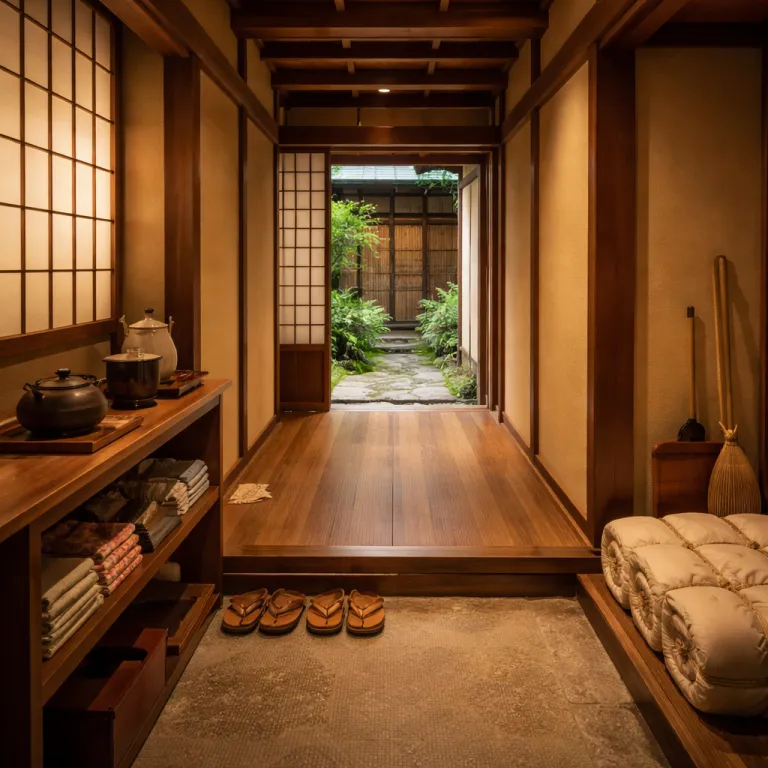
Kyoto machiya ryokan stay: what the term really means
A Kyoto machiya ryokan stay promises intimacy, history and a very specific kind of Japanese quiet. In practice, it usually means a restored machiya townhouse in Kyoto that borrows the service language of a traditional ryokan while operating closer to a refined holiday home. Understanding where your chosen machiya stay sits on this spectrum is the difference between a poetic Japanese experience and a frustratingly opaque booking.
In Kyoto, a machiya is a narrow wooden townhouse, historically located along merchant streets and built to strict fire regulations. A classic machiya house stretches deep from the street, with a wooden lattice façade, a small tsuboniwa courtyard garden and rooms that slide open and closed in pure Japanese style. When owners convert these houses into small hotels private guests can book, they must balance fragile beams and paper shoji with modern plumbing, insulation and safety codes.
Kyoto Machiya Ryokan, one of the better known accommodation brands, frames it clearly in their own materials. They describe their mission as offering stays in traditional Kyoto townhouses so that guests can experience authentic Japanese living, enjoy traditional architecture and immerse in Kyoto's culture. That ambition underpins most serious machiya fukune style projects across the city, but the execution varies dramatically from one address to another, whether you book through Kyoto Machiya Ryokan, Machiya Residence Inn or another specialist operator.
From machiya holiday rental to serviced ryokan: where the line sits
Many travelers arrive in Kyoto expecting every machiya holiday rental to function like a full ryokan, with kaiseki dinners and a nakai-san gliding in at dusk. The reality is that a Kyoto machiya ryokan stay usually falls into three models, ranging from fully serviced ryokan houses to independent holiday homes with minimal staff presence. Before you check availability, you need to decide how much service you actually want during your Japanese holiday.
At one end, a few properties in Higashiyama and near Nijo Castle operate as near classic ryokan, just located on quiet side streets instead of in the mountains. These houses may offer in-room kaiseki, daily room refresh, on-call staff and sometimes a compact hinoki bath that nods to the hot spring ryokan Kyoto travelers read about in guides to private onsen and traditional Japanese hospitality. At the other end, many machiya house conversions function as elegant holiday homes where guests self check in, cook simple breakfasts and treat the space as a private Kyoto residence.
Between those poles sits the hybrid model that now dominates the Kyoto market. Here, a machiya stay includes daily cleaning, concierge by message, stocked tea trays and curated restaurant reservations, but no on-site restaurant or communal baths. For couples planning a Kyoto side trip after time in Tokyo, this middle ground often works best, especially if you are comfortable eating out and using nearby sento instead of demanding a full onsen experience inside your temporary house.
Design appeal: why couples fall for Kyoto machiya interiors
Part of the seduction of a Kyoto machiya ryokan stay is visual, and it starts before you even open the door. The wooden lattice frontage, the stone step, the noren curtain and the low lantern all signal a traditional Japanese threshold that feels worlds away from anonymous city hotels. Inside, the narrow proportions of the machiya house create a sequence of intimate spaces that suit couples far better than large families.
Most serious restorations keep the original beams, earthen walls and tatami rooms, then layer in discreet climate control and underfloor heating for winter stays. Sliding shoji open onto a pocket garden, where a single maple or bamboo cluster catches Kyoto light and turns your private stay into a quiet stage set. When this is done well, spending the night in such a house feels like inhabiting a film still, yet the plumbing, Wi-Fi and bedding meet the expectations of travelers used to polished ryokan hotels.
Location amplifies that design story. In Higashiyama, machiya houses sit along lanes that climb towards Kiyomizu-dera, while in the Nijo area you can walk from your door to Nijo Castle in under fifteen minutes. For couples who value atmosphere over lobby bars, a Kyoto machiya located on side streets offers more romance than many larger hotels, and curated guides to Kyoto ryokan hotel stays for refined travelers can help you benchmark design quality before you commit.
Charm versus comfort: what a machiya ryokan actually feels like
Once you are inside, the trade offs of a Kyoto machiya ryokan stay become clear within a single night. These houses were never designed with modern sound insulation, so you hear rain on the tiled roof, footsteps on the street and sometimes the television from the neighboring house. For some guests, that soundtrack is part of the Japanese experience, while others quietly wish for double glazing and thicker walls.
Authenticity also collides with comfort in the details of bathrooms, beds and heating. Many machiya fukune style projects insert sleek modular bathrooms into the rear of the house, which protects the original structure but can feel compact compared with larger ryokan suites in other parts of Japan. If you are sensitive to cold, check whether your chosen house offers underfloor heating and modern air conditioning throughout, not just in the main tatami room where you will spend your evenings.
Then there is the question of beds versus futons. Some machiya stay options keep pure Japanese style sleeping on tatami, with futons laid out while you bathe, while others raise mattresses on low platforms to meet international expectations. Couples should read room descriptions carefully and check photos, because changing this on arrival is rarely possible in a small private house, especially when the property is fully booked during peak Kyoto seasons.
Where to base yourself: Kyoto neighborhoods that suit a machiya stay
Choosing the right neighborhood is as important as choosing the right house for your Kyoto machiya ryokan stay. Unlike large hotels located near Kyoto Station, machiya houses are scattered through residential streets, which means your daily rhythm will feel closer to local life. For couples, that can be a major advantage, provided you understand the trade offs in transport and nightlife.
Higashiyama is the classic romantic choice, with lanes that wind between wooden façades, small temples and cafés that open late enough for a quiet nightcap. Here, spending the night in a machiya house lets you step out early to walk empty stone streets before the tour buses arrive from Tokyo and beyond. The downside is that taxis can struggle with narrow alleys, so you may walk 300 to 500 metres with luggage, which is manageable for most couples but worth planning.
The Nijo area offers a different mood, anchored by the broad stone walls of Nijo Castle and a grid of calmer residential streets. Machiya houses located on the west side here tend to be slightly larger, and you are better placed for day trips to the Arashiyama bamboo groves without feeling trapped in a tourist zone. If you plan to combine Kyoto with time in Osaka, guides to elegant Osaka ryokan hotel options can help you balance your itinerary so that each city offers a distinct Japanese holiday rhythm.
How to book smart: pricing, taxes and realistic expectations
Booking a Kyoto machiya ryokan stay now requires more strategy than it did a decade ago. Kyoto has tightened rules on new hotel construction in historic districts, which has pushed more owners to convert machiya houses into holiday homes and semi serviced ryokan style properties. That surge in supply sits alongside a lodging tax that adds between ¥200 and ¥1,000 per person per night, depending on your room rate, so couples should factor this into their total budget. Figures in this section draw on recent summaries from Kyoto City Statistics and the Kyoto City Tourism Association.
For context, mid price Kyoto ryokan typically charge between ¥25,000 and ¥50,000 per person per night, according to estimates from Inside Kyoto and similar local sources, with higher rates during peak cherry blossom and autumn foliage seasons. Machiya stay pricing often undercuts that headline figure if no meals are included, but once you add restaurant dinners and transport, the gap narrows. Aggregated data from Kyoto City Statistics and the Kyoto Tourism Board indicate an average nightly rate around 200 USD for machiya style accommodations, which aligns with what we see across central districts for well restored houses in convenient locations.
Availability is the other pressure point. Serious ryokan in Kyoto often book out two to four months ahead for peak periods, and the best machiya house options follow a similar pattern, especially in Higashiyama and near Nijo Castle. The most reliable operators use online booking and email to manage reservations, and many now offer clear check in windows, usually from 15:00, with check out around 11:00, so plan your train times from Tokyo or Osaka accordingly and avoid arriving before the house is fully open and ready.
Who a machiya ryokan suits – and when a hotel is better
Not every traveler will thrive in a Kyoto machiya ryokan stay, no matter how beautiful the photos look. Couples who value privacy, architectural character and a sense of living in Kyoto rather than just visiting it tend to be happiest in these houses. Guests who prefer full service hotels, large lobbies and on site restaurants may find the independence of a machiya holiday less relaxing than expected.
If you are planning a Japanese holiday that moves between Kyoto, Tokyo and perhaps a coastal onsen town, think of the machiya segment as your most intimate, residential chapter. Use full service ryokan hotels for nights when you want elaborate kaiseki dinners and deep hot spring baths, then shift to a private machiya house when you want to shop local markets, cook simple breakfasts and slip into neighborhood cafés. Families can work in these spaces, but the narrow staircases and delicate fittings mean couples and small groups of friends are usually a better fit.
For travelers still unsure, it helps to return to the basics. As one local explainer puts it, “What is a machiya?” and answers, “A traditional wooden townhouse in Kyoto.” They continue, “Are machiya accommodations family-friendly?” and answer, “Yes, many are suitable for families.” Finally, they clarify, “Do machiya have modern amenities?” and answer, “Yes, most combine traditional design with modern comforts.” Those three statements capture the promise; your task is to choose the specific house, neighborhood and service level that align with how you imagine your Kyoto nights should actually feel.
Key figures for Kyoto machiya and ryokan stays
- Kyoto city hosts around 500 machiya style accommodations, according to recent summaries of Kyoto City Statistics and related municipal data, which means travelers face a highly fragmented market where careful comparison matters more than brand loyalty.
- The Kyoto Tourism Board reports an average nightly rate of about 200 USD for machiya accommodations, placing them between budget guesthouses and fully serviced luxury ryokan in Kyoto.
- Mid price ryokan in Kyoto typically charge between ¥25,000 and ¥50,000 per person per night, a range that helps couples benchmark whether a machiya house without meals represents genuine value.
- Peak periods in Kyoto often see quality ryokan and machiya houses book out two to four months in advance, so last minute availability is rare in Higashiyama and near Nijo Castle.
- Kyoto’s lodging tax adds roughly ¥200 to ¥1,000 per person per night, depending on the room rate tier, which can add the equivalent of a modest restaurant meal to a three night Kyoto machiya ryokan stay for two.
FAQ: Kyoto machiya ryokan stays
What is the difference between a machiya ryokan and a machiya vacation rental ?
A machiya ryokan combines a traditional Japanese townhouse setting with some level of hotel style service, such as daily cleaning, concierge support or arranged meals. A pure machiya vacation rental functions more like a private holiday home, where guests self check in, handle their own meals and may have limited staff contact. When you book, look for clear descriptions of services offered rather than relying on the label alone.
Are machiya accommodations family friendly or better for couples ?
Many machiya houses are technically family friendly, with multiple rooms and flexible futon layouts, and local guidance confirms that “many are suitable for families.” In practice, steep stairs, delicate shoji screens and compact bathrooms can be challenging with very young children. Couples and small groups who can move quietly and respect house rules usually find the spaces more comfortable.
Do machiya houses have modern amenities like heating, Wi-Fi and proper bathrooms ?
Most serious restorations in Kyoto now combine traditional Japanese architecture with modern comforts, including efficient heating, air conditioning, Wi-Fi and contemporary bathrooms. The level of finish varies, so you should check photos and amenity lists carefully, especially if you are sensitive to cold or require Western style beds. If a listing is vague about heating or bathroom layout, ask direct questions before confirming your stay on the Kyoto side.
How far in advance should I book a Kyoto machiya ryokan stay ?
For cherry blossom and autumn foliage seasons, plan to book your preferred machiya house or ryokan style property at least two to four months in advance. The most atmospheric neighborhoods, such as Higashiyama and the streets around Nijo Castle, see availability tighten first. Outside peak periods, you may find more flexibility, but last minute options are still limited for the best located Kyoto machiya houses.
Is a machiya stay better value than a traditional ryokan in Kyoto ?
Value depends on how you travel. A Kyoto machiya ryokan stay without included meals can appear cheaper than a full ryokan night, but once you add restaurant dinners and transport, the total cost often approaches mid range ryokan pricing. If you prioritize privacy, kitchen access and living like a resident in Kyoto, a machiya house can justify its rate; if you want elaborate kaiseki dinners and on site baths, a classic ryokan may deliver a richer Japanese experience for a similar budget.
What should I confirm before booking a machiya stay in Kyoto ?
Before you commit, check four practical points: heating and cooling in every room (not just the main tatami space), bed type and whether you are happy with futons, the steepness of stairs and overall accessibility, and exact neighborhood access, including walking distance to the nearest station or main road for taxis. Clarifying these details with the operator helps ensure your Kyoto machiya ryokan stay matches the way you actually like to travel.