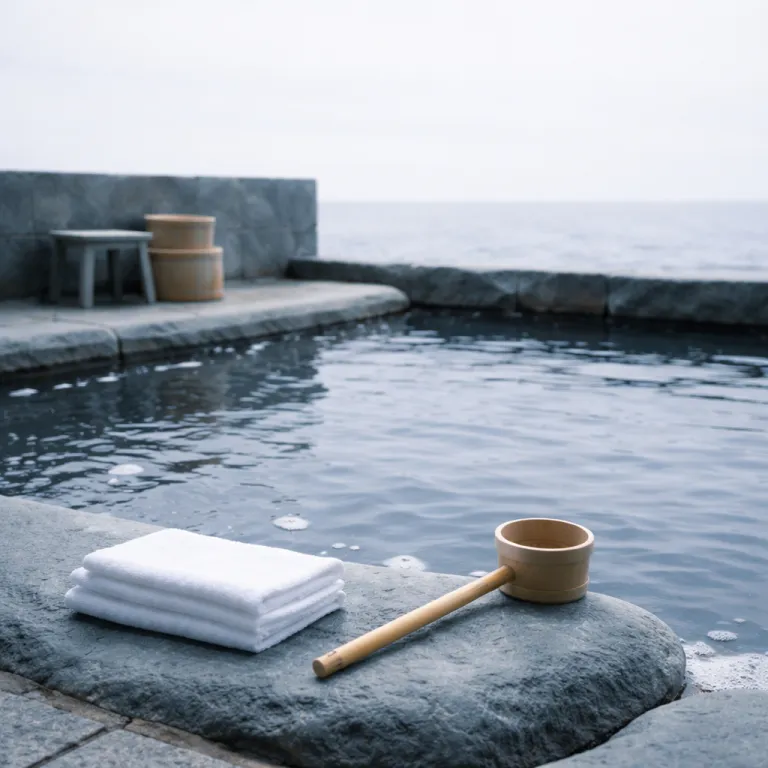
Rotenburo etiquette in open air onsen for luxury ryokan stays
Quick etiquette checklist for open air onsen (rotenburo)
- Shower and rinse thoroughly while seated before entering any hot spring pool.
- Use two towels: a large bath towel stays in the changing room, a small towel goes with you but never into the water.
- Enter the mineral rich baths slowly, keep your head above water and avoid swimming or splashing.
- Speak softly, keep phones and cameras away from communal bathing areas and respect shared silence.
- Check each ryokan’s tattoo policy and mixed gender rules in advance; consider private rotenburo for full privacy.
- Dry off lightly before returning to the changing area to protect tatami and wooden floors.
Rotenburo etiquette in an open air onsen is not a list of fussy rules; it is the operating system of Japanese hospitality. When you understand how onsen manners shape silence, movement and even eye contact, every moment in the hot spring feels more intentional and more luxurious. For couples planning premium travel in Japan, mastering these details turns a simple bath into one of the defining experiences the country can offer.
Across Japan there are more than two thousand three hundred onsen facilities, and many of the most coveted ryokan now highlight outdoor onsen and private onsen options before room categories. That figure, drawn from statistics published by the Japan National Tourism Organization (JNTO) and regional tourism offices, signals how central hot spring culture has become to domestic and international travel planning. For guests choosing between several onsens in Kyoto, Beppu or along the Kumano Kodo trail, the promise of a mineral rich open air bath often decides the booking.
Rotenburo, the open air baths usually fed by natural hot spring water, sit at the intersection of landscape, architecture and ritual. You are not just stepping into hot water; you are entering a shared cultural space where fellow bathers, onsen staff and the surrounding nature all play a role. Understanding how to move from changing area to bathing area, how to handle your small towel and how to share the view without intruding on others is what separates a merely pleasant soak from a quietly unforgettable one.
The washing ritual before bathing: from changing area to bathing area
The most important part of rotenburo etiquette in an open air onsen happens before you ever touch the onsen water. After you undress in the changing area, fold your clothes neatly, remove jewellery that might react with mineral rich spring water and take only your small towel with you. This transition from changing area to bathing area is where you shift from travel mode to onsen bathing mode, and the difference shows in how calmly you move.
In the bathing area you will find low stools, hand showers and wooden or plastic buckets, and this is where proper onsen etiquette becomes very specific. Sit down, never stand, and wash thoroughly from head to toe with soap and shampoo, rinsing every trace away so that only clean skin meets the hot spring pools. Japanese inn guides and local signage are explicit here: wash completely before entering the baths so the shared water stays clear and inviting for everyone.
Once you are fully clean, you may briefly rinse the small towel in clean water, wring it tightly and place it on your head or fold it beside you, but never let it trail in the baths. Many first time visitors from outside Japan are surprised that you must not swim or submerge your head, yet this keeps the hot springs calm and the water surface clear for everyone. Enter the hot bath slowly, allowing your body to adjust to the hot spring temperature, and remember that in a Japanese onsen, stillness is a form of respect.
Rotenburo etiquette also extends to how you leave the bathing area and return to the changing area. When you step out of the hot spring, use your small towel to pat away excess onsen water so you do not drip across the floor. Local onsen instructions often summarise this rhythm simply: dry off before re-entering the changing area, a detail that protects both fellow bathers and the tatami or wooden floors that frame many traditional Japanese inns.
For couples staying at design forward ryokan wrestling with tradition, this ritual can feel like a quiet anchor. Properties grappling with whether they are preserving onsen culture or repackaging it for Instagram are explored in depth in this analysis of the identity crisis of the modern ryokan. Knowing the correct sequence from changing area to bathing area lets you navigate even the most theatrical property with confidence.
Towel protocol, nudity and the rhythm of shared silence
Nothing reveals your grasp of rotenburo etiquette in an open air onsen faster than how you handle towels. In a Japanese onsen there are usually two towels: a large bath towel that stays in the changing area and a small towel that travels with you to the bathing area. The rule is simple but non negotiable, the large towel never enters the baths and the small towel never touches the onsen water.
Carry the small towel folded discreetly in front of you as you walk from the changing area to the hot spring, which offers a modest screen without pretending to hide full nudity. Once you reach the edge of the hot spring, place the small towel on your head or on a rock above the waterline, keeping it dry and out of the baths. This tiny square of cotton becomes a kind of passport in onsen culture, signalling that you understand the choreography of Japanese bathing.
Nudity is not optional in traditional onsens across Japan, and bathing suits are typically prohibited in both indoor and outdoor onsen spaces. Many ryokan and municipal bathhouses state this clearly in their house rules and on regional tourism pages: nudity is required in rotenburo and conventional swimwear is not allowed. For couples used to spa etiquette in Europe or North America, this can feel confronting at first, yet the atmosphere in a Japanese onsen is strikingly unsexualised.
Silence is another part of the unwritten rhythm that defines rotenburo etiquette in an open air onsen. You may speak quietly with your partner, but avoid loud conversations, phone calls or anything that breaks the shared calm with fellow bathers. Local etiquette leaflets often reduce this to a single line: keep your voice low while bathing, and luxury ryokan staff will always appreciate guests who understand that tranquillity is part of what they offer.
For couples planning stays in Kyoto, where some of the best ryokan blend urban sophistication with deep onsen culture, towel protocol and quiet conversation become part of the romance. When you are comparing properties, look for those that explain their onsen etiquette clearly, as in this guide to an authentic luxury ryokan stay in Kyoto. Clear communication before arrival lets you relax into the baths without second guessing every movement.
Tattoos, privacy and choosing between communal and private rotenburo
For many international travellers, the most stressful part of rotenburo etiquette in an open air onsen is not nudity but tattoos. Policies vary widely across Japan, and most official tourism sites now state it plainly: some baths accept tattoos, others request that they be covered or decline entry. The reality on the ground is shifting, with increased acceptance of body art and a rise in private rotenburo specifically designed to welcome overseas guests.
Luxury ryokan in Beppu, Hakone and Niseko now often offer suites with private onsen on the terrace, allowing guests with visible tattoos to enjoy natural hot spring water in complete privacy. These private baths follow the same onsen etiquette as communal baths, including washing before bathing and keeping the small towel out of the water, but the atmosphere is more relaxed. For couples, a private outdoor onsen can be the most romantic setting on the property, especially when the onsen water is mineral rich and the open air view frames forest, sea or snow.
Communal baths, by contrast, are where you feel the full weight of onsen culture and the presence of fellow bathers. Here rotenburo etiquette in an open air onsen is more visible, from how you move through the bathing area to how you share space at the washing stations. If you have tattoos and the property allows them only if covered, a small flesh coloured patch or wrap is usually more acceptable than a large bandage that might slip into the baths.
When booking through a specialist platform for traditional Japanese inns, look for clear notes on tattoo policies, private onsen availability and whether any mixed gender baths exist. Some mountain onsens and remote lodges along routes like the Kumano Kodo still maintain konyoku, or mixed gender outdoor onsen, though these are less common in mainstream travel circuits. For couples who value privacy above all, choosing a room with a private onsen and using communal baths only during quieter hours can be the ideal compromise.
If you are planning a multi stop itinerary focused on experiences Japan does best, consider alternating nights in ryokan with private rotenburo and nights in properties known for expansive communal hot springs. A detailed guide to booking a ryokan with a private onsen for a serene escape can help you map out which nights should be more social and which should be entirely secluded. This balance keeps rotenburo etiquette from feeling restrictive, instead turning it into a framework for tailoring each night of your journey.
Timing, crowd patterns and how couples can find real tranquillity
Even when you understand every rule of rotenburo etiquette in an open air onsen, timing can make or break the experience. In most ryokan the busiest periods for baths are just before dinner and just after breakfast, when group tours and families move in predictable waves. Couples seeking a quieter atmosphere should aim for late evening after kaiseki or very early morning, when the only sounds are wind, water and the occasional crow.
In Beppu, one of the most famous hot spring towns in Japan, public baths and hotel onsens can feel crowded during peak travel seasons. Yet even here, a simple shift of thirty minutes can transform the same outdoor onsen from a social pool into a near private sanctuary. Ask onsen staff discreetly about their quietest windows, because they know exactly when fellow bathers tend to arrive and when the baths sit almost empty.
At higher end ryokan, especially those along the Kumano Kodo or in rural prefectures, the rhythm of bathing often follows the rhythm of the kitchen. When the dining room is full and the nakai san are serving multi course meals, the bathing area is usually at its calmest, with only a few guests slipping into the hot spring between courses. Couples who are comfortable eating slightly earlier or later than the main seating can use this to their advantage, trading a conventional schedule for more private onsen time.
Weather also shapes how rotenburo etiquette in an open air onsen feels in practice. On cold or rainy nights, the contrast between natural hot spring water and cool air makes outdoor onsen especially appealing, yet some guests retreat to indoor baths, leaving the open air pools quieter. In summer, by contrast, late night bathing under a clear sky can be the most comfortable option, and the etiquette of speaking softly becomes even more important when sound carries across still water.
For couples who enjoy photography, remember that onsen culture places privacy far above the perfect photo. Many properties prohibit cameras entirely in communal baths, and even in private onsen, it is wise to limit photos to moments when no staff or neighbouring balconies are in frame. The most memorable images from experiences Japan offers in its hot springs are often mental rather than digital, shaped by steam, lantern light and the feeling of mineral rich water on skin.
Regional nuances: from Kyoto refinement to Beppu steam and mountain retreats
Rotenburo etiquette in an open air onsen is broadly consistent across Japan, yet each region layers its own character onto the ritual. In Kyoto, where many ryokan sit behind discreet noren on quiet side streets, the atmosphere in the baths tends to mirror the city’s refined tempo. Conversations are softer, movements are more deliberate and the architecture often frames small inner gardens rather than wide mountain views.
Beppu, by contrast, is a town built around hot springs in every possible form, from traditional wooden baths to modern complexes with multiple outdoor onsen. Here you will encounter a wider range of fellow bathers, from elderly locals to international visitors following onsen Japan itineraries, and the etiquette leans slightly more relaxed while still anchored in the same core rules. The onsen water in Beppu is famously varied, with different springs offering distinct mineral rich compositions that can feel silky, fizzy or almost milky against the skin.
Mountain regions along the Kumano Kodo and in Tohoku often feature ryokan where the rotenburo sits beside a river or deep in cedar forest. In these settings, rotenburo etiquette in an open air onsen takes on a more contemplative tone, because the natural hot spring water and the surrounding landscape are the main event. You may find that fellow bathers speak even less here, allowing the sound of spring water and wind to fill the silence.
Across all these regions, the basics remain constant: wash thoroughly before bathing, keep the small towel out of the baths, enter and exit the hot spring quietly and dry off before returning to the changing area. Onsen staff in luxury properties are used to guiding international guests, and a polite question about local nuances is always welcomed. When you respect both the universal rules and the local flavour of onsen culture, every bath, from the smallest indoor pool to the grandest outdoor onsen, feels connected to a larger story.
For couples curating a route that strings together Kyoto elegance, Beppu energy and remote mountain calm, paying attention to how each property explains its onsen etiquette is a useful filter. Ryokan that communicate clearly about bathing area layouts, tattoo policies and the character of their hot springs tend to be equally thoughtful about service in other areas. Over the course of a long journey, these details add up to a deeper understanding of how water, landscape and culture intertwine in Japan.
Practical booking tips for couples: reading between the lines of ryokan listings
Understanding rotenburo etiquette in an open air onsen is only half the story; the other half is choosing properties where that etiquette can shine. When you browse listings on a specialist platform for traditional Japanese inns, pay close attention to how each ryokan describes its baths, not just its rooms. Phrases like “outdoor onsen with river view”, “suite with private onsen” or “separate male and female bathing area” tell you how your onsen bathing will actually unfold.
For couples, the presence or absence of private onsen options can be decisive, especially if one partner is new to onsen culture or concerned about tattoos. Look for room descriptions that specify “open air private onsen on terrace” or “semi open air bath with natural hot spring water”, and confirm whether the hot spring is genuinely fed by spring water or simply heated tap water. Properties that highlight the mineral rich qualities of their onsen water, such as sodium chloride or hydrogen carbonate content, are usually proud of their source and more serious about maintenance.
Reading reviews with an eye for onsen etiquette can also reveal how well a property manages its bathing spaces. Comments about overcrowded baths, unclear rules in the changing area or guests using phones near the hot springs suggest that staff may not be enforcing standards consistently. By contrast, reviews that mention quiet fellow bathers, spotless bathing areas and attentive onsen staff who explain the washing ritual signal a ryokan where rotenburo etiquette in an open air onsen is part of the service culture.
Finally, do not hesitate to email the property with specific questions before you book, especially about tattoo policies, mixed gender options and the best times for couples to bathe in relative privacy. A concise reply that addresses onsen etiquette, explains whether you can bring your own small towel or toiletries and clarifies any rules about photos in or near the baths is a strong indicator of professionalism. In a country where water, heat and silence are elevated into an art form, choosing the right setting for your baths is as important as learning how to move within them.
Key figures and trends in rotenburo and onsen culture
- Japan National Tourism Organization and prefectural tourism bureaus report around 2,300 onsen facilities across Japan, illustrating how central hot springs are to domestic leisure and inbound travel.
- Rotenburo, or open air baths, consistently rank among the most requested features in ryokan reviews, often outranking room size or proximity to major sights.
- Private rotenburo attached to guest rooms typically begin appearing around the 40,000 yen per person price point at many properties, marking an approximate threshold between standard and premium ryokan stays rather than a fixed rule.
- Industry observers note increased acceptance of tattoos in onsen settings, especially where private onsen are available, reflecting a gradual shift from older blanket bans documented on regional tourism pages.
- Growing foreign patronage in onsen towns such as Beppu and Hakone has encouraged more properties to publish clear onsen etiquette guidelines in multiple languages, often linked directly from local tourism information sites.
FAQ about rotenburo etiquette in open air onsen
Are tattoos allowed in rotenburo at traditional Japanese inns ?
Policies differ by property, so you must check each ryokan individually before booking. Most regional tourism boards now explain that some baths accept tattoos, some require them to be covered and others do not allow them at all, and this remains accurate across most of Japan. Many luxury inns now offer private onsen so that guests with tattoos can enjoy hot springs without concern.
Is nudity required in open air onsen baths ?
Yes, nudity is standard in both indoor and outdoor onsen at traditional Japanese inns. House rules at classic ryokan typically state that bathing suits are prohibited in rotenburo and communal baths, which reflects long standing onsen culture. Some modern spa style facilities may allow swimwear, but these are exceptions and are usually labelled clearly.
Can I bring my own towel and toiletries to a Japanese onsen ?
Most ryokan provide towels and basic amenities, yet you are usually allowed to bring your own small towel and preferred toiletries. Many onsen information sheets phrase it simply: you may bring your own towel, but some facilities provide them, sometimes for a small fee. Remember that the large towel stays in the changing area and the small towel must never touch the onsen water.
What is the correct order of steps before entering the hot spring ?
The standard sequence is to undress in the changing area, move to the bathing area with only your small towel, wash thoroughly while seated and rinse completely, then enter the hot spring slowly and quietly. Local etiquette posters often summarise this as “wash before bathing” and “keep noise to a minimum”, followed by reminders to dry off before returning to the changing room. Following this order shows respect for fellow bathers and for the onsen staff who maintain the baths.
How can couples find quieter times in communal rotenburo ?
Communal baths are usually busiest just before dinner and just after breakfast, when group tours and families follow similar schedules. Couples seeking tranquillity should aim for late evening after the meal service or early morning before most guests wake. Asking onsen staff for their quietest windows is always worthwhile, because they know the daily flow of fellow bathers better than any timetable.