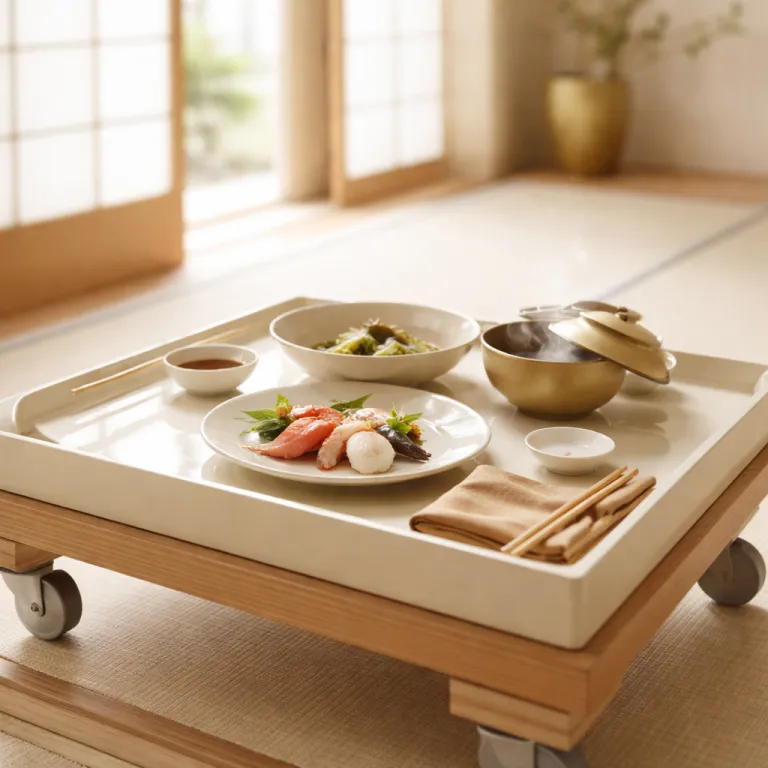
When the kitchen outranks the guest room
In a serious ryokan, the kaiseki ryokan dinner experience is not a side attraction. It is the central performance where every dish, every gesture, and every pause between courses quietly tells you whether this is a house of true omotenashi or just clever design. When you are planning a trip through Japan with your family, the quality of that kaiseki meal will often reveal more about the property than any photo of a cedar bath or a sculptural lamp.
Across Japan, owners know that guests now compare ryokan meals as closely as they compare onsen views or room size. At premium addresses, the kitchen often absorbs a larger share of your nightly rate than the guest room renovation, because a multi course kaiseki dinner served at its peak demands seasonal ingredients, specialist chefs, and a tightly drilled service équipe. Industry material from groups such as the Japan Ryokan & Hotel Association and the Japan National Tourism Organization notes that traditional kaiseki service is labour intensive and ingredient driven, which helps explain why, when you see a rate that includes both ryokan dinner and a full Japanese breakfast, a significant portion of what you pay will usually be invested directly into the food rather than the furniture.
That is why I tell families to start with the menu, not the mattress, when choosing a ryokan stay. A property that treats kaiseki ryori as the main event will usually offer more thoughtful ryokan meals, better handled vegetables, and a calmer rhythm to the evening meal service. By contrast, a place that leans on design but offers a generic served meal in a crowded dining room is unlikely to deliver the kind of slow, attentive experience that justifies a premium rate.
Look closely at how the dinner is described before you book your travel. Do they specify the number of dishes in the kaiseki course, mention local farmers by name, or explain how the vegetables served change with each season? A serious house will talk about seasonal ingredients, the exact fish landed that week, and whether your dinner served in the room will be adjusted for children or dietary needs. When a property simply writes that “a Japanese meal will be served” without detail, that is usually a sign that the kitchen is not the star.
Another reliable indicator is whether the ryokan meals are prepared by an in house team or outsourced. When the head chef is on site and works closely with the onsen and front office staff, the timing will be orchestrated so that your hot spring soak, your kaiseki ryokan dinner experience, and your futon turndown align seamlessly. If the served meal arrives rushed or lukewarm, or if dinner breakfast combinations are handled mechanically, you are probably in a place where the kitchen is treated as a cost centre rather than the heart of the house.
Families should also pay attention to how the property handles breakfast, because it reveals the same priorities. A ryokan that offers a carefully balanced Japanese breakfast with grilled fish, pickled vegetables, and miso soup prepared to order is usually the same house that will serve a thoughtful kaiseki course the night before. When breakfast is a buffet of reheated dishes, you can safely assume that the dinner will be more about volume than nuance, even if the room looks perfect on your screen.
How kaiseki signals real hospitality for families
For many premium travellers, the first instinct is to choose a ryokan in Japan based on the onsen photos or the size of the private baths. That is understandable, especially when you are travelling with children who will remember the hot spring steam and the tatami more vividly than the exact dish of simmered vegetables. Yet when you look at guest feedback across the country, reviews on major booking platforms and in travel magazines consistently show that the kaiseki ryokan dinner experience is the most mentioned highlight of a ryokan stay, often outranking even the baths.
The reason is simple: a well paced kaiseki dinner served either in your room or in a quiet dining room becomes the moment when the staff can read your family and adjust the evening. During a typical two hour meal, which aligns with figures reported in Japan National Tourism Organization guidance and Japan Ryokan & Hotel Association summaries that place the average number of courses around ten and the usual duration at about two hours, the team has time to notice which dishes your children finish, whether you prefer lighter seasoning, and how quickly each course should follow. That is when the ryokan staff, often described in industry material as hosts who prepare and serve the kaiseki meal, quietly turn a standard service into something tailored.
In practical terms, this means that a strong kitchen can make or break a family trip. A property that takes kaiseki ryori seriously will offer alternative dishes for younger guests, perhaps simplifying one course into a small hot pot or a grilled meat plate while keeping the adults on the full multi course path. When the meal is thoughtfully structured, children can step away between dishes, and the time will feel fluid rather than rigid, which matters far more than whether the room has the latest design furniture.
Location still matters, of course, and families often start with a city such as Tokyo before heading to an onsen town. When you look at a curated list of top rated ryokan in Tokyo with luxury tradition and private onsen baths, you will notice that the standouts are those where the kitchen is treated as a destination restaurant in its own right. At long established houses such as Hoshinoya Tokyo, Hiiragiya in Kyoto, or Gora Kadan in Hakone, for example, repeat guests and published reviews often mention that travellers plan their dates around specific seasonal ingredients, from spring mountain vegetables to autumn mushrooms.
Even in urban properties without large hot spring facilities, the same rule applies. A thoughtful Japanese meal will be served in a calm dining room, with dishes sequenced to allow conversation and rest rather than constant interruption. Families who choose based on the strength of the kitchen usually report that the children eat better, sleep earlier after the served meal, and remember the flavours of the seasonal vegetables served long after the details of the room have faded.
There is a counterpoint worth acknowledging for balance. Some excellent inns in Japan focus on simple regional food rather than a formal kaiseki course, perhaps serving a single large hot pot and a few side dishes instead of a full multi course progression. These places can still offer a memorable ryokan stay, especially for families who prefer a shorter dinner, but you should then adjust your expectations and understand that the value lies in the onsen or the setting rather than in a complex kaiseki ryokan dinner experience.
Inside the kaiseki room: pacing, privacy and children
Once you arrive, the way your kaiseki ryokan dinner experience unfolds in the room or private salon will tell you whether the property truly understands family travel. In the best houses, your nakai san will serve the first course shortly after you return from the onsen, giving children just enough time to change into yukata and settle. The futons remain folded away while the meal is served, so the tatami becomes a flexible dining room where younger guests can stretch, sit, or briefly lie down between dishes without disturbing anyone.
Premium properties increasingly offer a choice between in room dining and a dedicated private dining room, and this is where a specialist booking platform earns its keep. When you reserve through a site that focuses on private dining ryokan booking and exclusive culinary experiences, you can specify whether you want the full kaiseki course in your room or prefer a separate space where the served meal will not clash with bedtime. For families, this detail often matters more than whether the property has the latest design trend in the lobby.
During the meal itself, pacing is everything. A classic kaiseki ryori sequence might begin with a small seasonal dish, move through sashimi, a simmered course, a grilled item, perhaps a hot pot, and finish with rice, soup, and pickled vegetables before dessert. When the ryokan staff are well trained, each course will be served at a tempo that respects the children’s attention span, with the time naturally stretching or contracting depending on how quickly your family eats.
Thoughtful houses also understand that not every guest wants to sit through a long multi course progression after a full day of travel. Many will offer a shorter kaiseki style meal for the first night of your trip, then expand to the full ryokan dinner on the second evening once everyone has adjusted. For children, the kitchen might simplify certain dishes, perhaps replacing a complex simmered plate with a small hot pot or a grilled fish, while still using the same seasonal ingredients and vegetables served to the adults.
Privacy plays a crucial role in how relaxed the evening feels. When dinner is served in the room, parents can quietly manage jet lag, spills, or small tantrums without worrying about other diners, and the staff will serve each course with a light touch that respects that intimacy. In properties where the kaiseki ryokan dinner experience takes place in a shared dining room, ask whether they offer semi private booths or early seating for families, so that the served meal aligns with children’s natural rhythms.
Finally, remember that the same kitchen usually prepares both dinner and breakfast, so the way they handle the morning meal is another test. A house that offers a carefully arranged Japanese breakfast with grilled fish, rice, miso soup, and pickled vegetables laid out with the same precision as the evening dishes is signalling that every meal will be treated as part of the overall ryokan stay. When dinner breakfast combinations feel like an afterthought, you can assume that the kitchen is not the property’s proudest asset, and plan your next travel choice accordingly.
Seasonal plates, regional baths and the real cost of excellence
Seasonality is the quiet engine behind every serious kaiseki ryokan dinner experience, and it is where the economics of your stay become visible. A chef who insists on peak seasonal ingredients, from spring mountain vegetables to winter crab, is committing a large share of the ryokan meals budget to the plate rather than to decorative extras. For families willing to pay for a higher tier room, it is worth asking how much of the rate goes to the kitchen, because at the top end in Japan, sourcing can approach Michelin level standards.
Consider a stay in an onsen town such as Kinosaki Onsen, where many houses compete on both hot spring quality and food. One property might offer larger rooms and private baths but a relatively simple served meal, while another keeps the room modest yet pours its resources into a multi course kaiseki ryori dinner served at the peak of the season. For travellers who care about flavour and cultural depth, the second option often delivers a richer memory, even if the tatami room is smaller.
Seasonal variation also shapes how family friendly the meal feels. In spring and summer, kaiseki dishes tend to be lighter, with more raw or lightly cooked vegetables served alongside delicate fish, sesame seeds scattered over chilled plates, and broths that feel almost weightless. Autumn and winter bring deeper flavours, from hot pot courses bubbling at the centre of the table to grilled meats and root vegetables, and the warmth of the food mirrors the heat of the onsen and hot spring baths outside.
From a cost perspective, each of those dishes carries a story. When a ryokan commits to serving local fish landed that morning, or to buying vegetables from a specific farmer, the meals ryokan offers become a form of regional storytelling rather than generic hotel food. That is why some houses openly explain that a large portion of your fee supports the kitchen, the farmers, and the fishermen, and why a served meal there feels more like a cultural event than a simple dinner.
For families, the key is to align your expectations with the season and the region. If your trip takes you to a mountain area with limited seafood, expect the kaiseki course to focus on river fish, wild plants, and pickled vegetables rather than ocean delicacies, and judge the meal on how well those ingredients are handled. When you head north to refined hot spring retreats in Hokkaido, you might choose a property where the kaiseki ryokan dinner experience highlights dairy, corn, and cool water fish, and where the ryokan stay is built around both the onsen and the table.
Ultimately, the most reliable way to judge value is to ask detailed questions before you book. How many courses are included in the kaiseki meal, and are there child friendly alternatives for certain dishes? Is dinner served in the room or in a shared dining room, and can the timing be adjusted for younger guests? When a property answers these questions with clarity and pride, and when their replies echo standard advice from organisations such as the Japan National Tourism Organization and the Japan Ryokan & Hotel Association to reserve in advance and share dietary needs early, you can be confident that every meal will be served with the same care, from the first dish of the evening to the last bowl of rice at breakfast.
Key figures behind the kaiseki ryokan dinner experience
- Traditional kaiseki dinners at ryokan in Japan typically feature around ten courses, aligning with industry and tourism data from sources such as the Japan National Tourism Organization and the Japan Ryokan & Hotel Association often summarised as “Average number of courses: 10”, which means families should plan for a substantial, multi course evening meal rather than a quick dinner.
- The usual duration of a full kaiseki ryokan dinner experience is about two hours, as reflected in guidance from the Japan National Tourism Organization, regional tourism boards, and similar references that list “Typical duration: 2 hours”, so parents should schedule onsen time and children’s bedtimes around this window.
- Standard advice from ryokan associations and official tourism sites notes that guests are encouraged to “Reserve in advance” and “Inform about dietary restrictions”, which underlines how much planning and ingredient sourcing goes into each served meal and why last minute changes can be difficult.
- These same sources confirm that kaiseki is defined as “a traditional multi-course Japanese meal emphasizing seasonal ingredients”, reinforcing that the quality of seasonal ingredients and vegetables served is the main differentiator between an ordinary dinner and a standout ryokan meals programme.
- Daily scheduling information in reference material shows that kaiseki service follows a clear timeline from “Arrival at dining area” through “Sequential serving of courses” to “Conclusion with dessert”, which helps families understand how the time will flow from the first dish to the final sweet.