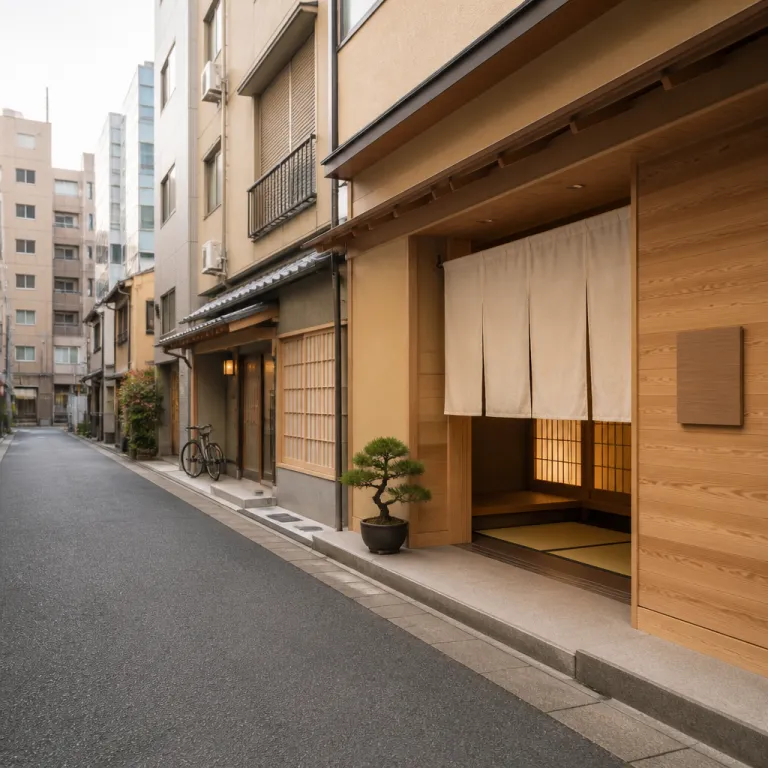
Tokyo urban ryokan city stay experience: a new kind of sanctuary
Tokyo has long been a city where travelers choose a business hotel near a major station, then escape to the countryside for a traditional ryokan stay. Today a distinct style of urban ryokan stay in Tokyo is emerging, bringing tatami, kaiseki and onsen-style rituals directly into the city grid. For people who balance meetings and leisure, this shift quietly rewrites what the best place to stay in Tokyo can mean.
At its core, a ryokan is defined by tatami rooms, low tables, futon bedding and a service philosophy shaped by omotenashi rather than by the marketing language of design hotels. The Japan Ryokan & Hotel Association describes it simply and precisely: “What is a ryokan? A traditional Japanese inn with tatami rooms and communal baths.” That definition matters in Tokyo because many hotels borrow Japanese-style aesthetics, yet only a true Tokyo ryokan will structure your entire stay around seasonal cuisine, bathing rituals and attentive room-level care.
Urban ryokan in Tokyo are usually located in compact buildings, often within walking distance of a major subway or JR line. They sit in neighborhoods such as Asakusa, Ueno, Ginza or Shinjuku, where people step out from a quiet tatami room directly into neon-lit streets within minutes. This is the essence of a city-based ryokan stay in Tokyo: the same traditional Japanese hospitality once reserved for mountain valleys, now layered over the dense fabric of hotels Tokyo travelers already know.
For guests used to a standard Tokyo hotel, the contrast is immediate from check-in. Shoes come off at the threshold, luggage is whisked away, and a nakai-san quietly explains how your futon will be laid out while you bathe. The room may be smaller than a typical hotel Tokyo suite, yet the sense of space comes from sliding shoji, uncluttered alcoves and a carefully framed view of a side street or temple roof rather than a skyline panorama.
In this context, choosing a ryokan-style hotel in Tokyo is not about spectacle but about precision. You might arrive on the last train from Tokyo Station, step into a Tokyo ryokan lobby scented with hinoki, and feel the day fall away in seconds. One repeat visitor described it this way: “I walked in exhausted from meetings in Marunouchi, and ten minutes later, sitting on tatami with a cup of green tea, it felt like I had left the city entirely.” For many such guests, that moment is why they now book Tokyo hotels that are ryokan first and city hotel second.
From yanaka to ginza: where urban ryokan quietly take root
The earliest wave of the Tokyo urban ryokan city stay experience grew in low-rise neighborhoods where time moves more slowly. In Yanaka, Sawanoya Ryokan has long offered a modest room, shared bath and warm conversation, proving that a ryokan Tokyo stay can feel like a family guesthouse rather than a resort. Nearby, Andon Ryokan experiments with modern design while keeping tatami floors and communal baths, showing how traditional Japanese elements can coexist with industrial-style metalwork.
Closer to central transport hubs, Komatsu Ryokan near Ueno demonstrates another side of this movement. Here the appeal is a simple room, a fair rate and walking-distance access to Ueno Station, museums and business districts, which makes it a practical place to stay Tokyo guests can use as a base between meetings. For travelers who usually default to a chain hotel Ueno property, this kind of ryokan offers a more personal, review-worthy alternative without sacrificing convenience.
Ginza raises the stakes for the Tokyo urban ryokan city stay experience. Properties such as FUFU Tokyo Ginza bring private hot spring baths, piped from Atami, into high-rise rooms above one of Tokyo’s most polished shopping streets. Here the hotel is located steps from Ginza-itchome Station, so people can move from a client dinner to a steaming hinoki tub in minutes, a contrast that few traditional countryside ryokan can match.
Rates in this area can reach the level of the best Tokyo luxury hotels, with some suites priced around two thousand dollars per night. At that level, guests rightly check every detail: the depth of the bath, the quiet of the room, the choreography of kaiseki service and the quality of the view over the surrounding area. For many executives extending a business stay Tokyo side, the question becomes whether this urban ryokan delivers more value than a flagship hotel Tokyo brand on the same block.
For readers comparing options, it helps to think in layers rather than labels. A Tokyo hotel with Japanese-style décor and a spa may feel atmospheric, but a true Tokyo ryokan will structure your entire stay around bathing, dining and rest in a way that feels almost ritualistic. For a deeper look at how this plays out across the city, our guide to elegant Tokyo ryokan with onsen stays maps out properties where the hot spring and the room design genuinely work together.
Asakusa, Ueno and Shinjuku: urban ryokan in the everyday city
As the Tokyo urban ryokan city stay experience matures, it is Asakusa that often provides the clearest case study. Here, streets around Sensō-ji temple host small inns where a tatami room might look onto a narrow lane rather than a manicured garden, yet the rhythm of the stay feels unmistakably traditional Japanese. Guests step out in yukata to the shared bath, return to find futons laid out, then wake early to the sound of temple bells instead of countryside cicadas.
Within this district, ryokan Asakusa options range from simple family-run houses to more polished properties such as Ryokan Kamogawa. The Ryokan Kamogawa team has built a reputation for attentive service, and the Kamogawa Asakusa location means you are within walking distance of both the river and the subway. For many people, this balance of access and intimacy makes it one of the best places to stay in the area for a first ryokan Tokyo night.
North in Ueno, the hotel Ueno landscape is dominated by efficient business hotels, yet a handful of small ryokan and guesthouses offer tatami rooms at competitive rates. Here the Tokyo urban ryokan city stay experience is often about practicality: quick access to Tokyo Station via the JR lines, easy airport connections and a quieter residential feel after dark. Travelers who usually book a Dormy Inn or similar chain sometimes shift to these ryokan when they want more character without losing the predictability of a well-run hotel.
Shinjuku tells a different story again. In this dense entertainment and business hub, a Tokyo hotel is usually defined by height, brand and skyline view, yet a few small properties tuck tatami rooms into side streets. These inns rarely have large baths, but they compensate with proximity to meetings, restaurants and late-night trains, which matters for business-leisure guests who treat the city as their extended living room.
Looking beyond Tokyo, the same urban ryokan logic is reshaping other cities. Kyoto ryokan properties now appear in central districts rather than only in temple valleys, and Osaka has seen a rise in refined inns that sit close to major stations while preserving traditional Japanese interiors. For readers planning a wider itinerary, our elegant Osaka ryokan hotel guide shows how this city-based approach to ryokan living plays out west of Tokyo.
What makes an urban ryokan different from a themed hotel
Many travelers ask whether a Tokyo urban ryokan city stay experience is truly different from a hotel that simply borrows Japanese-style décor. The distinction lies less in the furniture and more in the operating philosophy, from the booking process to the final farewell at the door. A ryokan Tokyo property will usually ask about dietary needs, arrival time and bathing preferences in advance, then quietly shape your stay around those details.
In a standard Tokyo hotel, the room is the product and services are add-ons: breakfast, spa access, late check-out. In a Tokyo ryokan, the stay itself is the product, and the room, bath and meals are interlocking parts of a single narrative that unfolds over an evening and a morning. This is why people who care about omotenashi often rate a modest ryokan as one of their best Tokyo memories, even when the building is small and the view is of a side street.
Urban ryokan also handle time differently. You are encouraged to arrive early enough to bathe before dinner, to linger over multiple kaiseki courses, and to sleep on futons that staff quietly prepare while you soak, which creates a sense of choreography that few hotels Tokyo side attempt. Even in properties without full kaiseki, the way tea is served, luggage is handled and local recommendations are shared reflects a slower, more attentive rhythm.
There are trade-offs. Most city ryokan cannot offer a sweeping garden view or a natural riverside rotenburo, and some rooms are compact compared with international hotels near Tokyo Station. Yet for many business-leisure travelers, the ability to step from a meeting in Ginza or Shinjuku into a tatami room within walking distance outweighs the absence of mountain scenery.
For readers evaluating where to book, it helps to read more than one review and to look for specifics: how many rooms, what kind of bath, whether meals are served in-room or in a dining area. Our analysis of the luxury ryokan investment wave, including the Atona, Hyatt and Kiraku partnership, in this in-depth look at Japan’s new luxury ryokan bet explains why urban properties are central to the sector’s future. When you see a hotel located in a dense Tokyo block yet operating with ryokan-level care, you are looking at that future in real time.
How to choose and book your urban ryokan stay in Tokyo
Choosing the right Tokyo urban ryokan city stay experience starts with clarifying your priorities. Do you want a full kaiseki dinner, a deep onsen-style bath, or simply a quiet tatami room within walking distance of your meetings? Once you know your non-negotiables, you can narrow down ryokan Tokyo options more efficiently than by browsing endless hotels.
Location is the next filter. Asakusa and Ueno suit travelers who value a slower neighborhood feel and easy access to traditional Japanese temples and markets, while Ginza and Shinjuku work better for people whose days revolve around business, dining and late-night transport. Check the distance to the nearest station in meters, not just in minutes, and confirm whether the hotel is located on a main street or a side alley, as this affects both noise levels and ease of arrival with luggage.
When comparing Tokyo hotels that call themselves ryokan, look closely at room photos and floor plans. A genuine Tokyo ryokan will show tatami flooring, futon bedding and often a low table with zabuton cushions, while a standard hotel Tokyo property may only add shoji-style screens as decoration. Read at least one detailed review that mentions the bath layout, breakfast style and staff interaction, because these elements define whether your stay Tokyo side will feel immersive or merely themed.
Booking strategies matter, especially as the number of ryokan in Tokyo remains relatively limited compared with the volume of visitors. City tourism data and association lists suggest there are only a few dozen such inns across the metropolis, so the best Tokyo options often fill quickly during peak seasons. Book in advance, respect house rules, and learn a few basic Japanese phrases; these small gestures go a long way in properties where the équipe is often family-based and deeply invested in guest satisfaction.
Finally, consider how an urban ryokan fits into a wider itinerary that might include a countryside onsen town or a Kyoto ryokan stay. Some travelers pair a night in a high-floor Ginza ryokan with a later visit to a mountain valley inn, using the city stay as a gentle introduction to futons and kaiseki. Others treat a compact ryokan near Tokyo Station as their primary place to stay, then rely on day trips for scenery, proving that traditional Japanese hospitality no longer requires leaving the city at all.
FAQ
What is the main difference between a hotel and a ryokan in Tokyo ?
A standard hotel in Tokyo focuses on private rooms, predictable amenities and flexible schedules, while a ryokan structures your stay around tatami rooms, shared or semi-private baths and set meal times. In a Tokyo ryokan, staff often lay out futons while you bathe and serve multi-course Japanese-style meals that are integral to the experience. This creates a more curated Tokyo urban ryokan city stay experience than most hotels Tokyo side attempt.
Are urban ryokan in Tokyo very expensive compared with countryside inns ?
Prices vary widely, from modest family-run ryokan in Asakusa or near Ueno to high-end properties in Ginza that rival the best Tokyo luxury hotels. Publicly available booking data on major travel platforms suggests that average nightly rates for ryokan in Tokyo sit around the mid-range level, though top suites can reach several thousand dollars per night. Travelers who usually book a business hotel Tokyo room often find that a carefully chosen ryokan Tokyo stay offers better value in terms of service and atmosphere.
Do urban ryokan in Tokyo offer meals and onsen style baths ?
Many urban ryokan provide breakfast and dinner, often in a traditional Japanese kaiseki format, though some offer lighter or more flexible options. Baths range from compact communal sento-style facilities to private onsen baths in guest rooms, especially in high-end Ginza properties that pipe hot spring water from outside Tokyo. When you check details before booking, confirm whether the bath is shared, gender-separated or in-room, as this shapes your Tokyo urban ryokan city stay experience.
Who should consider booking an urban ryokan instead of a standard hotel ?
Urban ryokan work especially well for business-leisure travelers who extend work trips, repeat visitors who want more depth without leaving Tokyo, and first-time guests who are curious about ryokan but short on time. People who value quiet, ritual and attentive service often rate these stays as some of their best Tokyo memories, even when the buildings are modest. If you want to step from a meeting or museum into a tatami room within walking distance, an urban ryokan is usually a better place to stay than a generic hotel.
How far in advance should I book a ryokan in Tokyo ?
The number of ryokan in Tokyo is relatively small compared with the volume of visitors, so early booking is wise, especially for weekends and holidays. For popular areas such as Asakusa, Ginza and Shinjuku, securing a room one to three months ahead gives you more choice of room type and rate. Last-minute availability does appear, but travelers seeking a specific Tokyo urban ryokan city stay experience should not rely on it.