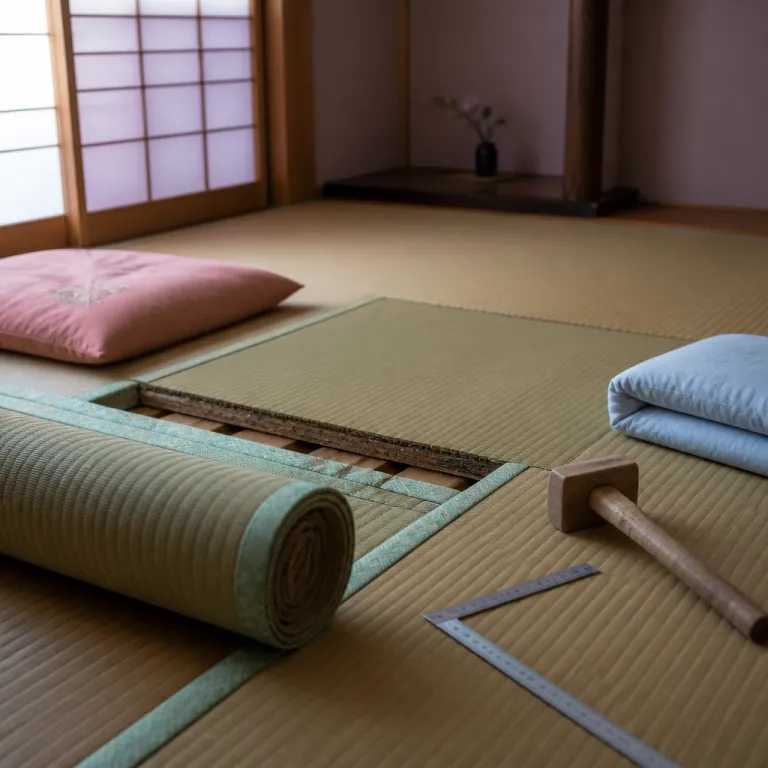
Washitsu floor covering and the quiet luxury of your stay
Washitsu floor covering shapes your first impression the moment you slide open the shoji. In a luxury ryokan, the way the tatami mats meet the wooden threshold, the way each mat surface feels under your bare feet, tells you more about the room than any amenity list ever could. A carefully built washitsu invites you to slow down, breathe deeply, and feel how traditional Japanese interiors were designed around the body.
In these refined rooms, every tatami mat is aligned in a precise pattern that respects long standing cultural rules. The standard tatami mat size of about 1.91 meters (roughly 0.955 m × 1.91 m for a full mat, as described by the Japanese Industrial Standards JIS A 9111:2006 for floor units) guides how the room is proportioned, how the futon mattress is laid out, and even where a low bed alternative might be placed for guests used to western homes. When a ryokan invests in premium tatami mats rather than a cheaper discount mat sale option, you feel it instantly in the spring of the floor and the calm, natural scent of woven rush.
Artisans weave rush grass over a core traditionally made from compressed rice straw, creating a resilient yet gentle floor surface. As one reference from the Agency for Cultural Affairs in Japan explains without embellishment, “a traditional Japanese floor mat made of woven rush grass and straw” (Agency for Cultural Affairs, Cultural Properties Database). That simple definition hides a sophisticated sleep system in which the floor, the futon, and the shoji screens work together to regulate temperature, absorb sound, and create a Japanese style sanctuary that feels both minimal and deeply warm.
How to read a tatami room before you unpack
When you enter a tatami room, pause for a moment before dropping your bags. Look at how the washitsu floor covering is laid out, how the tatami mats frame the low table, and how the shoji panels filter light across the mat edges. This quiet inspection tells you whether the inn treats its traditional Japanese rooms as a design centerpiece or just another modular room kit to be turned over quickly.
High end ryokan usually follow regular patterns that avoid crossing tatami corners in the center of the floor, a subtle sign of respect for classical layout rules documented in traditional design manuals such as the Shoin-zukuri plans (see, for example, architectural pattern books held by the National Diet Library). The best properties also keep the rush grass tightly woven, with no fraying at the seams and no soft spots where the rice straw core has collapsed under heavy beds or luggage. If you see folding tatami panels used to extend a space, check that they sit flush with the main mats so your futon mattress and your feet experience one continuous surface.
Lighting matters as much as layout in a washitsu. Soft light through shoji screens reveals the natural sheen of fresh tatami, while harsh ceiling fixtures can flatten the texture of the mats and make even premium tatami room designs feel regular and unremarkable. For a deeper guide to reading ma, shoji, and empty space before you unpack, many seasoned travelers rely on specialist advice from ryokan concierges or Japan travel writers about how to interpret a ryokan room layout, which helps you understand how the floor, walls, and openings work together as a single Japanese sleep environment.
Materials that define authentic washitsu floor covering
True washitsu floor covering begins with igusa, the rush used to create the visible face of tatami mats. In traditional Japanese craftsmanship, this rush grass is dried, sorted, and then woven tightly over a core of rice straw using specialized looms operated by experienced tatami artisans. The result is a mat that balances firmness and give, supporting a futon while remaining comfortable enough to sit or kneel on for long meals or tea ceremonies.
Luxury inns often specify higher grade woven rush with longer fibers and more consistent color, which creates a smoother surface and a more refined scent in the room. Some properties now use a hybrid construction where the core is built from modern materials for durability, while the top layer remains natural rush grass to preserve the tactile qualities that define Japanese homes. When you compare rooms, ask whether the tatami mats are fully natural or partially synthetic, because this choice affects both comfort and the long term price value of the stay.
In premium washitsu rooms, the floor works as part of a complete sleep system rather than as a simple covering. The futon mattress is chosen to match the resilience of the tatami mat, and the absence of a raised bed keeps your body closer to the warm, insulated floor surface. This integration of mat, futon, and shoji partitions is what allows Japanese style interiors to feel cool in summer, warm in winter, and quietly luxurious all year, even when compared with the thick carpets more common in western homes.
Price, value, and what luxury really means in a tatami room
When you browse a luxury booking website for traditional Japanese inns, the price differences between rooms can seem mysterious at first glance. Two washitsu rooms may look similar in photos, yet one commands a higher regular price while another appears as a limited price sale or special sale price. The key often lies under your feet, in the quality, age, and maintenance of the tatami mats that form the core of the washitsu floor covering.
Premium ryokan rarely cut corners by choosing the cheapest sale tatami options, because inferior mats flatten quickly and lose their natural scent, forcing more frequent mat sale replacements that disrupt guests. Surveys by regional tatami cooperatives in Kumamoto and Fukuoka, for example, suggest that high grade igusa mats in guest rooms are typically resurfaced every 3–5 years and fully replaced roughly every 8–12 years, depending on occupancy (see summaries published by the Kumamoto Prefectural Tatami Industry Cooperative and Fukuoka Tatami Industry Association). When a property lists a room kit as renovated, ask whether that renovation included full tatami mat replacement or only cosmetic updates to shoji and walls.
Some booking platforms now highlight tatami room specifications alongside bed type and view, which helps you compare value beyond the headline sale price. A room with a carefully maintained Japanese sleep system, fresh tatami mats, and a well balanced futon mattress often delivers better rest than a larger space with a western bed but tired flooring. In case studies shared by luxury ryokan such as Hoshinoya Kyoto and Gora Kadan in Japanese hospitality trade magazines, guests frequently rate upgraded washitsu rooms with new tatami as offering better sleep quality than more spacious western style suites at a similar price point.
Design choices that balance Japanese and western sleep preferences
Luxury inns increasingly welcome guests who love the aesthetics of a washitsu but hesitate about sleeping directly on the floor. Thoughtful properties respond by offering flexible sleep system options that respect traditional Japanese design while acknowledging habits formed in western homes. The most successful solutions keep the tatami mats as the primary floor covering and then layer comfort in reversible ways.
Some ryokan provide low platform beds placed directly on top of the tatami mat, using slatted bases that allow the woven rush and rice straw beneath to breathe. Others offer folding tatami panels that can be rearranged to create a raised zone for a futon mattress, giving a subtle sense of elevation without introducing a bulky western bed frame. In both cases, the goal is to preserve the continuous tatami surface so the room still reads as a true tatami room rather than a hybrid that feels neither fully Japanese nor fully western.
Designers also play with transitions between washitsu rooms and adjacent western style rooms within the same suite. A common layout pairs a tatami room for daytime relaxation with a separate bedroom that holds a conventional bed, allowing guests to choose each night whether to enjoy a Japanese sleep experience or a familiar mattress. When you evaluate room descriptions, look for clear explanations of how the floor, futon, and bed options interact, rather than vague references to Japanese style décor that might hide a compromised washitsu floor covering.
Adaptive reuse and the future of washitsu floor covering
One of the most intriguing developments in luxury hospitality is the adaptive reuse of historic buildings into high end inns. When former schools, merchant houses, or even prisons become ryokan, designers face the challenge of inserting authentic washitsu floor covering into structures originally built for very different purposes. The way they integrate tatami rooms into these spaces reveals how seriously they take traditional Japanese craft and how deeply they understand guest expectations.
In some converted properties, architects carve out a sequence of tatami rooms along one wing, using raised platforms to accommodate the thickness of tatami mats and the rice straw or modern cores beneath. They then use shoji or glass partitions to frame views of original brick or timber, creating a dialogue between traditional Japanese interiors and the building’s earlier life. A detailed case study of a former prison transformed into a luxury resort on Shikoku, published in a Japanese hospitality trade journal, shows how carefully planned tatami room layouts can coexist with heavy masonry walls while still delivering a refined Japanese sleep experience that feels coherent rather than staged.
For travelers, this trend means you can enjoy the scent of fresh rush grass and the resilience of a well built tatami mat in settings that once had entirely different functions. When you read property descriptions, look for explicit mentions of tatami mats, washitsu rooms, and the involvement of tatami artisans, not just generic references to Japanese style design. A future facing inn treats the washitsu floor covering as a central narrative element, using it to connect guests to centuries of Japanese homes while still meeting the comfort expectations of visitors from western homes.
Key figures about tatami and washitsu floor covering
- The standard tatami mat length of about 1.91 meters has shaped washitsu room proportions for centuries, influencing how many mats fit comfortably in both compact and spacious rooms; this dimension is reflected in modern Japanese Industrial Standards such as JIS A 9111 and in regional variants including Kyoto (about 0.955 m × 1.91 m), Nagoya (about 0.91 m × 1.82 m), and Fukuoka (about 0.88 m × 1.76 m) sizes.
- Traditional tatami construction uses a woven rush grass surface over a compressed rice straw core, a combination that provides both thermal insulation and cushioning without the need for thick carpets, as noted in technical materials published by the Japan Tatami Industry Association and regional tatami guilds.
- Luxury inns typically replace or resurface tatami mats on a multi year cycle, with high grade mats maintaining their resilience and color significantly longer than lower cost sale tatami options; industry interviews with ryokan owners in trade journals often cite 3–5 years for resurfacing and around a decade for full replacement in busy properties.
- In many high end ryokan, more than half of the guest rooms remain tatami rooms, reflecting sustained demand for authentic Japanese sleep experiences alongside western style bedrooms; surveys by regional tourism boards in Kyoto and Kanazawa report that 50–70% of rooms in traditional inns still feature tatami flooring and dedicated washitsu layouts.
FAQ about washitsu floor covering in luxury Japanese inns
What is a tatami mat and why does it matter for my stay ?
A tatami mat is a traditional Japanese floor mat made of woven rush grass over a core that is usually rice straw or a modern equivalent. In a luxury inn, high quality tatami mats provide gentle cushioning, regulate temperature, and contribute a subtle natural scent that defines the character of the room. The condition and grade of the tatami often distinguish a truly premium washitsu from a regular room with only superficial Japanese style décor.
How should I behave in a tatami room to avoid damage ?
Guests are expected to remove shoes before stepping onto tatami, because hard soles can crush the woven rush and mark the surface. Walking in socks or bare feet protects the mats and also lets you feel the texture of the washitsu floor covering more clearly. Avoid dragging luggage or heavy furniture across the floor, and never place sharp bed legs directly on the tatami without protective pads.
Are synthetic tatami mats acceptable in luxury properties ?
Some high end inns use tatami with synthetic cores or blended materials to improve durability and moisture resistance, especially in humid regions. As long as the visible surface remains high quality woven rush, many guests find the comfort comparable to fully natural rice straw construction. If you are sensitive to materials, you can ask the property whether the tatami mats in your room are fully natural or partially synthetic before booking.
Can I request a western bed in a washitsu room ?
Many luxury ryokan now offer flexible sleep system options, including low western beds placed on tatami or separate bedrooms with conventional mattresses. When a bed is added to a washitsu, careful properties use wide feet or protective boards so the tatami mats are not damaged by concentrated weight. If you prefer a futon mattress directly on the floor, you can usually request that the staff prepare the tatami room in a fully traditional Japanese way each evening.
How do I know if a washitsu is worth the higher price ?
A higher regular price for a washitsu is often justified when the property invests in fresh, high grade tatami mats, meticulous shoji maintenance, and a well matched futon mattress. Look for detailed room descriptions that mention tatami thickness, renovation dates, and whether artisans were involved, rather than vague references to Japanese style interiors. When a luxury inn offers a temporary price sale on such a room, it can be one of the best value upgrades on a premium booking website.
