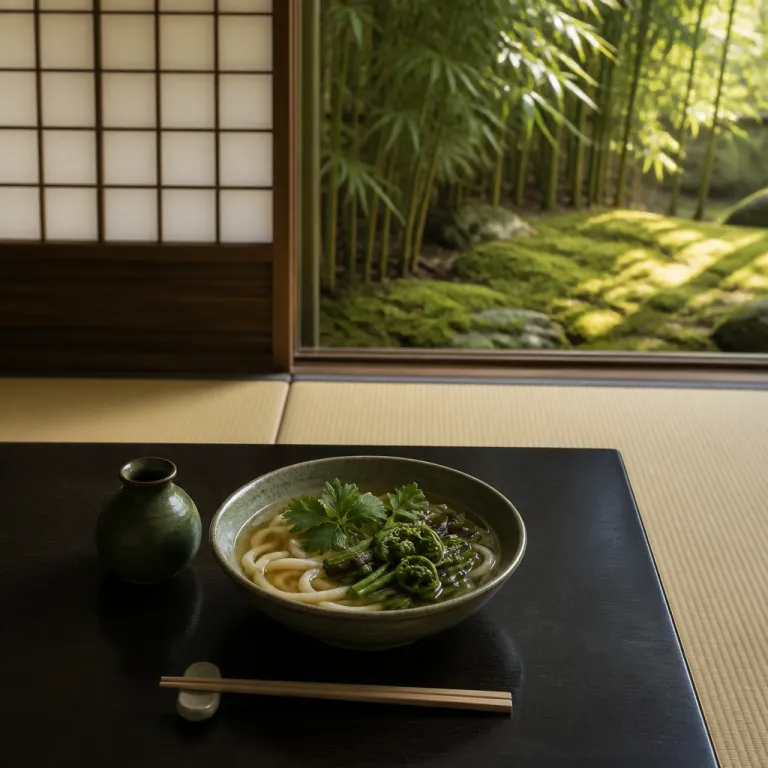
Sansai udon as the quiet star of luxury ryokan cuisine
In many luxury ryokans, the most memorable meal is often a humble bowl of sansai udon. This traditional Japanese noodle soup pairs thick udon noodles with wild mountain vegetables to create a dish that feels both rustic and refined. When you stay at a premium traditional inn, this single bowl can say more about the chef’s philosophy than an entire platter of sushi rolls.
Sansai udon is defined by its balance of textures and aromas, where tender noodles meet slightly crispy mountain vegetables and earthy mushrooms. The broth is usually a clear dashi made from fish and kombu or a delicate vegan stock based on kombu and soy sauce, and both versions highlight the natural sweetness of the vegetables rather than masking them. Many high end ryokans now offer both vegan and non vegan noodle soup options, allowing guests to find the best match for their dietary needs without sacrificing depth of flavor.
For travelers comparing menus filled with sushi, tempura, and ramen noodles, it can be easy to overlook a simple udon dish. Yet experienced guests often read reviews carefully to find fresh seasonal specialties such as sansai udon, because these bowls reveal how closely a property works with local farmers and foragers. When a ryokan proudly lists its soba noodles, udon noodles, and buckwheat noodles alongside seasonal sansai vegetables, as you might see at long established inns in Nagano or Yamagata, you can usually trust that the rest of the kaiseki style cuisine will be handled with equal care.
From mountain trail to ryokan table: how chefs source vegetables for sansai udon
Behind every excellent bowl of sansai udon stands a quiet network of growers, foragers, and noodle makers. Many countryside ryokans partner with local farmers who specialize in wild mountain vegetables, ensuring that the greens, shoots, and mushrooms arrive fresh each morning. This close relationship allows chefs to adjust the balance of noodles and vegetables daily, depending on what the mountain and weather provide.
In spring, you might find sansai udon garnished with tender shoots and young leaves, while autumn brings deeper flavors from forest mushrooms and heartier greens. The base broth can shift as well, with some kitchens favoring a light fish based dashi and others preparing a clean vegan broth that lets the vegetables shine even more clearly. Guests who pay attention to these seasonal changes often use them as a way to find best value in a stay, since a ryokan that respects seasonality in its noodle soup usually applies the same care to its grilled fish, miso soup, and even its sushi rolls.
Breakfast trays at high end inns often feature smaller noodle dishes that echo the evening meal, and you can learn a great deal about a property from this first service. When planning your stay, look for inns that highlight their morning tray traditions and explain how their soba noodle or udon soba offerings change with the seasons, as described in this guide to the ryokan breakfast that reveals the kitchen. A house that serves fresh soba or wheat noodles with carefully cut green onions and a precise dash of soy sauce at breakfast is very likely to serve an exceptional bowl of sansai udon at dinner.
Pairing sansai udon with sake and multi course kaiseki dinners
In luxury ryokans, sansai udon rarely appears alone; it usually forms one movement in a longer kaiseki style dinner. Chefs may serve a small bowl of udon noodles with sansai vegetables between courses of sashimi and grilled fish, using the gentle broth to reset your palate. This is where the contrast between rich sushi dishes and clean noodle soup becomes especially clear, and where thoughtful sake pairing makes a real difference.
Warm sake can emphasize the comforting side of a steaming bowl of sansai udon, while chilled sake highlights the herbal notes of the vegetables and the subtle sweetness of the wheat noodles. Many premium inns now train their staff to guide guests through these choices, explaining how a particular rice polishing ratio or serving temperature will interact with the broth, soy sauce seasoning, and even the slight bitterness of certain mountain greens. If you are curious about these nuances, consult resources on warm versus cold sake in luxury ryokans before you book, then ask the sommelier to align your sake flight with the noodle course.
Some properties also weave soba noodles and buckwheat noodles into the same meal, offering a trio of textures that moves from firm soba to supple udon and finally to delicate ramen noodles in a lighter soup. When you read guest reviews, pay attention to how diners describe the pacing of these dishes and whether the kitchen uses a single fish broth for every course or varies between miso soup, clear noodle soup, and richer stocks. A ryokan that can handle sushi rolls, grilled river fish, and multiple noodle preparations with equal precision is usually a safe place to reserve a multi night stay focused on gastronomy.
Designing a ryokan stay around sansai udon and regional noodles
Travelers who care deeply about food increasingly plan their itineraries around specific dishes, and sansai udon is an ideal anchor for such a trip. Mountain regions in Japan are especially known for this style of noodle soup, where chefs combine udon noodles with foraged vegetables that reflect the local terrain. When you search for a luxury inn, use filters and map views to find properties near trailheads, hot springs, and farming villages, since these locations often support the best kitchens.
Many booking platforms now allow you to sort by culinary focus, so you can find fresh interpretations of classic dishes such as soba, sushi, and udon in just a few clicks. Look for descriptions that mention sansai Japanese ingredients, detailed explanations of the broth, and clear references to noodles vegetables combinations rather than generic statements about serving Japanese food. When a property takes the time to explain whether it uses fish broth, vegan broth, or both in its noodle dishes, you can be confident that the kitchen understands how to balance flavor, texture, and dietary preferences.
Hot spring access also shapes the rhythm of your meals, since many guests enjoy a bowl of sansai udon after a long soak in an outdoor bath. For inspiration, consult guides to open air bath celebrations worth the trip, then look for ryokans that pair these baths with strong culinary reputations. A stay that combines rotenburo bathing, carefully prepared noodle soup, and seasonal sushi rolls will feel far more cohesive than one where the onsen and the dining room seem unrelated.
How to read menus and reviews to find the best sansai udon
When you browse menus online, the language around noodles can be surprisingly revealing. A serious kitchen will specify whether it serves soba noodles made from local buckwheat, hand cut udon noodles, or factory produced wheat noodles, and this transparency usually extends to how they handle sansai vegetables. Phrases such as fresh soba, house made udon, or hand selected mushrooms suggest a level of care that should translate into a memorable bowl of sansai udon.
Guest reviews are equally important, especially for travelers who want to find best value in a high nightly rate. Look for comments that mention the clarity of the broth, the fragrance of the green onions, and the texture of the noodles rather than generic praise for Japanese food. When multiple guests describe the noodle soup as balanced, note whether they mention a fish based broth, a lighter vegan broth, or a miso soup variation, since this will help you choose between properties if you have specific dietary needs.
Some travelers even keep personal notes on where they find fresh mountain vegetables or the most satisfying combination of noodles vegetables in a single dish. If you are sensitive to salt, pay attention to how often soy sauce is mentioned in reviews, and consider asking the ryokan to season your sansai udon more lightly. Remember that you are not only choosing where to sleep; you are effectively deciding where to invest in a complete culinary experience that includes sushi, ramen noodles, and multiple noodle soup preparations.
Global influences, vegan options, and the future of sansai udon in luxury inns
As Japanese cuisine spreads worldwide, luxury ryokans are quietly responding to new expectations from international guests. Travelers from California and other food focused regions often arrive with a deep interest in vegan and vegetarian cooking, and they look for noodle dishes that highlight vegetables rather than meat. Sansai udon fits this demand naturally, since it is traditionally built around mountain greens, mushrooms, and a broth that can easily be prepared without animal products.
Many high end inns now offer parallel versions of the same dish, serving one bowl of sansai udon in a clear fish based broth and another in a carefully layered vegan broth. The toppings may include crispy vegetable tempura, finely sliced green onions, and a mix of noodles vegetables that combine both wheat noodles and buckwheat noodles for contrast. Guests who usually order sushi rolls or ramen noodles in city restaurants often find that this quieter, plant forward noodle soup becomes the highlight of their stay.
Some chefs experiment with regional twists, such as adding local herbs or adjusting the thickness of the noodle to echo nearby soba traditions. Others play with temperature, serving a warm bowl after an evening bath and a chilled version at lunch, always keeping the focus on the quality of the vegetables and the integrity of the broth. As interest in traditional dishes grows, one guidance from the expert dataset remains relevant for travelers planning their stays: “What is sansai udon? A Japanese noodle dish with wild mountain vegetables.”
Key figures and nutritional insights for sansai udon in ryokans
- A typical serving of sansai udon contains around 300 kilocalories per bowl, which makes it lighter than many deep fried dishes while still providing enough energy after a long soak in the hot springs (estimated nutritional information from the dataset and comparable values in the Standard Tables of Food Composition in Japan, 2020 edition).
- Each serving offers approximately 10 grams of protein, mainly from the wheat noodles, buckwheat noodles if included, and any tofu or egg toppings, which helps balance the carbohydrates in the noodle soup (estimated nutritional information from the dataset and general Japanese diet studies such as the National Health and Nutrition Survey).
- Because sansai udon is centered on vegetables and mushrooms, the dish usually delivers a higher fiber content than plain udon or soba noodles served without toppings, supporting digestion during multi course kaiseki dinners (general nutritional comparison based on Japanese diet studies and government health guidance).
- Luxury ryokans that highlight local produce in dishes such as sansai udon often report higher guest satisfaction scores in culinary reviews, reflecting the growing interest in seasonal Japanese cuisine among international travelers (trend noted across Japanese tourism and hospitality reports and regional visitor surveys).
FAQ about sansai udon in luxury and premium traditional inns
What is sansai udon in the context of a luxury ryokan stay?
Sansai udon is a Japanese noodle dish that combines thick udon noodles with wild mountain vegetables in a light broth, often served as part of a multi course kaiseki dinner in traditional inns. In luxury ryokans, the quality of the vegetables, mushrooms, and broth is usually very high, reflecting close relationships with local farmers and foragers. This makes the dish a reliable indicator of the overall standard of the kitchen.
Is sansai udon usually vegetarian or vegan in premium inns?
Many traditional recipes use a fish based dashi broth, so the dish is often not suitable for strict vegetarians or vegans by default. However, an increasing number of luxury ryokans now offer a vegan broth version, allowing guests to enjoy the same noodles and vegetables without animal products. When booking, you should contact the property in advance to confirm whether they can prepare a fully vegan noodle soup.
Where can I try authentic sansai udon during a trip to Japan?
Authentic sansai udon is most common in mountainous regions, where wild vegetables are abundant and local cuisine emphasizes seasonal produce. You can find the dish in many Japanese restaurants, but luxury ryokans in rural areas often serve the most refined versions, especially during spring and autumn. When planning your itinerary, look for inns that highlight regional noodles and vegetables in their dining descriptions.
How does sansai udon compare to soba or ramen noodles in a ryokan menu?
Soba noodles, made from buckwheat, usually offer a firmer texture and nuttier flavor, while ramen noodles are often paired with richer, heavier broths. Sansai udon sits between these extremes, combining soft wheat noodles with a lighter broth and a generous amount of vegetables and mushrooms. In a luxury ryokan, choosing between these dishes depends on whether you prefer a delicate, vegetable forward bowl or a more robust, meat focused soup.
What should I look for in reviews when choosing a ryokan for its sansai udon?
When reading reviews, focus on comments about the clarity and depth of the broth, the freshness of the vegetables, and the texture of the noodles. Mentions of hand made udon noodles, carefully prepared vegan broth, or seasonal mountain vegetables are strong positive signs. Consistent praise for the noodle soup usually indicates that the ryokan takes its entire culinary program seriously.
