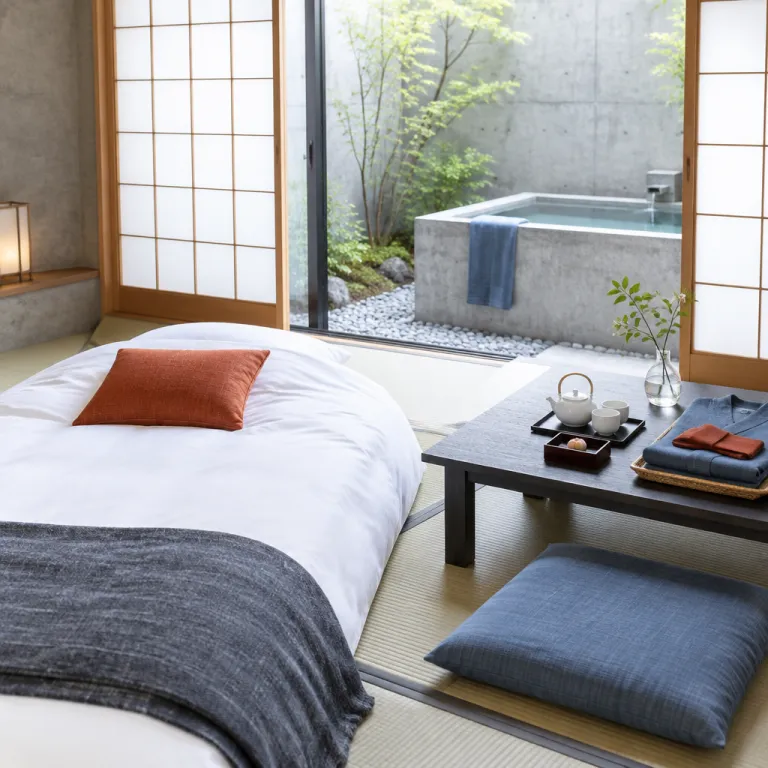
What defines a five room ryokan in Japan
A genuinely small intimate ryokan Japan boutique style property usually runs between three and seven rooms. In this micro scale, the ryokan is often owner operated, and the okami or host family lives on site and treats the building less like one of many hotels and more like an extended home. That shift in scale changes the entire ryokan experience, from how you are greeted at the entrance to how quietly the tatami corridors absorb sound at night.
In these traditional Japanese inns, every room is a meaningful unit of revenue, so prices are calculated with precision rather than volume discounts. With only a handful of rooms, the economics depend on guests choosing half board plans that include a multi course kaiseki dinner and a carefully prepared Japanese breakfast, often served in rooms private or in a small dining salon. Many of these ryokans offer just one shared onsen zone, sometimes with a single open air bath carved from stone, which keeps maintenance focused and the hot spring water quality high.
Architecture in this format leans toward intimacy rather than spectacle, and the image is closer to a refined country house than to urban boutique hotels. You might find a compact moss garden instead of a grand lobby, or a single corridor of tatami rooms facing a stream in rural Kyoto Japan rather than a maze of floors. For couples, this traditional scale in Japan feels immediately personal, because the distance between your futon, the hot springs and the kitchen is measured in steps, not elevator rides.
The service difference when everyone knows your name
Service at a five room ryokan in Japan is built on recognition rather than scripts. By the time you complete your booking, the team has usually noted your arrival time, dietary needs and whether you prefer Japanese style futon or a more western style bed. When you arrive, the okami or a senior nakai often welcomes you by name, pours green tea in the lounge and quietly confirms details you shared earlier.
This is where a small intimate ryokan Japan boutique style stay diverges sharply from larger hotels. With so few rooms, the same staff member may guide you to the onsen, serve your miso soup at breakfast and adjust your private dinner timing if you linger in the hot spring longer than planned. Allergies or preferences are handled in real time, so if you mention at dinner that you loved the local river fish, the next evening’s multi course menu might feature a different preparation of the same catch.
Bathing rituals also feel more personal, especially when there is a private onsen that couples can reserve by the hour. Some properties offer an open air air bath on a terrace, while others keep the spring baths indoors but add large windows that frame the garden like a living image. For travelers who care about onsen culture, planning a stay around events such as Japan’s open air bath day, which many hot springs celebrate with special rotenburo experiences, can add another layer of meaning to the ryokan experience, and resources like this guide to open air bath celebrations help you choose the right town.
How tiny kitchens shape the ryokan dining experience
In a micro ryokan, the kitchen is usually just a few steps from the tatami rooms, and you can often sense the rhythm of service as the multi course kaiseki unfolds. With only five rooms, the chef can watch how each couple eats, adjusting portion sizes or seasoning for the next meal without needing a formal feedback form. This proximity turns dinner into a dialogue rather than a fixed performance.
Traditional Japanese kaiseki in such ryokans often leans heavily on local produce and river or sea fish, because the team can shop in small quantities each morning. If you stay several nights, the menu rarely repeats, and the chef might design a special Japanese style hot pot one evening after hearing you talk about cold weather hot springs that you loved in northern Japan. Guides to quieter onsen towns, such as this overview of Tohoku’s least visited hot spring villages, are invaluable when you want that combination of serious cuisine and silence.
Breakfast follows the same pattern of attention, with trays laid out in your room or a small dining area, featuring grilled fish, miso soup, rice, pickles and green tea alongside occasional western style touches like eggs or yogurt. Because ryokans offer both Japanese breakfast and lighter options, couples can negotiate their own balance between tradition and comfort each morning. Over several days, this evolving meal pattern becomes one of the most memorable parts of the experience ryokan guests talk about long after they leave Kyoto Japan or the countryside.
The architecture of intimacy and the onsen layout
Space planning in a five room ryokan is an exercise in restraint, and every square metre must work hard. Instead of multiple lounges, you might find one shared salon with low sofas, a few art books and a single large window framing the garden, which becomes the property’s signature image. Corridors are short, ceilings often low, and the result is a sense of calm density rather than emptiness.
Bathing areas follow the same principle, with one or two compact hot spring zones rather than a sprawling spa complex. Many micro ryokans in Kyoto and across Japan rely on a single gender separated onsen plus one private onsen that couples can reserve, sometimes with an open air bath that looks over a bamboo grove or tiled rooftops. The focus is on water quality and atmosphere, not on the number of spring baths or the size of the locker room.
Some properties, such as Nazuna Kyoto in Kyoto Japan, reinterpret the traditional Japanese townhouse layout by turning former machiya into a cluster of rooms private to each couple, often with their own semi open air hot springs. Others, like certain refined mountain stays in Hakone’s onsen heights highlighted in this guide to a mountain ryokan with serious hot spring credentials, use tiered architecture to give each room a different angle on the valley. In both cases, the architecture of intimacy means you feel the building’s bones as you move from your room to the baths and back again, rather than losing yourself in anonymous hotel corridors.
Booking strategy, prices and who micro ryokan stays suit
Securing a stay at a small intimate ryokan Japan boutique style property requires more planning than booking a standard hotel. With only five rooms, there are literally five chances on any given night, and repeat guests often reserve the same room and the same time of year far in advance. Cancellation policies tend to be strict, because a single last minute change can erase a significant share of the month’s revenue.
Prices at these ryokans reflect both the intimacy and the all inclusive nature of the stay, usually bundling dinner, Japanese breakfast and access to the onsen or hot springs into one per person rate. When you compare rooms across different ryokans, pay attention to whether you have a private onsen, an open air air bath or shared spring baths only, because that detail often explains the gap between two similar looking prices. Reading the fine print of what ryokans offer, from western style beds to fully traditional Japanese style futon, helps you avoid surprises and ensures the room matches your expectations.
This format suits couples who value quiet, ritual and a sense of being known, as well as solo travelers who want connection without the bustle of larger hotels. Families needing space or flexible meal times may find the structure of a classic ryokan experience too rigid, especially when dinner is served at a fixed time in your room or a small dining area. For those who do choose this path, the reward is a stay where the staff remember how you take your green tea, adjust the multi course menu after the first night and make your limited time in Japan feel less like a transaction and more like a relationship.
FAQ
What makes a five room ryokan different from a small hotel
A five room ryokan in Japan is usually owner operated, with the okami or host family living on site and overseeing every detail from the onsen schedule to the multi course dinner. Unlike small hotels, these traditional Japanese inns typically include kaiseki dinner and Japanese breakfast in the rate, and the focus is on ritual, tatami rooms and hot spring bathing rather than amenities like bars or gyms. The result is a slower, more personal rhythm where staff know each guest by name and preference.
How far in advance should I book a micro ryokan
Because there are only a few rooms, booking a small intimate ryokan Japan boutique style property often requires planning several months ahead, especially in Kyoto Japan during peak seasons. Repeat guests frequently reserve the same room and dates each year, which reduces availability for first timers. If your dates are fixed, secure your booking as early as possible and be prepared for stricter cancellation policies than at larger hotels.
Are private onsen baths common in five room ryokans
Many micro ryokans offer at least one private onsen that couples or solo travelers can reserve, even if most bathing takes place in shared hot springs. Some rooms private to each couple may feature an open air bath on a terrace, while others provide indoor spring baths with large windows facing a garden. When comparing prices, always check whether your room includes a private onsen or whether you will share the main baths on a rotating schedule.
Can dietary restrictions be accommodated at such small properties
One advantage of the tiny scale is that the kitchen can usually adapt the multi course kaiseki dinner and Japanese breakfast to many dietary needs, provided you share them clearly at booking time. With only a handful of guests, the chef can adjust miso soup stock, swap proteins or add more vegetable dishes without disrupting service. That said, extremely complex requirements may be difficult in very traditional kitchens, so clear communication before you confirm your room is essential.
Is a five room ryokan suitable for families with children
These properties are designed primarily for couples and quiet travelers, and the structure of the ryokan experience, with fixed dinner times and silent onsen areas, can be challenging for young children. Some ryokans accept families in specific rooms or on certain dates, but many prefer to keep the atmosphere calm for all guests. If you are traveling with children, look for larger ryokans or hotels that blend Japanese style rooms with more flexible facilities.
Sources
Japan National Tourism Organization (JNTO) ; Japan Ryokan & Hotel Association ; Kyoto City Tourism Association.