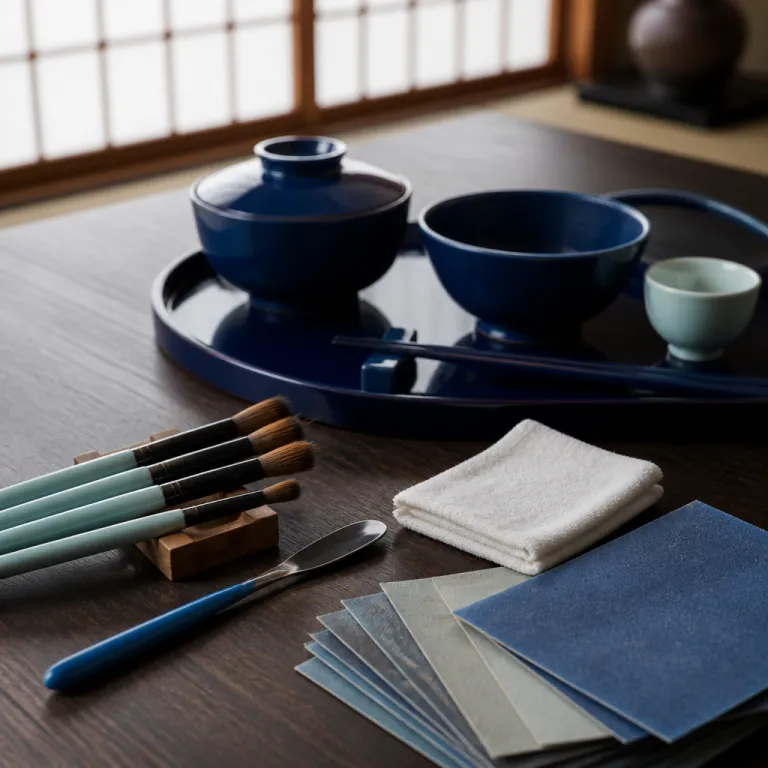
Ryokan lacquerware craft in Japan dining: why the vessels matter
At a serious ryokan, the first thing to check is not the view but the lacquerware resting on your tatami side table. The main ryokan lacquerware craft Japan dining experience begins long before the first bite, because every piece of lacquer, wood and urushi on the tray signals how seriously this house takes traditional culture and hospitality. In the best restaurants and ryokan, the bowls, trays and covered dishes are treated as works of art, not props.
Urushi lacquerware is made from the sap of the Japanese lacquer tree, applied in dozens of whisper thin layers over carved wood cores. This traditional production process can stretch across many months, with each layer of lacquer cured in a humid chamber, then polished back before the next is brushed on by a local artisan who often specialises in a single stage of the craft. When you sit down to kaiseki in a traditional Japanese room, you are meeting not only the chef but an invisible team of crafts specialists whose works of art frame every course.
In this article, we focus on how to read those vessels so your ryokan lacquerware craft Japan dining experience becomes richer and more intentional. You will see how traditional crafts from Ishikawa Prefecture, Aomori and Fukushima appear on the tray, and how to recognise the difference between genuine Japanese lacquerware and cheaper synthetics. We will also look at how to talk with your nakai san about the art on the table without derailing the meal, so your curiosity supports rather than distracts from the flow of traditional Japanese service.
What urushi lacquerware is and how it reaches your kaiseki tray
Urushi is the refined sap of the Japanese lacquer tree, tapped in small quantities and filtered until it becomes a honey like liquid that hardens into a glassy skin. In serious Japanese craft workshops, this urushi is brushed over wood, fabric or paper cores in many ultra thin coats, building a resilient surface that resists heat, moisture and time in a way that synthetic lacquer cannot match. When you lift a soup bowl in a quiet yamanaka onsen dining room, you are holding the result of a production process that may have involved more than thirty separate applications.
The traditional crafts of Ishikawa Prefecture are a good lens for understanding this production process in detail. In Wajima lacquerware studios, for example, local artisans reinforce the wood base with layers of cloth and urushi before the visible lacquerware traditional surface is even started, which makes wajima nuri famous for durability in both singular masterpiece bowls and everyday pieces. Echizen lacquerware, produced further west, tends to favour a slightly lighter build and a different balance between colour and texture, yet both traditions share the same respect for traditional craft and Japanese culture at the table.
From a guest perspective, the key is to recognise that each piece on your tray represents a chain of crafts decisions. The thickness of the rim, the depth of the red or black lacquer, the presence of gold leaf or subtle gold silver dusting, all tell you how the artisan imagined the final dining experience. When a ryokan invests in this level of Japanese lacquerware, it signals that the property sees kaiseki not as a show but as a living expression of traditional Japanese culture and local identity.
Regional lacquerware traditions you will meet at ryokan tables
Different onsen towns and coastal regions in Japan have distinct lacquerware traditions, and a thoughtful ryokan will quietly showcase its local craft on the tray. In Ishikawa Prefecture, wajima nuri is the reference point, with deep black or vermilion lacquerware traditional bowls often carrying a whisper of gold leaf or shell inlay that catches candlelight during dinner. When a property in Wajima or nearby Noto serves soup in heavy, perfectly balanced wajima lacquerware, you feel the weight of both wood and history in your hands.
Travel east and you may encounter Tsugaru nuri in Aomori, where the production process involves layering multiple colours of lacquer, then polishing back to reveal a mottled, almost geological surface that feels closer to abstract art than tableware. In Fukushima, Aizu nuri often combines strong colour with restrained decoration, creating Japanese style vessels that frame mountain vegetables and river fish with quiet confidence rather than glitter. For a deeper dive into how ceramics and lacquer signal place, the piece on how a ryokan’s ceramics tell you where you are pairs well with this focus on lacquer.
Back in Ishikawa, Echizen lacquerware and pieces sourced from yamanaka onsen workshops often appear together in the same dining room, each bringing a slightly different reading of traditional culture to the table. Some restaurants and ryokan commission custom works of art from a single local artisan, while others curate mixed sets of Japanese craft from across the region to match seasonal menus. As a guest, paying attention to these regional signals turns your ryokan lacquerware craft Japan dining experience into an informal series of culture tours, one course and one bowl at a time.
How to tell genuine urushi from synthetics at the table
When you sit down to kaiseki, one of the quiet pleasures is testing your eye and hand against the lacquerware in front of you. Genuine urushi coated wood has a warmth and depth that plastic or synthetic lacquer cannot fake, and learning to check for these details adds another layer to your traditional Japanese dining experience. You do not need to be an expert in Japanese craft to start, only attentive to weight, temperature and the way light moves across the surface.
Lift a soup bowl gently and notice the balance between the lid and the base, because real Japanese lacquerware over carved wood feels light yet substantial, never hollow or aggressively glossy. Run a fingertip along the rim, where traditional crafts often reveal themselves in a soft, almost rounded edge rather than a sharp mould line, and watch how reflections on the lacquer shift subtly rather than bouncing back like a mirror. If you see tiny irregularities in the surface or in the gold leaf or gold silver maki e decoration, that is usually a sign of handwork rather than mass production, and it means a local artisan has left a quiet signature in your hand.
Synthetic pieces tend to feel colder at first touch and maintain a uniform, slightly lifeless shine, especially under bright restaurant lighting. In contrast, urushi lacquerware traditional bowls often show minute variations in colour density, where the production process has built up layers that catch light differently at the shoulder and base. Once you start noticing these cues, your ryokan lacquerware craft Japan dining experience becomes a kind of informal workshop in traditional craft, one that rewards curiosity without requiring any formal tours or studio visits.
Seasonal logic and the language of shapes on the kaiseki tray
Kaiseki is often described as a seasonal conversation, and lacquerware is one of its most eloquent speakers. The shape, colour and decoration of each piece are chosen to echo the moment outside your shoji screens, so the works of art on the tray become a parallel narrative to the food itself. When a traditional Japanese inn gets this right, the entire meal feels like a guided walk through local culture and landscape.
In spring, you might see pale red or soft gold leaf accents on shallow hira plates, carrying sashimi arranged like petals, while summer brings cooler black lacquer bowls with crisp lines that frame chilled dishes and river fish. Autumn often leans into deeper reds and browns, with lacquerware traditional trays in wood tones that mirror fallen leaves, and winter may introduce heavier lidded bowls designed to hold heat, sometimes dusted with gold silver to suggest frost or starlight. The production process behind these seasonal sets is long, so what appears on your tray tonight was likely planned many months ago in collaboration between chef and artisan.
Shape carries its own grammar in Japanese culture, and learning a few basic forms will sharpen your ryokan lacquerware craft Japan dining experience. Wan refers to deep bowls, often used for soup or nimono, while hira plates are flatter and better suited to sashimi or grilled courses, and small covered bowls signal something delicate or aromatic that should be revealed at the right moment. For a sense of how this attention to objects extends beyond lacquer to the entire room, the piece on Tobe ware artisans and the luxury ryokan stay shows how ceramics and lacquerware together express traditional culture in a Japanese style setting.
The economics of a single bowl and what it tells you about the ryokan
Behind every refined soup course at a high level ryokan sits an economic story written in urushi and wood. A single hand made bowl in wajima nuri or Echizen lacquerware can take months to complete, from carving the wood core to the final polishing of the lacquer surface, and that time is baked into the room rate you pay. When a property chooses to serve multi course kaiseki on such pieces, it is making a clear statement about its priorities and its relationship with local artisans.
In Ishikawa Prefecture, for example, the traditional craft ecosystem around wajima lacquerware depends heavily on orders from restaurants and ryokan that are willing to invest in durable, repairable pieces rather than disposable tableware. The production process is labour intensive, with different specialists handling wood turning, urushi application, decoration with gold leaf or gold silver powder, and final inspection, so each bowl represents an entire network of Japanese craft skills. When you see a full tray of such lacquerware traditional works of art, you are looking at a quiet ledger of time, training and cultural continuity.
For travellers using a curated booking platform, this is where property selection becomes meaningful. A ryokan that partners with local artisans for its Japanese lacquerware, ceramics and textiles usually also excels at the subtler aspects of omotenashi, the kind described in depth in the guide to what omotenashi really looks like. When a house cares enough to commission custom bowls and trays that reflect Japanese culture and traditional crafts, it tends to care about how your futon is laid out, how your dietary notes are handled and how your entire ryokan lacquerware craft Japan dining experience fits into the wider story of the region.
How to talk about the lacquerware with your nakai san
Curiosity is welcome at most serious inns, but timing and tone matter when you want to ask about the lacquerware on your tray. The nakai san, your room attendant, is balancing service choreography with the kitchen’s rhythm, so the best moment to check details about a particular bowl or tray is usually between courses rather than as a dish is being placed. A simple, focused question about whether a piece is wajima lacquerware, Echizen lacquerware or from a yamanaka onsen workshop often opens the door to a richer conversation about local culture and traditional crafts.
Start with what you notice, perhaps the warmth of the wood through the urushi, the way the gold leaf catches candlelight or the unusual Japanese style of a lid, and then invite a short explanation. Many nakai san take pride in being able to point out which works of art come from which local artisan, and which pieces are reserved for particular seasons or festivals in Japanese culture. If the dining pace is fast, you can always ask to continue the conversation after the meal, or request information about studio visits or small culture tours that focus on traditional craft in the area.
For solo travellers, this kind of exchange often becomes a highlight of the stay, because it turns a private meal into a shared experience rooted in place. You begin to see how the production process behind each piece of Japanese lacquerware is intertwined with the life of the town, from Ishikawa Prefecture fishing ports to mountain hamlets that supply wood and urushi. By the time you check out, the bowls and trays at other properties will feel different, because you will read them not as anonymous tableware but as quiet signatures of the ryokan’s values and its commitment to sustaining traditional Japanese culture.
Key figures behind lacquerware at the ryokan table
- Urushi tapping yields only around 200 millilitres of usable lacquer per tree each year, according to data from the Japan Urushi Association, which explains why genuine Japanese lacquerware remains relatively rare and costly.
- Wajima lacquerware production involves more than 120 distinct steps from raw wood to finished bowl, based on figures published by the Wajima Lacquerware Cooperative, highlighting the complexity behind each piece on a ryokan tray.
- Domestic urushi accounts for less than 5 percent of lacquer used in Japan, with the rest imported, according to the Agency for Cultural Affairs, which makes ryokan that specify local urushi significant supporters of traditional craft.
- In Ishikawa Prefecture, traditional crafts including wajima nuri and Echizen lacquerware contribute billions of yen annually to the regional economy, as reported by the Ishikawa Prefectural Government, tying your dining experience directly to local livelihoods.
- Specialised lacquerware tours and studio visits in regions such as Wajima and yamanaka onsen typically limit groups to fewer than ten guests, according to regional tourism boards, to protect workshops and maintain authentic interaction with artisans.
FAQ about lacquerware at the ryokan table
How can I quickly tell if a ryokan bowl is real urushi lacquerware ?
Genuine urushi coated wood usually feels warm and softly textured to the touch, with a depth of colour that changes subtly under different light. Synthetic lacquer or plastic tends to feel colder and shows a uniform, almost glassy shine without variation. Weight is another clue, because real Japanese lacquerware over carved wood feels light yet substantial rather than heavy or hollow.
Why do some ryokan charge more but serve kaiseki on very simple looking bowls ?
Minimalist looking lacquerware can still be extremely valuable if it is made through a traditional production process such as wajima nuri or Echizen lacquerware. The cost lies in the time, materials and skills of multiple artisans, not in flashy decoration or obvious gold leaf. High end properties often prefer understated works of art that support the food and reflect traditional Japanese aesthetics.
Is it acceptable to pick up lacquerware bowls and drink directly from them ?
In Japanese culture, it is normal and polite to lift certain bowls, especially soup bowls or small wan, and drink directly from them. The key is to handle the lacquerware gently with both hands when possible and avoid clinking lids or stacking pieces. If you are unsure, watch how locals behave or quietly ask your nakai san for guidance.
Can I buy similar lacquerware near my ryokan and ship it home ?
Many onsen towns and cities in Ishikawa Prefecture, Aomori and Fukushima have galleries or co operative shops that sell local Japanese craft, including wajima lacquerware and Echizen lacquerware. Staff can usually arrange international shipping, especially for higher value works of art, though lead times may be long for made to order pieces. Ask your ryokan to recommend trusted local artisans or shops that align with the quality of what you see on the dining tray.
Do lacquerware pieces at ryokan require special care if I buy them ?
Yes, urushi lacquerware should be washed by hand with lukewarm water and mild soap, then dried immediately with a soft cloth. Avoid dishwashers, microwaves and prolonged soaking, which can damage both the lacquer and the wood core. If you follow these guidelines, well made traditional crafts can last for decades and carry your ryokan memories back home.