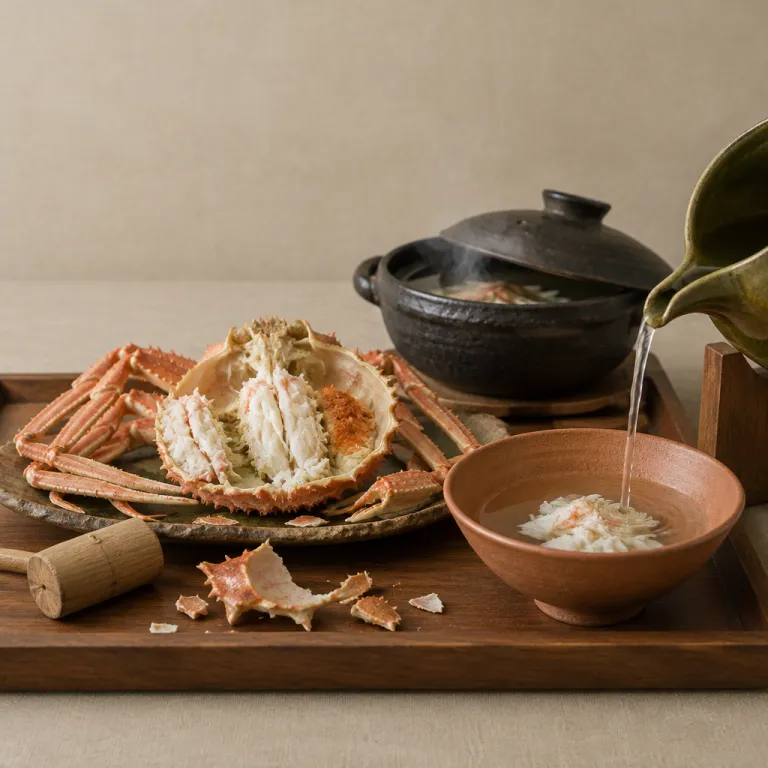
Why the matsuba crab kaiseki ryokan season is winter’s quiet luxury window
The matsuba crab kaiseki ryokan season along the Sea of Japan is the most strategic moment to book a coastal stay. From 7 November to 31 March, male snow crab from Tsuiyama Port and neighboring harbors defines dinner in Kinosaki Onsen, yet early and late weeks remain surprisingly good value. For couples who time their trip between early November and late March, the same full course that Tokyo restaurants price far higher becomes an intimate, slow evening in a tatami room with onsen access.
Think of it as a seasonal arbitrage between air temperature, snow probability and demand curves for crab season. Early November offers lively seafood markets and crisp air without deep snow, while late March brings softer light, quieter streets and the last matsuba crab before the fishing ban returns. In between, New Year and February weekends in this small town see crab plans at established ryokan such as Nishimuraya Honkan jump from around 15,000 yen per person to more than 30,000 yen per person, and the best suite room categories sell out months ahead.
For a couple, that price gap changes the entire stay, from the category of room you can reserve to how many nights you can linger in Kinosaki. Book a garden view room on the second floor in November or March and you may secure a private open air bath, while the same room open to peak dates will already be gone. The matsuba crab kaiseki ryokan season is therefore less about chasing the single snowiest night and more about choosing the time when persons, price and plate align in your favor.
What a matsuba crab kaiseki full course really includes
When a ryokan advertises a matsuba crab kaiseki full course, it promises a structured progression of textures and temperatures, not just a large shell on a tray. The meal usually begins with snow crab sashimi, legs cut so the translucent flesh can be lifted straight from the shell, followed by lightly steamed sections that highlight the sweetness of matsuba gani. As the kaiseki unfolds, you move from grilled crab to hot pot, then to zosui rice cooked in the final broth, a sequence that rewards couples who take their time and eat slowly.
In Kinosaki Onsen, many properties pair matsuba crab with Tajima beef, the local wagyu lineage that later supplies Kobe, so one dinner can showcase both seafood and meat. A typical course might place a small Tajima beef steak beside grilled matsuba crab, allowing you to compare the richness of marbled beef with the clean salinity of the Sea of Japan. By the time kani miso, the prized paste inside the shell, appears alongside sake, you understand why leg spans reaching about 70 centimeters are less impressive than the concentrated flavor hidden in the carapace.
Some ryokan in town, including long established houses like Nishimuraya Honkan, offer several crab plans per season, from a focused matsuba gani menu to mixed seafood kaiseki that also feature other catch from Tsuiyama Port. Couples should read the plan descriptions carefully, because the difference between a standard dinner and a premium full course can be an extra grilled snow crab, a larger portion of sashimi or an additional hot pot. For travelers who care about culinary detail, this is where a specialist booking site earns its keep, translating plan names, clarifying how many persons each room and course combination suits and explaining why one restaurant style dining room may feel more intimate than another.
For more context on how refined, multi course seafood experiences shape luxury stays in Japan, see this guide to why precise sashimi style service matters at high end inns. It helps frame matsuba crab kaiseki as part of a broader culture of timing, knife work and pacing rather than a single seasonal spectacle. Understanding that culture makes it easier to judge whether a crab dinner feels like true omotenashi or a costume designed only for photos.
Onsen towns, winter air and how the bath completes the meal
Eating matsuba crab in Kinosaki without stepping into an onsen would be like ordering a full course and skipping the final rice, technically possible but emotionally incomplete. The town grew around hot springs and the Sea of Japan, and the rhythm of the matsuba crab kaiseki ryokan season follows both the fishing boats and the bathhouse lanterns. You arrive in the late afternoon, check into your room, change into yukata, then walk through the cold air to one of the seven public baths before returning for dinner.
That contrast between icy streets and steaming water is what makes winter here feel cinematic, especially when snow begins to fall on the canal that cuts through town. Some ryokan offer private open air baths attached to a suite, where two persons can soak while watching steam rise into the night, the sound of the river replacing city noise. Others reserve an indoor air bath with a small room garden, so you can slide a shoji open and feel the outside air on your face while your body stays submerged.
For couples, the most romantic pattern is often an early evening circuit of Kinosaki Onsen’s public baths, a little tabe aruki street snacking between them, then a long crab dinner back at the ryokan. After the meal, a final soak in your room open air bath or the house onsen helps your body process both seafood and sake, and you sleep under futon while staff quietly reset the suite room for breakfast. To understand how ryokan communicate through timing, placement and silence rather than language, this piece on non verbal hospitality in Japanese inns is essential reading before you book.
Pairing crab with sake is another layer of the experience, and serious properties curate their lists with the same care they apply to seafood sourcing. A focused primer on the kinds of sake served in luxury ryokan will help you choose bottles that flatter both matsuba crab and Tajima beef. Dry, mineral driven labels tend to lift the sweetness of snow crab, while richer styles can echo the depth of kani miso and other umami heavy dishes in the kaiseki sequence.
Booking strategy: how to secure the right room and crab plan
Securing the best value during the matsuba crab kaiseki ryokan season is less about luck and more about disciplined booking. Crab plan rooms at established coastal ryokan such as Nishimuraya Honkan routinely sell out months ahead of peak dates, especially for weekends and for room types with private open air baths. If you want a suite with a garden view or a second floor room garden that feels both private and close to the onsen level, you should treat your reservation like a limited release rather than a casual last minute choice.
For early November and late March, a three to four month lead time usually secures strong options, while New Year and mid season weekends can require six months or more. When you search, filter not only by ryokan name and town but also by whether the plan includes a full course of matsuba crab, a mixed seafood kaiseki or a combination of matsuba gani and Tajima beef. Pay attention to how many persons each plan assumes, because some couples prefer a smaller room with a better view and a more elaborate dinner, while others prioritize a larger suite room with a modest but still generous crab season menu.
On the ground, Kinosaki’s seafood market and the stalls near Tsuiyama Port give a sense of the day’s catch, but your ryokan has already locked in its supply long before you arrive. That is why booking a dedicated matsuba crab plan matters more than hoping to order snow crab à la carte in a restaurant on the day, especially between November and March when demand peaks. For travelers who want to compare options calmly, a specialist platform that focuses on Japanese inns can show which properties align with your priorities, whether that is a quiet room open to a small garden, proximity to Kinosaki Onsen’s main street for tabe aruki or the most intricate seafood kaiseki in town.
FAQ
When is the best time to visit Kinosaki for matsuba crab kaiseki ?
The official matsuba crab season in Kinosaki runs from 7 November to 31 March, with the first boats landing on 6 November and the final landings just before April. For value, early November and late March usually offer lower rates and better room choice than New Year and February weekends, while still delivering excellent snow crab quality. Couples who prioritize atmosphere and a chance of snow often target mid winter weekdays, accepting higher prices in exchange for quieter streets and deeper cold.
How far in advance should I book a ryokan crab plan ?
For established ryokan such as Nishimuraya Honkan, crab plan rooms can sell out several months before peak dates, especially for weekends and suites with private open air baths. As a rule, aim for at least three to four months ahead for early November or late March stays, and six months or more for New Year and February weekends. If you have a specific room type in mind, such as a second floor suite room with a garden view, treat it like a limited event and reserve as soon as booking opens.
What is typically included in a matsuba crab kaiseki full course ?
A classic matsuba crab kaiseki full course usually includes raw snow crab sashimi, lightly steamed legs, grilled sections and a hot pot that ends with zosui rice cooked in the remaining broth. Many ryokan also serve kani miso, the rich paste from inside the shell, often alongside sake, and some add Tajima beef or other seafood from the Sea of Japan. Portions are generous, so most couples find that one full course per person is more than enough, especially when followed by onsen bathing.
Do I need a private open air bath, or are public baths enough ?
Public baths in Kinosaki Onsen are a core part of the town’s culture, and many travelers feel that rotating through several bathhouses is the highlight of their stay. A private open air bath attached to your room adds intimacy and flexibility, letting you soak before dinner or late at night without leaving your suite. For couples on a mid range budget, a good compromise is a standard room in a well located ryokan plus frequent visits to the public baths, reserving private facilities only if you value seclusion above all.
Is Kinosaki suitable for non Japanese speakers during crab season ?
Kinosaki is accustomed to international guests, and many ryokan now provide English language support on booking sites and in basic in house materials. Staff may speak limited English, but the structure of a matsuba crab kaiseki dinner and the onsen routine is highly choreographed, so you can follow cues without much language. Reading a guide to non verbal communication in ryokan before your trip helps you interpret gestures, timing and room arrangements with confidence.