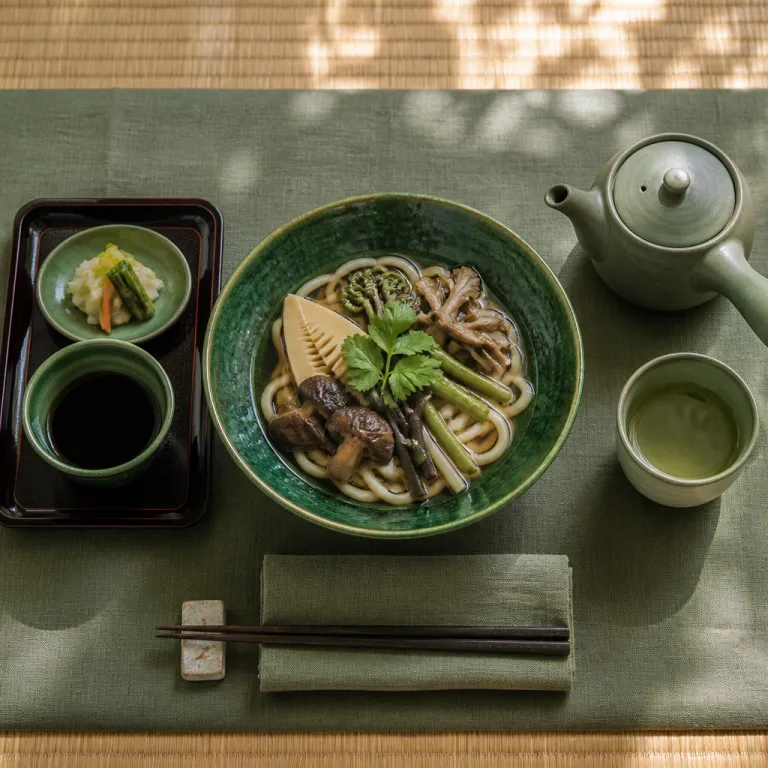
Why sansai udon belongs on your luxury ryokan shortlist
Sansai udon is a traditional Japanese noodle soup that brings wild mountain vegetables into a refined, comforting bowl. In luxury and premium traditional inns, this humble udon dish is elevated through meticulous sourcing of fresh vegetables, hand cut mushrooms, and clear, layered broth. For travelers comparing soba, ramen noodles, and udon noodles on a winter evening, a well made bowl of sansai udon often becomes the most memorable noodle soup of the stay.
At its core, this Japanese specialty pairs thick wheat noodles with seasonal sansai, the wild greens foraged in rural hillsides and served at around 300 kilocalories per serving in typical nutrition tables.1 Some ryokans offer a light vegan broth built from kombu and dried shiitake mushrooms, while others lean into a deeper fish broth enriched with katsuobushi for guests who prefer a more traditional taste. You will often find green onions, crispy tempura crumbs, and a drizzle of soy sauce finishing the dish, creating a balance of textures that rivals elaborate sushi rolls or a carefully plated fresh soba course.
Guests used to miso soup or clear noodle soup in California style Japanese restaurants are often surprised by the depth of flavor in ryokan versions. The best properties work with local farmers and foragers to find fresh sansai, then boil udon noodles to a precise firmness before layering vegetables and mushrooms on top. At Yudanaka Onsen in Nagano, for example, a guest at Ryokan Biyu no Yado described the noodles and vegetables combination as “like eating the forest after rain” in a 2023 dining review, a comment that reveals as much about the kitchen’s skill as any premium sushi or grilled fish course.2
From foraged mountains to your bowl: how ryokans source sansai
Luxury ryokans in mountainous regions treat sansai udon as a seasonal story told through vegetables and broth. In spring, chefs work with trusted foragers to find the best young shoots, ferns, and edible leaves, then decide whether each harvest suits a delicate vegan broth or a richer fish broth. During colder months, the same kitchens may turn to preserved or cultivated mushrooms and greens, still crafting a Japanese noodle soup that feels rooted in the surrounding landscape.
Because sourcing is so local, no two bowls of sansai udon or udon soba taste exactly alike, even within the same region. Some inns highlight buckwheat noodles alongside wheat noodles, allowing guests to compare soba noodle texture with the softer chew of udon noodles in parallel courses. Others keep the focus on one signature noodle, then vary toppings such as crispy mountain vegetables, green onions, and tofu to offer both vegan and non vegan versions without compromising the clarity of the broth.
When you read property descriptions or dining reviews, look for mentions of partnerships with nearby farmers and foragers. Phrases such as “served with fresh soba and local sansai Japanese greens” or “noodle soup made with hand cut buckwheat noodles and wild vegetables” signal a kitchen that respects seasonality. If you are planning a business focused stay and want to align late arrivals with premium dining, consult a detailed ryokan dining guide or business traveler playbook, which explains how to time meals so you can still find best access to signature dishes like sansai udon after a long travel day.
Balancing kaiseki, sushi, and sansai udon in a premium stay
High end ryokans often build their reputation on elaborate kaiseki dinners, pristine sushi, and refined sashimi, yet the quiet bowl of sansai udon at breakfast or lunch can be just as telling. A thoughtful chef will design the menu so that soba noodles, udon noodles, and rice based dishes alternate, preventing palate fatigue while still showcasing regional vegetables and fish. For guests who usually order sushi rolls or grilled unagi, this gentle noodle soup becomes a restorative counterpoint between richer courses.
Many properties now offer flexible dining, allowing you to buy an additional light meal such as sansai udon outside the formal kaiseki sequence. This is particularly helpful if you want a vegan option, because the kitchen can prepare a separate vegan broth while keeping the main dinner centered on fish broth and seasonal sashimi. When you compare menus, look for wording that highlights noodles vegetables combinations, miso soup variations, and the option to switch between wheat noodles and buckwheat noodles, since this signals a kitchen comfortable with customization.
Guests interested in elevated seafood experiences can pair a lighter noodle dish with more intricate courses focused on eel or sashimi style preparations. At one coastal ryokan in Gifu, for example, a chef might serve grilled river eel followed by a small bowl of sansai udon with a clean, vegetable forward broth to reset the palate. In practice, alternating a rich sushi or sashimi course with a clear, aromatic noodle soup keeps the meal balanced, especially for travelers adjusting to jet lag or unfamiliar ingredients.
How to read menus and reviews to find the best sansai udon
When you browse a luxury booking website for traditional Japanese inns, the dining section is your main tool to find the best sansai udon experiences. Start by scanning menus for explicit mentions of sansai Japanese vegetables, udon soba combinations, and whether the broth is vegan, fish based, or mixed. A property that clearly explains its noodle soup styles, from miso soup to clear broth with mushrooms, usually takes equal care with execution.
Guest reviews are another powerful way to find fresh, well prepared noodle dishes without relying solely on marketing language. Pay attention when travelers mention that the noodles were perfectly cooked, the vegetables tasted fresh, or the broth felt light yet satisfying, because these details indicate consistent kitchen standards. Comments that compare soba noodles to udon noodles, or that praise both ramen noodles and buckwheat noodles at breakfast, show that the inn handles multiple Japanese noodle traditions with confidence.
To narrow options efficiently, create a shortlist of properties where several guests independently highlight the same dish. If three or more reviews praise the sansai udon or a similar noodle soup with wild vegetables, you can be reasonably sure that the kitchen treats this as a signature. Use search filters and internal search fields on the booking site to find best matches for terms such as “vegan broth”, “fish broth”, or “noodles vegetables”, then cross check with photos and image alt text to confirm that mushrooms, green onions, and other toppings align with your expectations.
Customizing your bowl: vegan, gluten conscious, and flavor focused choices
Guests with specific dietary needs can still enjoy sansai udon in many luxury ryokans, provided they communicate preferences clearly before arrival. Because the base of the dish is a combination of noodles, vegetables, and broth, chefs can often adjust elements such as soy sauce, toppings, or even the type of noodle. For example, a guest avoiding fish broth may request a kombu and mushroom based vegan broth, while someone sensitive to wheat might ask whether buckwheat noodles or mixed grain options are available.
When you send pre arrival messages through the booking platform, specify whether you prefer udon noodles, soba noodles, or a lighter portion of ramen noodles, and mention any allergies to mushrooms or soy. Some kitchens can prepare wheat noodles separately from buckwheat noodles to avoid cross contact, although this level of control varies by property and should never be assumed without confirmation. If you follow a vegan diet, ask whether the miso soup and noodle soup bases contain only plant ingredients, because traditional Japanese recipes often rely on fish broth even when the bowl appears vegetable focused.
Flavor customization is also common at higher end inns, where condiments such as soy sauce, sansho pepper, and finely sliced green onions are served on the side. This allows you to adjust saltiness and aroma without overwhelming the delicate taste of the vegetables and noodles. Travelers used to bold California style sushi rolls may initially want stronger seasoning, but many find that a restrained approach lets the fresh mountain greens and carefully simmered broth shine.
Planning your ryokan stay around seasonal sansai and noodle experiences
Timing matters when you want the most expressive version of sansai udon at a traditional inn. Spring is generally the peak season for wild vegetables in mountainous regions, when foraged sansai are abundant and chefs are eager to showcase them in both noodle soup and side dishes. During other seasons, kitchens may rely more on cultivated greens and preserved mushrooms, still producing satisfying bowls but with a slightly different character.
When planning your itinerary, consider pairing rural ryokans known for sansai Japanese cuisine with urban stays that highlight sushi and tempura, creating a contrast between mountain and city flavors. Use booking platforms to find fresh, countryside properties where menus emphasize local vegetables, fresh soba, and udon soba combinations, then schedule city nights for omakase sushi and modern ramen noodles. This approach lets you compare how different regions treat the same core ingredients, from wheat noodles and buckwheat noodles to miso soup and clear broth styles.
For travelers balancing work and leisure, aligning meal times with check in and check out is essential. Business traveler resources on Japanese inns explain how to coordinate late arrivals with lighter meals, so you can still buy a simple bowl of sansai udon instead of missing dinner entirely. Whether you are coming from California or another long haul destination, planning ahead ensures that your first taste of noodles, vegetables, and carefully seasoned broth feels like a welcome into Japanese hospitality rather than an afterthought.
Key figures and nutritional insights on sansai udon in ryokans
- Typical sansai udon served in traditional Japanese inns contains around 300 kilocalories per bowl, according to standard nutritional databases for noodle soup with vegetables such as the Standard Tables of Food Composition in Japan (8th Revised Edition); this makes it lighter than many deep fried dishes while still providing enough energy for sightseeing.1
- The base of the dish usually combines an estimated 120 to 150 grams of cooked wheat noodles or buckwheat noodles with roughly 60 to 80 grams of vegetables and mushrooms, giving a higher vegetable to noodle ratio than many ramen noodles preparations in urban restaurants.1
- Because the broth is often made from kombu, dried mushrooms, or fish flakes, a standard serving can provide several hundred milligrams of sodium, so guests sensitive to salt may wish to request reduced soy sauce or a lighter seasoning approach.1
- Ryokans in mountainous regions of Japan, such as parts of Tohoku, Nagano, and Gifu, are more likely to serve fresh, foraged sansai between early spring and early summer, while properties in coastal or urban areas may rely on cultivated greens for most of the year, which slightly changes texture but maintains overall nutritional value according to regional tourism and agricultural reports.2
FAQ about sansai udon in luxury and premium Japanese inns
What is sansai in the context of sansai udon ?
Sansai refers to wild mountain vegetables in Japan, including young shoots, ferns, and edible leaves that are foraged seasonally and then simmered or blanched before being added to noodle soup. In a ryokan setting, these vegetables are carefully cleaned and prepared to highlight their natural bitterness and freshness. They form the core topping of sansai udon, sitting above the noodles and absorbing the flavor of the broth.
Is sansai udon usually vegetarian in luxury ryokans ?
Many versions of sansai udon are vegetarian because they focus on noodles, vegetables, and a broth made from kombu and mushrooms, but the base can still contain fish broth in traditional kitchens. Luxury ryokans are often willing to prepare a fully vegan broth if you request it in advance, especially when they already offer vegan options in their kaiseki menus. Always confirm whether the stock contains katsuobushi or other fish derived ingredients before assuming the dish is vegan.
Where can I try authentic sansai udon during a trip to Japan ?
You can try authentic sansai udon in Japanese restaurants, especially in mountainous regions where foraged vegetables are part of everyday cooking. Rural ryokans in areas such as Tohoku, Nagano, and parts of Gifu often feature the dish at breakfast or as a light evening option.2 Urban luxury inns may also serve it, but the vegetables are more likely to be cultivated rather than wild.
How does sansai udon compare with soba or ramen in a ryokan meal ?
Sansai udon tends to be milder and more vegetable focused than many ramen noodles dishes, which often rely on richer, fattier broths. Compared with soba, which uses buckwheat noodles and can be served chilled, sansai udon emphasizes warmth and comfort through thick wheat noodles and hot broth. In a multi course ryokan meal, it usually appears as a gentle, satisfying course that balances heavier fish or meat dishes.
What tools and methods are used to prepare sansai udon in traditional inns ?
Chefs typically use a large pot to boil the noodles, a strainer to drain them at the right texture, and deep bowls to assemble the final dish. The broth is prepared separately, simmered slowly to extract flavor from kombu, mushrooms, or fish flakes before being poured over the cooked noodles and vegetables. This method allows precise control over noodle firmness and broth clarity, which are key quality markers in luxury and premium ryokans.
