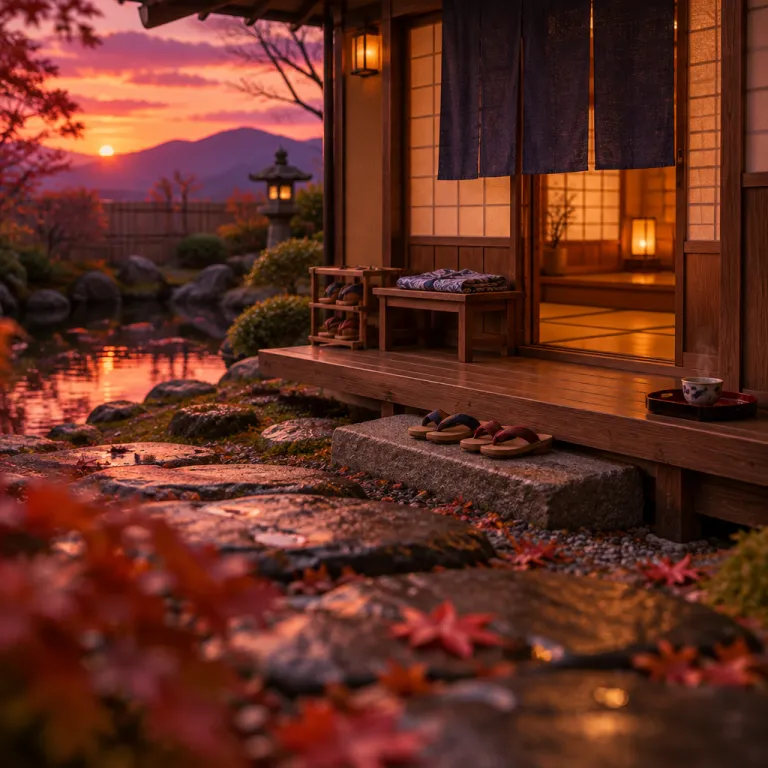
The quiet threshold: genkan, first bow and the slipper change
Your ryokan arrival begins before a single word is spoken. The moment you step from the street of a small town in Japan to the stone of the genkan entrance, the inn is already signalling how your stay will unfold. Watch how the staff move, how the first bow lands, and how quickly someone relieves you of luggage, because this choreography reveals the level of service and the depth of traditional Japanese hospitality you can expect.
In a well run Japanese ryokan, the genkan is a stage where etiquette and efficiency share the same spotlight, and the staff will guide you with subtle gestures rather than instructions. You remove your shoes on the lower stone, step up onto polished wood, and slip into the provided bathroom slippers or corridor slippers, which should be neatly aligned with the toes facing the left side or right side depending on the direction you will walk. If the slippers are already placed for you, that small act of anticipation is your first hint that this ryokan culture is not costume but lived experience, something you notice immediately at long established houses such as Tawaraya in Kyoto.
Some inns escort you straight to your room for welcome tea, while others seat you briefly in a small lobby for a more formal check in, and this choice shapes the tone of your stay from the first minutes. A lobby based welcome often feels closer to a Western hotel, with forms and passports handled before any real immersion in traditional Japanese rhythms. When you are led directly across tatami mats to your room, with luggage gliding silently behind, the inn is telling you that your private space and the unfolding ryokan experience take precedence over paperwork and process.
Reading the room: tea, tokonoma and the unspoken etiquette guide
Once the sliding door opens, the arrival ritual shifts into a more intimate register inside your room. A low table, cushions on tatami mats and a scroll or flower arrangement in the tokonoma alcove form a quiet composition that tells you how seriously this Japanese ryokan treats aesthetics and tradition. If the arrangement feels thoughtful rather than generic, you can expect the same care in your kaiseki dinner, your onsen baths and every other part of the ryokan experience.
Your nakai san, the attendant assigned to your room, will usually kneel to pour welcome tea and offer a seasonal sweet, and this is where the etiquette becomes a two way conversation without many words. Sit on the floor or at least lower yourself slightly rather than towering over them, and accept the tea with both hands, because this small respect sets the tone for the rest of your stay in Japan. This is also the moment when the inn quietly explains its own etiquette guide through objects rather than speeches, from where bathroom slippers are placed to how the yukata robe is folded on the futon.
Pay attention to the placement of items, because a ryokan will often communicate more through layout than language, and this is especially true in properties that pride themselves on refined experiences Japan wide. The tea set on the left side of the table, the futon folded away in a corner, and the neatly stacked towels for the hot spring baths all hint at the sequence of your evening. One guest at a mountain inn in Nagano recalled, “I realised the whole night had been mapped out for us just by where the trays, yukata and towels were waiting when we arrived.” For a deeper look at how ryokans use space and timing as a silent language, our article on how ryokan communicate through placement, timing and silence unpacks these signals in detail.
The first questions: bath timing, dinner hour and how the inn really runs
After tea, the welcome conversation becomes more practical, and the questions you are asked reveal how the house is organised behind the scenes. Your nakai san will usually confirm the time for your kaiseki dinner, ask whether you prefer to bathe before or after eating, and check any dietary needs, and the precision of these questions shows how tightly the kitchen and onsen schedule are choreographed. When a ryokan offers you a clear choice of dinner and bath times rather than a vague window, it is signalling that your multi course meal and hot spring routine are being planned with care rather than squeezed into a crowded timetable.
In a smaller onsen ryokan, the staff may ask whether you would like to reserve a private onsen slot, and this is where couples can shape a more romantic stay by choosing a quiet hour. Larger ryokans with big communal baths and multiple hot springs might instead hand you a printed ryokan guide, listing bath opening times, dinner seatings and even suggested routes for evening travel walks around town. Either way, these early questions are not bureaucracy; they are the framework that will structure your entire experience, from when you wear yukata to how you move between room, baths and dining.
This is also the right moment to clarify practicalities such as allergies, alcohol preferences and any concerns about shared baths, because Japanese etiquette values clarity delivered early and discreetly. If you have booked through a luxury focused platform, you may find that many of these details were already captured at reservation stage, and the on site team is simply confirming them. For insight into how different booking channels shape what the inn knows about you before arrival, our piece on how the ryokan reservation game is really won explains why some stays feel pre tuned to your habits from the first knock on the door.
Costume versus omotenashi: where real hospitality quietly shows itself
Not every ryokan in Japan delivers the same depth of omotenashi, and the first half hour is where you can tell whether you are stepping into a costume drama or a genuinely traditional house. When staff recite scripted lines about onsen rules without looking at you, or rush through explanations of the hot spring baths while glancing at the clock, the performance can feel thin. By contrast, a Japanese ryokan that pauses to notice your jet lag, offers to shift dinner time or suggests a shorter multi course menu if you are tired is showing real flexibility and care.
Watch how they explain how to wear yukata, because this small ritual often separates thoughtful service from box ticking. In a ryokan environment that takes omotenashi seriously, someone will quietly show you how to wrap the robe left side over right, adjust the obi belt and choose the right bathroom slippers for corridors versus the onsen area, and they will do it without making you feel clumsy. When the explanation is rushed or left entirely to a printed etiquette guide, you may find the rest of the stay follows the same slightly hands off pattern.
Money is another subtle signal, especially around Japan tipping customs, which are very different from those in the United States and other Western countries. High calibre ryokans do not angle for tips during check in, and any envelope you choose to leave later for exceptional service will be accepted with surprise rather than expectation. If you feel pressured to tip early or sense that extra attention is reserved for those who do, you are likely in a property that has drifted away from the quieter, more egalitarian spirit that defines the best ryokan experiences Japan wide.
Scale and rhythm: five room intimacy versus onsen hotel theatre
The shape of your welcome changes dramatically with the size of the property, and understanding this helps you choose the right kind of stay. In a five room family run inn, you might be greeted at the door by the owner, escorted personally to your room and given a slow, almost conversational explanation of the baths and dinner, with time for questions about your travel route through Japan. That intimacy means your preferences for bath temperature, kaiseki dinner pacing and even pillow firmness can be remembered across several nights without a single form.
By contrast, a larger onsen hotel style ryokan will often manage arrivals in waves, with several couples checking in at once and a more standardised script for explaining hot springs, meal times and room features. The experience can still be polished, especially in high end onsen ryokan properties where the baths are extensive and the multi course dinners are ambitious, but the rhythm is different. You may be handed a printed ryokan guide, directed to the main hot bath area and told when to return for futon turndown, rather than having each step woven into a personalised narrative.
Couples who value deep quiet and tailored service often find that the smallest ryokans deliver the most resonant stays, especially when the owners live on site and treat each visit as a shared ritual rather than a transaction. Our feature on why the smallest properties deliver the most personal stays explores this in detail, from private onsen rotations to unhurried breakfasts. Whatever scale you choose, the first thirty minutes will tell you whether the house runs on your time or expects you to run on its, and that single distinction shapes every bath, every course of dinner and every step across the tatami mats.
What is expected of you: the guest side of the arrival ritual
The first encounter is not only about what the inn offers; it is also about how you respond as a guest. Removing shoes promptly at the genkan, using the correct bathroom slippers for corridors and toilets, and never stepping on tatami mats with outside footwear are the basic signals of respect that any traditional Japanese host will quietly appreciate. When you mirror the calm, unhurried pace of the staff rather than pushing for a faster process, you help preserve the atmosphere that makes a ryokan experience different from a standard hotel stay.
Inside the room, treat the space as a shared stage rather than a private lounge, because the staff will return several times to lay out futons, serve kaiseki dinner and clear trays. Keep luggage to one side, avoid placing bags in the tokonoma and resist the urge to rearrange furniture, since the layout has been designed to support the sequence of baths, meals and sleep. When you are shown how to wear yukata or how to wrap the robe left side over right, follow the guidance even if it feels unfamiliar, because these gestures are part of the cultural fabric that makes travel in Japan so rewarding.
During the first conversation, answer questions about bath timing, dinner preferences and allergies clearly and honestly, as this information allows the team to fine tune your stay without constant check backs. If you are unsure about Japan tipping customs, remember that tipping is generally not expected, and a sincere thank you or a short handwritten note often carries more weight than cash. By engaging with the arrival ritual as a two way exchange rather than a scripted performance, you turn those first thirty minutes into the foundation of a stay that feels both luxurious and deeply human.
FAQ
What should I do first when I arrive at a ryokan ?
When you arrive at a ryokan, pause at the genkan entrance and wait for staff to guide you. Remove your shoes on the lower stone step, step up onto the raised floor and slip into the provided slippers before walking further inside. This simple sequence respects Japanese etiquette and signals that you understand the boundary between outside travel and the inner world of the inn.
How does check in at a ryokan differ from a Western hotel ?
Check in at a ryokan usually happens in your room over tea rather than at a front desk counter. Staff will explain bath times, kaiseki dinner hours and how to use the onsen baths, often with minimal paperwork. The focus is on setting the rhythm of your stay rather than processing a transaction as quickly as possible.
What is the correct way to wear yukata in a ryokan ?
When you wear yukata, always wrap the left side of the robe over the right side, then tie the obi belt in a simple knot at the front or slightly to the side. The opposite wrapping is reserved for funerals in Japan, so getting this detail right matters. You can wear yukata to dinner, to the baths and while walking around most ryokans, unless the inn specifies otherwise.
Do I need to tip at a ryokan in Japan ?
Tipping is generally not expected at a ryokan, and many Japanese ryokan owners prefer that service be considered part of the overall rate. Some guests choose to leave a small envelope for a nakai san after an exceptional stay, but this is optional. A warm thank you and considerate behaviour during your stay are usually the most valued forms of appreciation.
How should I use the onsen baths during my first visit ?
Before entering any onsen baths, wash thoroughly at the shower stations using the provided stools, buckets and toiletries. Enter the hot spring water slowly, without splashing, and keep towels out of the bath itself, resting them on your head or at the side. If you feel unsure, watch how local guests move through the space, because their quiet routine is often the best real time etiquette guide.