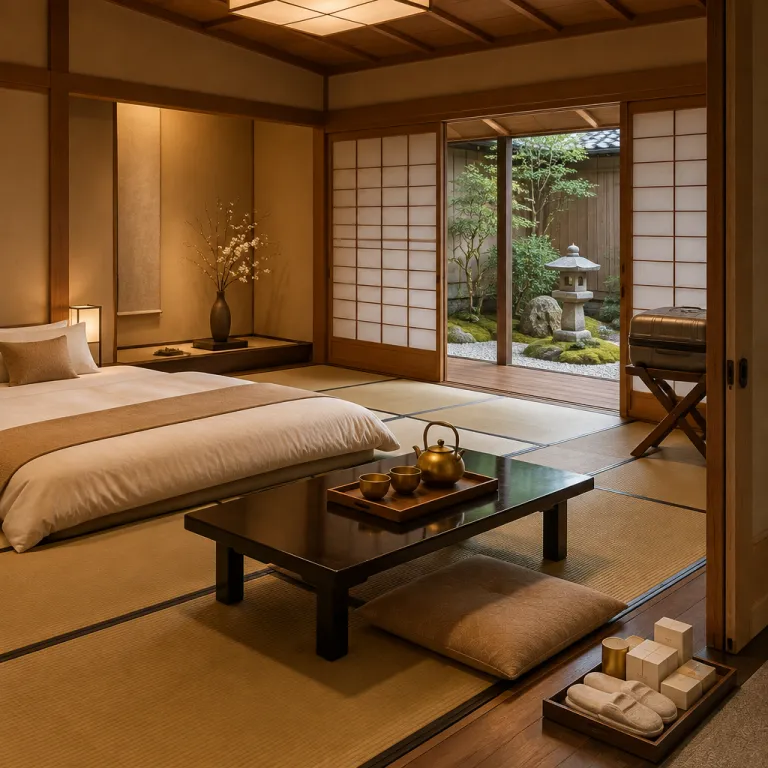
Kyoto’s new luxury skyline and the meaning of a ryokan stay
Kyoto is now a city where a luxury hotel can sit one short walk from a wooden ryokan that has hosted generations of the same family. International luxury hotel brands arriving in Kyoto Japan bring global booking engines, loyalty points and polished club lounges, yet they inevitably raise questions about what defines traditional Japanese hospitality at night when the streets fall quiet. For travelers comparing a Kyoto ryokan with a branded hotel Kyoto property, the choice is no longer between comfort and culture but between two very different readings of what a stay in Japan should feel like.
Capella Kyoto opened in Miyagawa cho with 89 rooms designed by Kengo Kuma, and the project has become a reference point for how luxury hotel brands in Kyoto ryokan Japan territory borrow from local language without becoming ryokan. The low rise form, extensive use of wood and stone, and framed views into a controlled garden echo the vocabulary of a traditional Japanese inn, yet the service choreography follows an international hotel playbook rather than the nakai san system. Guests check into a luxury hotel with a front desk, concierge and spa, not into a ryokan Kyoto property where a single attendant quietly manages your room, your kaiseki dinner and your timing for the hot spring bath.
Across Kyoto Japan, the surge in luxury hotels Kyoto wide has coincided with record national room rates, with Japan wide hotel ADR reaching JPY 23,397 in April according to industry data. That pricing environment encourages more global brands to enter the city, from Park Hyatt to Aman Kyoto, and it pushes some mid tier Kyoto ryokan to reconsider how they present their value. For travelers using a premium booking website, the filter between a luxury hotel and a ryokan private retreat in Kyoto is no longer price alone but the depth of Japanese cultural immersion they expect from each stay.
What international luxury brands bring that most ryokan never tried to offer
For an executive extending a business trip, the appeal of luxury hotel brands in Kyoto ryokan Japan territory is obvious when you first check availability on a corporate portal. A Park Hyatt or Ritz Carlton listing appears with room categories, loyalty benefits and clear availability booking data, while many traditional Kyoto ryokan still rely on smaller agencies or Japanese language sites. That gap in visibility means hotels Kyoto aligned with global systems often capture the traveler who wants a fast, low friction stay rather than a long email exchange about room types and kaiseki timing.
Inside these hotels, the experience is calibrated for predictability, from the size of the room to the pressure of the shower and the way breakfast arrives on time every morning. A luxury hotel in Kyoto Japan typically offers multiple restaurants instead of one fixed kaiseki menu, a fitness center instead of a shared hot spring, and meeting rooms that make it easy to justify an extra night in the city. For many guests, especially those new to Japan, that structure feels safer than navigating the etiquette of a ryokan Kyoto property where you dine in your room and change into a yukata before walking through the corridor.
Brands such as Ritz Carlton Kyoto and the newer Carlton Kyoto style properties along the Kamogawa river lean into Japanese aesthetics while keeping the service language international. You might find a Japanese garden in the courtyard, a tea ceremony inspired lounge and an open air terrace that nods to river deck culture, yet the staff are trained to handle elite status upgrades and late check outs rather than futon layouts. For travelers researching refined stays in traditional Japanese inns through resources such as this guide to ryokan in Kyoto Japan, these hotels Kyoto options sit as a parallel track, offering Japanese flavor without the full commitment of a ryokan private experience.
What luxury hotels cannot replicate from the ryokan model
Even the best luxury hotel brands in Kyoto ryokan Japan territory cannot fully reproduce the intimacy of a small inn where the same person serves your tea, lays your futon and adjusts your dinner pace by reading your body language. In a traditional Japanese ryokan, the room is not just a place to sleep but a stage for a sequence of rituals that unfold from afternoon tea to the final breakfast tray. That choreography, managed by a single nakai san, is difficult to scale across hundreds of rooms in a large hotel Kyoto property.
Onsen culture is another line that most international hotels hesitate to cross, even in Kyoto Japan where hot spring traditions run deep in nearby regions. A ryokan Kyoto retreat with a private onsen or shared hot spring bath expects guests to understand washing etiquette, acceptable tattoo coverage and the quiet that defines these spaces, while a luxury hotel often redirects that demand into spa suites or open air whirlpools that feel more like wellness amenities than sacred bathing. Properties such as Nazuna Kyoto or Rinn Gion, which offer ryokan private style baths or semi open air tubs within a small number of rooms, sit closer to the traditional model than a large city hotel with a rooftop pool.
For travelers seeking countryside calm, curated lists of Kyoto countryside retreats for refined stays in traditional Japanese inns, such as this overview of Kyoto countryside ryokan, highlight how the Japanese garden, the sound of the river and the absence of corridors define the experience. In these settings, the garden is not a design feature but an extension of the room, and the night sky replaces city lights as your entertainment. No matter how carefully a luxury hotel frames its courtyard or labels a suite as a Kyoto ryokan inspired room, the presence of elevators, key cards and a lobby bar keeps the experience firmly in the hotel world.
Design diplomacy: how Capella and peers borrow from ryokan language
Capella Kyoto stands at the center of the luxury hotel brands Kyoto ryokan Japan conversation because of how deliberately it borrows from the ryokan playbook without claiming the label. Kengo Kuma’s design uses low eaves, layered screens and a sequence of thresholds that echo the way you move from street to genkan to tatami room in a traditional Japanese inn. The building steps back from the street to create a garden like buffer, turning arrival into a quiet transition rather than a grand hotel entrance.
Inside, rooms are organized to frame views of greenery, with materials that feel closer to a Kyoto ryokan than to a glass heavy city tower. Timber, stone and shoji inspired panels soften the light, while some suites open onto small terraces that function almost like open air engawa verandas, though they stop short of becoming true private onsen decks. This is design as diplomacy, signaling respect for Kyoto Japan traditions while still delivering the layered amenities that loyalty members expect from a luxury hotel stay.
Other brands follow similar strategies, from Aman Kyoto with its forested Japanese garden campus to Park Hyatt Kyoto with its hillside views over Gion and the city. These hotels Kyoto properties use traditional Japanese motifs, from tokonoma alcoves to carefully raked gravel, to suggest a bridge between ryokan Kyoto culture and international expectations. For travelers comparing availability booking options, the question becomes whether a garden view room in a luxury hotel can satisfy the same desire for stillness that once required a night in a remote ryokan private retreat.
Pressure points: how mid tier ryokan adapt between budget stays and global brands
The arrival of luxury hotel brands in Kyoto ryokan Japan territory does not simply create more choice at the top end of the market ; it also squeezes the middle. Mid tier Kyoto ryokan that once competed mainly with domestic business hotels now face guests who can book a branded luxury hotel Kyoto stay for a similar rate on certain nights, especially outside peak foliage or cherry blossom periods. At the same time, budget hotels Kyoto wide and short term rentals undercut them from below, offering low prices and instant booking even if the rooms lack character.
Some traditional Japanese inns respond by sharpening their story rather than chasing amenities, emphasizing multi course kaiseki dinners, access to a genuine hot spring and the depth of their Japanese garden rather than adding Western beds or televisions. Others quietly partner with specialist platforms that can handle English language check availability tools, curated photos of each room and nuanced explanations of onsen etiquette, allowing them to compete with the clarity of a luxury hotel listing. For travelers, this means that a ryokan Kyoto stay booked through a dedicated Japanese inn site can now feel as seamless as reserving a room at Ritz Carlton Kyoto or Carlton Kyoto, while still delivering tatami floors and futon bedding.
Industry wide, the record Japan hotel ADR has emboldened groups such as Hoshino Resorts to expand their onsen ryokan portfolio, a trend explored in depth in this analysis of onsen ryokan expansion. That growth signals confidence that travelers will continue to pay for authentic hot spring experiences even as luxury hotel options multiply in the city. For Kyoto Japan, the result is a more polarized landscape where the best ryokan private retreats double down on depth of experience while some smaller hotels drift toward generic city stay territory.
Who really benefits: matching traveler profiles to Kyoto’s new hospitality map
For the business leisure traveler, luxury hotel brands in Kyoto ryokan Japan territory offer a pragmatic bridge between meetings and meaningful downtime. You can land in Kyoto Japan after a week in Tokyo, check into a familiar luxury hotel, and still walk to Gion or a nearby shrine before dinner without worrying about curfews or fixed meal times. That flexibility matters when your calendar shifts by the hour and you need a room that can double as a workspace and a retreat.
At the same time, travelers who have already sampled one or two luxury hotels Kyoto wide often start to look toward Nazuna Kyoto, Rinn Gion or other hybrid properties that blend ryokan private elements with hotel like services. These stays might offer a private onsen style bath, a compact Japanese garden and in room dining, while still allowing late arrivals and online availability booking in English. For many guests, this middle ground becomes the best way to test whether a full Kyoto ryokan experience suits their travel rhythm before committing to a more remote hot spring inn.
Ultimately, the presence of brands such as Aman Kyoto, Park Hyatt and Ritz Carlton does not erase the appeal of a traditional Japanese ryokan ; it clarifies what each format does best. A luxury hotel excels at frictionless logistics, loyalty recognition and consistent rooms, while a ryokan Kyoto stay excels at slowness, ritual and the feeling that the city has paused outside your shoji screens for one night. As you check availability for your next stay in Kyoto Japan, the most useful question is not which option is objectively best, but which version of Japanese hospitality you want to inhabit on this particular trip.
FAQ
Is a luxury hotel or a ryokan better for a first stay in Kyoto ?
First time visitors who feel unsure about Japanese customs often find a luxury hotel in Kyoto Japan easier, because staff are used to international guests and expectations are familiar. A Kyoto ryokan offers a deeper cultural experience, with tatami rooms, set meal times and sometimes shared baths, which can feel intense if you are still adjusting to the city. Many travelers start with a hotel Kyoto stay near Gion, then add one night at a smaller ryokan Kyoto property once they feel more comfortable.
Can international luxury hotels in Kyoto offer real onsen experiences ?
Most international luxury hotel brands in Kyoto ryokan Japan territory provide spa style baths or open air whirlpools rather than true hot spring onsen sourced from natural springs. If you want a genuine hot spring experience, you are more likely to find it at a traditional Japanese ryokan outside the dense city center or in nearby regions known for geothermal activity. Some hybrid properties in Kyoto Japan offer private onsen style tubs in a few rooms, but they usually do not qualify as full hot spring resorts.
How far in advance should I book a Kyoto ryokan compared with a hotel ?
Popular Kyoto ryokan with limited rooms and elaborate kaiseki dinners often fill months ahead for peak seasons, so early check availability is essential. Luxury hotels Kyoto wide usually have more rooms and dynamic pricing, which means you can sometimes secure a stay closer to your travel dates, especially outside major holidays. For both formats, using a reliable availability booking platform or a specialist Japanese inn site helps you see real time room options and avoid last minute surprises.
Are brands like Aman Kyoto and Park Hyatt Kyoto suitable for business travelers ?
Aman Kyoto, Park Hyatt Kyoto and Ritz Carlton Kyoto are all designed to handle business leisure guests who need meeting friendly rooms, strong connectivity and flexible dining. These hotels Kyoto properties combine Japanese design cues with international service standards, making them comfortable bases for work and short walks into the historic city after meetings. If you need loyalty points, late check out and predictable amenities, a luxury hotel Kyoto stay will usually serve you better than a small ryokan private retreat.
What should I expect from service at a traditional Kyoto ryokan ?
Service at a traditional Japanese ryokan Kyoto property centers on a single attendant who manages your room, meals and sometimes your bath schedule, often with limited English but strong attention to detail. You can expect set arrival windows, fixed dinner and breakfast times, and a focus on quiet rather than constant interaction. Compared with a luxury hotel, the stay feels more like being hosted in a private home, which many travelers consider the best expression of Kyoto Japan hospitality.