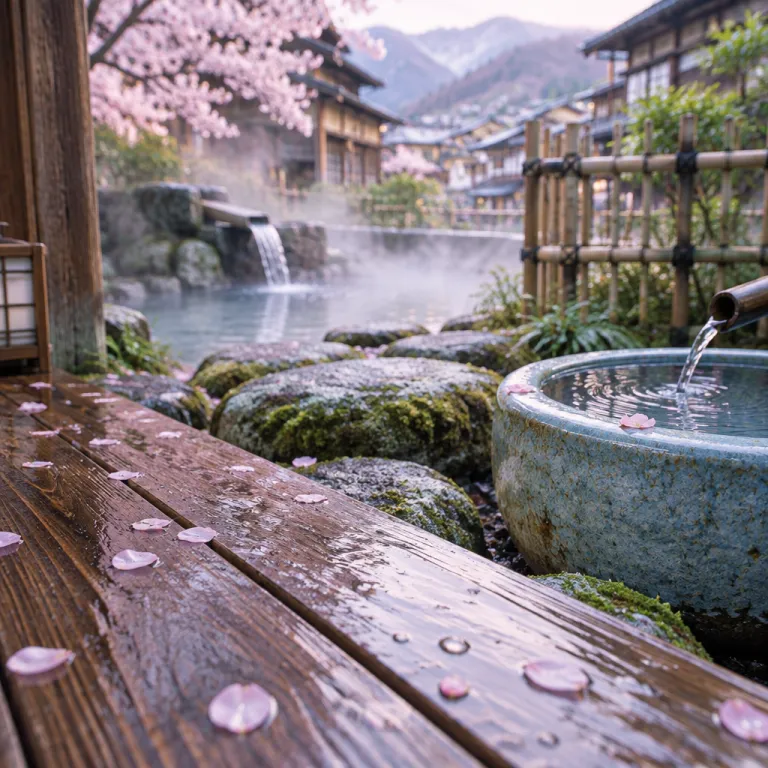
Reading the rhythm of crowds in Japan’s classic onsen towns
To genuinely sidestep the busiest moments in a Japanese hot spring town, you first need to understand its daily rhythm. Visitor density in the most famous onsen resorts rises and falls with almost metronomic precision, shaped by Japan Rail timetables, tour bus arrivals, and kaiseki dinner hours. When you time your stay and each bath around those flows, even the most popular hot springs can feel unexpectedly calm.
Weekends draw domestic couples, multigenerational families, and overseas visitors, so a Friday or Saturday night stay in an iconic onsen ryokan usually means fuller changing rooms and livelier communal baths. Shift your trip to a Tuesday, Wednesday, or Thursday, and the same hot spring town often feels like a different side of Japan, with more space in every room and quieter streets after dark. Many people still plan their visit around cherry blossom or fall foliage peaks, but the real luxury is often found in the shoulder weeks just before or after those postcard moments.
Daily timing matters just as much as the season when you want to steer clear of crowds in a traditional onsen area. Most day trip visitors arrive from Tokyo or Kyoto around late morning, after a mid morning departure from Tokyo Station or Kyoto Station, and they typically leave before the last convenient Japan Rail connection home. That creates a precious window for ryokan guests, who can slip into the hot baths at dawn or just before dinner, when the water is hot, the air is quiet, and only a handful of people share the space.
Think of the town itself as a living timetable, not just a backdrop for photos. In Kinosaki Onsen, for example, the main street grows busy from late afternoon as guests in yukata move between the seven public hot springs, yet the same town feels almost contemplative at 7 a.m. when only locals and early risers pad between baths. The more precisely you plan each day and night around these patterns, the more your trip shifts from managing crowds in Japan to enjoying the kind of unhurried onsen experience you probably imagined when you first booked your stay.
Why midweek stays change everything in Kinosaki Onsen and beyond
Among Japan’s classic hot spring destinations, Kinosaki Onsen is a perfect case study in how timing transforms the experience. On a Saturday, the town’s willow lined canal can feel like a stage set, with people queuing for photos and lining up outside the most famous baths, yet on a Tuesday the same streets are quiet enough that you hear only geta on stone. If you want to enjoy a characterful onsen town without the heaviest foot traffic, aim your stay squarely at the midweek window.
Most ryokan in Kinosaki Onsen structure their service around a traditional rhythm, with check in from about 15:00 and kaiseki dinner served between 18:00 and 19:30, and that rhythm shapes when the baths are busiest. On weekends, guests often rush to the nearest hot spring immediately after check in, creating a short but intense rush in the changing rooms and indoor baths before dinner. Arrive on a Wednesday, check in as close to 14:00 as possible, and you can enjoy a first soak while the day trip visitors are still walking back toward the station for their evening trains.
Midweek also changes the feel of the town at night, when the lanterns reflect on the canal and the air cools around the hot springs. On a quiet Thursday night in Kinosaki, you may share an outdoor bath with only one or two other people, and the staff have more time to guide you through etiquette, from how to use your small towel to where to leave your yukata in the changing room. That slower pace is especially valuable for families, who can move between baths at their own rhythm without worrying about queues or rushed children.
For travelers building a longer trip, pairing a midweek stay in Kinosaki Onsen with quieter onsen towns in northern Japan creates a balanced itinerary. Resources such as the guide to Tohoku’s quietest onsen towns on JapaneseInnStay help you identify hidden gems where visitor numbers are still low, even in peak seasons. When you combine those lesser known hot springs with a carefully timed stay in a famous town, you gain both the iconic experience and the calm that many people assume no longer exists.
Reservation systems, visitor caps, and the new rules of access
As overtourism reshapes how people move through Japan, the rules for accessing popular onsen towns are changing. Some municipalities now experiment with reservation systems for parking, shuttle buses, or even specific hot spring facilities, especially during cherry blossom and fall foliage peaks. If you want to enjoy quieter baths in a well known resort, understanding these systems before you book your room is as important as choosing the right property.
In several well known hot spring areas, evening access to certain baths is now prioritized for overnight guests, with day trip visitors limited to earlier slots or capped numbers. That means a rail pass traveler arriving late from Tokyo or Kyoto without a reservation may find the most atmospheric baths fully booked, while a guest who planned a one or two night stay enjoys near private access. Some towns also require advance booking for shuttle services from the nearest station, especially where the onsen area sits inside or near a national park with strict traffic controls. In places such as Kusatsu Onsen and Nyuto Onsen, for example, local buses and hotel shuttles can require seat reservations during busy holiday periods.
These access rules are part of a broader national conversation about how to manage aging infrastructure and abandoned properties in historic onsen towns. Government initiatives to address so called onsen ghost towns, documented in depth by JapaneseInnStay’s report on Japan’s abandoned ryokan, show how authorities are trying to balance preservation with realistic visitor numbers. For travelers, the practical implication is clear, because the most atmospheric onsen ryokan may now have fewer rooms available and stricter booking windows, especially during school holidays and long weekends.
Planning ahead does not mean surrendering spontaneity; it means choosing where to be flexible. Secure your core reservations, such as a two night stay in a landmark onsen town and any required shuttle or bath bookings, then leave space for a spontaneous day trip to a nearby hidden gem on the quieter side of Japan. When you understand how visitor caps and reservation systems work, you can move through even the busiest hot springs with the calm of someone who knows they already have a place in the water.
Overnight strategy: how ryokan guests reclaim the quiet hours
The most reliable way to enjoy peaceful hot spring time is simple, though not always cheap, because you stay overnight inside the town rather than commuting in for a day trip. An onsen ryokan guest holds a kind of backstage pass, with access to the baths in the early morning and late evening when the streets empty and the water steams under the night sky. Those hours, bracketed around dinner and breakfast, are when the promise of traditional hot springs living feels most authentic.
Check in timing is critical if you want to make the most of this advantage. Aim to arrive at your ryokan around 14:00, even if official check in starts at 15:00, and leave your luggage while you explore the town or slip into the first available bath, because this pre dinner window is when many properties are still quiet. Families traveling from Tokyo or Kyoto with a Japan Rail Pass often underestimate how much energy they will have after a long train day, so building in that early arrival gives everyone time to reset in the hot water before the formal kaiseki meal.
Inside the ryokan, the details of the bathing facilities matter more than the lobby flowers. Look for properties with both indoor and outdoor baths, ideally separated by gender but with generous changing rooms and clear signage, because that layout keeps the flow of people smooth even at busier times. A well designed bath area will have space to leave your small towel, shelves for yukata, and a logical route from washing stations to the hot spring itself, which reduces the sense of crowding even when several guests share the water.
Night bathing is where the overnight strategy truly pays off, especially in towns that attract many day trip visitors. After dinner, when the last trains have left the station and the streets fall quiet, you can walk to an outdoor hot spring under the stars, sometimes with only the sound of the river and the occasional temple bell in the distance. Wake early the next day for a final soak before breakfast, and you will have experienced the same famous onsen town that fills social media feeds, yet your own memories will be defined by silence rather than queues.
Second tier towns and hidden valleys: quiet alternatives to the icons
Not every traveler needs to sleep in the most photographed onsen town to feel they have truly visited Japan. In fact, one of the most effective ways to find breathing room in hot spring country is to choose a second tier destination, often just one or two stops beyond the famous station on the same line. These neighboring towns share the same hot spring sources and mountain air, yet remain largely absent from international itineraries.
Consider the contrast between a marquee destination and its quieter cousins. While a place like Kinosaki Onsen draws steady flows of people year round, smaller onsen towns in nearby prefectures offer similar wooden facades, lantern lit streets, and steaming baths with far fewer visitors, especially on weekdays. In some regions, a short bus ride from the main station delivers you to a valley where the only sounds at night are the river and the occasional train in the distance, not the chatter of tour groups.
For families seeking both nature and culture, pairing a famous onsen town with a stay in a rural valley such as the Iya Valley can be particularly rewarding. The Iya Valley is known for its vine bridges, deep gorges, and remote hot springs, and while it is not a classic canal lined onsen town, it offers a different side of Japan where the pace slows and the landscape does most of the talking. Here, an onsen ryokan stay might include views over forested slopes that glow in fall foliage season, with only a handful of other guests sharing the baths at any one time.
These quieter destinations often sit near national park boundaries, which naturally limit large scale development and help keep visitor numbers manageable. When you plan your trip, look for clusters of onsen towns within the same region and consider spending one night in the headline destination and another in a nearby hidden gem, rather than two nights in the busiest town. This approach not only reduces pressure on the most crowded streets in Japan but also gives your family a richer sense of how varied hot spring culture can be from one valley to the next.
Designing a crowd smart itinerary from Tokyo and Kyoto
For many international visitors, the journey to any onsen town begins in Tokyo or Kyoto, and the way you structure that journey has a direct impact on how many crowds you meet. To enjoy calmer hot spring districts, think of your rail pass not just as a cost saving tool but as a way to shift your travel days away from peak flows. Leaving Tokyo Station or Kyoto Station early on a weekday morning, for example, can put you in your ryokan’s lobby before most people have even boarded their trains.
A refined four day Tokyo itinerary that ends with a midweek departure toward the hot springs works particularly well for families. By the time you leave the city, you have already adjusted to the time zone, learned basic onsen etiquette, and figured out how your children handle long train rides, which makes the transition to a quieter onsen town smoother. JapaneseInnStay’s urban ryokan focused Tokyo guide offers a useful template for this kind of planning, especially if you want to balance city energy with hot spring calm in a single trip.
From Kyoto, a similar logic applies, especially if you plan to enjoy a night in Kyoto that includes an evening temple visit or a stroll through less crowded neighborhoods. Avoid scheduling your onsen departure on a Sunday, when both domestic travelers and overseas visitors often move between cities, and instead aim for a Tuesday or Wednesday train. That way, you arrive in your chosen hot spring town when the weekend crowds in Japan have already thinned, and you can walk from the station to your ryokan at a relaxed pace.
Throughout your itinerary, build in small buffers that protect the quiet moments you care about most. Allow extra time between trains so you are not rushing through stations with tired children, and choose ryokan within easy walking distance of the local station to minimize transfers after a long day. When you align your city stays, rail days, and onsen nights with the natural ebb and flow of people across Japan, even a short trip can feel both efficient and unhurried. A simple sample schedule might look like this: depart Tokyo around 08:00 on a Wednesday, arrive in your onsen town by late morning, check in at 14:00, bathe before dinner, enjoy a second soak after 21:00, then take one last bath before breakfast the next day.
Seasonality, climate, and the art of choosing your onsen moment
Season shapes every onsen experience, and understanding that seasonality is essential if you want to enjoy hot springs in Japan without sacrificing atmosphere. Spring cherry blossom and autumn fall foliage periods remain the most popular times for both domestic and international travelers, which means higher room rates, busier streets, and more competition for the best baths. Yet the weeks just before and after these peaks often offer equally nice light, comfortable temperatures, and far fewer people in the changing rooms.
Winter brings its own rewards, especially in mountain towns where snow piles on rooftops and steam rises dramatically from outdoor baths. Families willing to travel in colder months often find that even famous hot springs feel more spacious, with fewer day trip visitors and more opportunities to linger in the water without feeling rushed. The contrast between the hot spring and the cold air heightens the sensory experience, turning a simple soak into a memory that anchors the entire trip.
Summer, by contrast, can be both lush and humid, with cicadas loud in the trees and rivers running high near national park areas. While some people avoid hot baths in hot weather, many Japanese guests still value the ritual, especially in the evening when temperatures drop slightly and the night air carries the scent of forest or sea. If you choose a summer stay, prioritize ryokan with well ventilated changing rooms, shaded outdoor baths, and easy access to riverside walks or short hikes, so you can balance time in the hot water with cooler activities.
Whatever the season, the key is to align your expectations with the reality of how many visitors share the same idea of the perfect onsen moment. A family seeking quiet reflection might prefer a midweek winter stay in a lesser known town, while another family that enjoys a bit of bustle could happily visit during cherry blossom season as long as they plan their baths for early morning and late night. By matching your personal rhythm to the seasonal and daily rhythms of Japan’s onsen towns, you turn crowd management from a stress point into a subtle art.
Key figures on onsen tourism and crowd patterns
- According to the Japan Tourism Agency’s statistics on overnight stays in hot spring regions, visitor numbers have risen significantly over the last decade, which has intensified pressure on famous onsen towns during peak seasons.
- Data published by the Japan Railways Group indicate that weekend leisure travel volumes on major shinkansen lines can be markedly higher than midweek volumes, which directly affects crowd levels in onsen destinations connected to Tokyo and Kyoto.
- Surveys by several prefectural tourism boards suggest that more than half of international visitors prefer to visit hot springs during cherry blossom or autumn foliage periods, concentrating demand into roughly eight to ten weeks of the year.
- Municipal reports from selected national park adjacent onsen towns show that pilot reservation systems and visitor caps have reduced peak hour congestion in certain baths while maintaining overall annual visitor numbers at sustainable levels.
FAQ
When is the best time to visit a popular onsen town to avoid crowds ?
The best time to visit a busy onsen town with fewer crowds is usually midweek during the shoulder seasons, just before or after cherry blossom and autumn foliage peaks. Tuesday through Thursday stays typically see fewer domestic leisure travelers than weekends, which means quieter baths and more relaxed streets. Early morning and late evening bathing times are also consistently less crowded than mid afternoon slots.
Is a day trip to an onsen town from Tokyo or Kyoto worth it ?
A day trip from Tokyo or Kyoto to an onsen town can be rewarding, but it rarely offers the same calm as an overnight stay. Most day trip visitors arrive and leave within the same six to eight hour window, which concentrates crowds in the streets and baths. If you value quiet and flexibility, staying at least one night in an onsen ryokan is usually a better choice.
How do reservation systems affect access to hot spring baths ?
In some popular onsen towns, reservation systems now manage access to specific baths, shuttle buses, or parking areas during peak periods. Overnight guests often receive priority for evening time slots, while day visitors may be limited to earlier hours or capped numbers. Checking these rules before you book helps you choose the right town and ryokan for your preferred bathing schedule.
Are lesser known onsen towns suitable for families with children ?
Many lesser known onsen towns are very suitable for families, especially those seeking a slower pace and more space. These towns often have fewer visitors, simpler street layouts, and ryokan that are used to hosting multigenerational groups. As always, it is wise to confirm child friendly policies, meal options, and room configurations before booking.
Do I need a rail pass to visit onsen towns comfortably ?
A rail pass is not strictly necessary to visit onsen towns, but it can make longer itineraries more flexible and cost effective, especially if you plan multiple intercity journeys. For shorter trips focused on a single region, individual tickets may be more economical. The key is to align your train choices with midweek, off peak departures to reduce crowding on both the trains and in the onsen towns themselves.