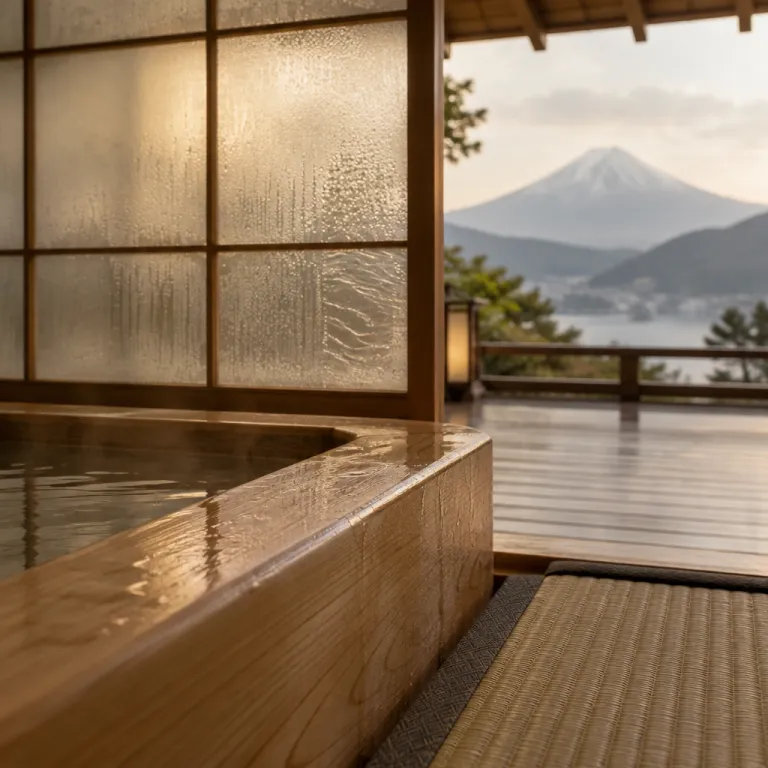
Can you see Mount Fuji from Hakone during a refined ryokan escape ?
Many travelers ask whether you can see Mt Fuji from Hakone on a short stay. On clear days the answer is yes, and the experience feels especially memorable when framed by the quiet elegance of a traditional Japanese inn in the Hakone area. To enjoy a rewarding Fuji view or several Fuji views, you need to understand how weather, location, and season work together around this mountain landscape.
Hakone sits within the Fuji Hakone Izu National Park, and the straight line distance to Mount Fuji is roughly 32 to 40 kilometers as the crow flies, depending on whether you stand near Lake Ashi or closer to Owakudani. This means that seeing Mount Fuji from Hakone depends on visibility, which can change quickly during the day and between seasons. When you plan a Hakone day or longer trip, think in terms of multiple vantage points rather than relying on a single famous spot for your best views Mount experience.
From lakeside promenades to ropeway stations, each area offers a different angle on the mountain and the surrounding lake scenery. Some travelers combine a day trip from Tokyo with an overnight stay, which increases the chance of catching Fuji from several locations at different times. If you are booking a luxury ryokan, always ask the property in advance whether any rooms or hot spring baths offer a direct Fuji view or partial Fuji views from Hakone, and request recent photos or a simple annotated map that shows the sightline toward the mountain.
Best Hakone viewpoints for Mount Fuji, from lake cruises to ropeways
When you want the best chance to see Mount Fuji from Hakone, start by mapping the classic viewpoints around Lake Ashi. The southern and eastern shores of Lake Ashi often provide a postcard style view, where the red Hakone Shrine torii gate stands in the foreground and the snow capped mountain rises behind on clear days. From these lakeside paths you can enjoy both a wide angle Fuji lake panorama and more intimate views Mount framed by cedar trees.
Many visitors choose a Lake Ashi sightseeing cruise, which glides slowly across the water and reveals shifting Fuji views from different angles. On a calm day the reflection of Mount Fuji on the lake surface can be striking, while on hazy days the mountain may appear only faintly behind the clouds. If you prefer more flexibility, walking the Onshi Hakone Park trails above the lake gives you several terraces where you can pause for a quiet Fuji view away from the crowds.
For a higher vantage point, the Hakone Ropeway between Togendai and Owakudani offers some of the most dramatic Fuji views from Hakone. As the cabin rises over the mountain slopes, the cone of Mount Fuji appears beyond the volcanic valley, creating a powerful sense of scale. Travelers who enjoy alpine scenery often combine this with future journeys to the Japanese Alps, using guides such as this detailed article on Takayama ryokan stays for refined onsen escapes to compare different mountain regions in Japan.
Weather, seasons, and timing your Hakone day trip for Fuji views
Even in the best viewing spots, whether you can see Mt Fuji from Hakone depends heavily on weather and timing. The mountain often hides behind clouds during the warmest hours of the day, especially in summer when humidity rises over the lake and mountain area. Your chances improve significantly if you plan your Hakone day or overnight trip around early morning or late afternoon light.
On many clear days in autumn and winter, the air around Hakone feels crisp and visibility improves, which makes a day tour from Tokyo particularly rewarding. Local tourism data and Japan Meteorological Agency visibility records suggest that from November to February, clear morning views of Mount Fuji from Lake Ashi and the Hakone Ropeway are possible on roughly 45 to 55 percent of days, while in July and August the proportion of fully clear days can drop below one third. In spring, cherry blossoms around Hakone Park and Onshi Hakone viewpoints add a soft frame to the mountain, while in summer the lush greenery around the hot spring towns creates a different mood for your Fuji views.
Travelers who value flexibility often book a private car or a private guided tour, which allows them to adjust the schedule quickly if clouds move over the mountain. If you are planning a longer onsen focused journey, this comparison of Hakone, Kusatsu, or Beppu for a first ryokan stay can help you decide how many days to allocate to each hot spring area. No matter the season, always check the local forecast on the morning of your day trip from Tokyo, and be ready to shift between lake, ropeway, and park viewpoints as conditions change.
Choosing a luxury ryokan in Hakone with a Mount Fuji view
For many guests, the most memorable answer to can you see Mt Fuji from Hakone comes from a quiet moment in a private hot spring bath. Some high end ryokan in the Hakone area offer guest rooms with open air onsen tubs that face the mountain, allowing you to enjoy Fuji from the comfort of your own terrace. These properties often highlight their Fuji view or partial Fuji views in room descriptions, so read the details carefully before confirming your booking.
When comparing options, look at the exact location of each inn in relation to Lake Ashi, Hakone Park, and the main ropeway line. Ryokan perched on hillsides or near open valleys tend to have better views Mount, while those deep in forested ravines may focus more on river scenery and intimate garden settings. A refined example is Hotel Kajikaso in Hakone, which emphasizes riverside hot spring experiences and easy access to the wider Hakone area rather than direct Mount Fuji vistas.
Luxury booking platforms that specialize in traditional Japanese inns often provide detailed room by room notes about whether a specific suite offers a Fuji lake glimpse, a full Mount Fuji panorama, or no mountain view at all. For instance, a Hakone ryokan might list a “Fuji View Japanese Western Room with Open Air Bath” and show sample photos taken from the terrace; before you commit, email the property and ask for a couple of recent images or a simple map marking the room’s orientation on a clear day, then compare the angle and framing with the official gallery. When in doubt, contact the property directly and ask for recent photos taken on clear days from the exact room type you are considering, so that your expectations for Fuji from Hakone align with what the ryokan can realistically provide during your stay.
Designing a Fuji and Hakone itinerary from Tokyo
Travelers often debate whether to focus on Hakone or Lake Kawaguchiko when planning a Mount Fuji itinerary from Tokyo. Hakone offers a broader mix of hot spring towns, museums, and lake cruises, while Lake Kawaguchiko provides some of the most direct and symmetrical Fuji views across the water. A balanced approach is to treat Hakone as a refined onsen base and Kawaguchiko as a dedicated Fuji view destination, linked by rail or highway bus.
One practical strategy is to start your day trip from Tokyo with an early train to Hakone, enjoy a Hakone day of ropeway rides, Owakudani valley walks, and Lake Ashi cruises, then continue to Kawaguchiko for a second night focused on photography. This sequence allows you to experience both the volcanic drama of Owakudani and the calm shoreline of Fuji lake areas without rushing. If you prefer a slower pace, consider a two or three day tour that includes one night in a Hakone Fuji facing ryokan and another night in a lakeside inn at Kawaguchiko.
For guests who value privacy and comfort, arranging a private transfer between Hakone and Kawaguchiko can turn a simple relocation into a scenic drive around the mountain. Along the way, your driver can stop at lesser known viewpoints where you can enjoy free time to photograph Fuji from different angles. Whether you choose rail, bus, or private car, always build some flexibility into your schedule, because the most memorable Fuji views often appear when clouds shift unexpectedly over the mountain.
Practical tips for maximizing Mount Fuji views from Hakone ryokan stays
Once you have chosen a ryokan, a few practical habits can significantly improve your chances of seeing Mount Fuji from Hakone. Set an early alarm and step onto your balcony or into the outdoor hot spring before breakfast, because the air is often clearest at dawn. If your room does not face the mountain, ask the staff which nearby terrace, lounge, or public bath offers the best Fuji view on clear days.
During the day, keep an eye on the sky while you move between Hakone Park, the ropeway, and the Owakudani mountain area. When you notice clouds lifting around the summit, be ready to pause your schedule and head quickly to a known viewpoint such as Onshi Hakone Park or the Lake Ashi promenade. Many ryokan teams are happy to suggest a short walk or a quick bus ride that leads to reliable Fuji views from Hakone within fifteen or twenty minutes.
In the evening, the silhouette of Mount Fuji can appear softly against the fading light, especially when viewed from open air baths or lounges with west facing windows. Some luxury inns offer free shuttle services to nearby viewpoints at sunset, which can be a comfortable way to enjoy the mountain without navigating public transport after dark. By combining thoughtful planning with a flexible mindset, you give yourself the best chance to answer yes when someone later asks whether you could see Fuji from Hakone during your trip to Japan.
Key figures about Mount Fuji and Hakone travel
- The elevation of Mount Fuji is 3 776 meters, making it the highest mountain in Japan and a dominant presence in the Fuji Hakone Izu National Park (Japan Meteorological Agency).
- Hakone is located roughly 80 to 90 kilometers from Tokyo by rail, which allows many travelers to visit as a day trip from Tokyo while still having several hours for Lake Ashi cruises and ropeway rides (East Japan Railway Company data).
- Visitor statistics for Fuji Hakone Izu National Park show tens of millions of entries annually, with Hakone consistently ranking among the most visited hot spring regions in the country (Ministry of the Environment, Japan).
- Surveys of international travelers indicate that clear views of Mount Fuji are among the top three visual expectations for first time visitors to Japan, alongside cherry blossoms and traditional temples (Japan National Tourism Organization research).
FAQ about seeing Mount Fuji from Hakone
Can you reliably see Mount Fuji from Hakone all year round ?
You can see Mount Fuji from Hakone in every season, but visibility varies greatly with weather and humidity. Autumn and winter usually offer the clearest air and the most stable Fuji views from Lake Ashi, Onshi Hakone Park, and the ropeway. In spring and summer, the mountain often hides behind clouds during midday, so early morning and late afternoon are more reliable.
Is Hakone or Kawaguchiko better for Mount Fuji views ?
Lake Kawaguchiko generally offers more direct and symmetrical views of Mount Fuji across the water, which suits photographers who want classic postcard images. Hakone provides a wider variety of experiences, including hot spring towns, museums, Owakudani volcanic scenery, and lake cruises with partial Fuji views. Many travelers combine both areas in one trip, using Hakone for onsen luxury and Kawaguchiko for concentrated Fuji photography.
Do all Hakone ryokan have rooms with a Mount Fuji view ?
Only a limited number of ryokan in the Hakone area offer guest rooms with a clear Fuji view, because terrain and forest cover block the line of sight in many places. Properties that do have Fuji facing rooms usually label them clearly and often charge a premium for these categories. Always confirm with the inn directly and request recent photos taken from the exact room type you plan to book.
Is a day trip from Tokyo to Hakone enough to see Mount Fuji ?
A day trip from Tokyo to Hakone can be enough to see Mount Fuji if the weather cooperates and you plan your route efficiently. However, staying one or two nights in a ryokan increases your chances of catching the mountain at different times of day and under changing light. An overnight stay also allows you to enjoy private hot spring baths and traditional kaiseki dinners without rushing back to the city.
Are there free viewpoints for Mount Fuji in Hakone ?
Yes, several free viewpoints in Hakone offer potential Fuji views, including certain terraces in Onshi Hakone Park and lakeside promenades along Lake Ashi. Access to these areas does not require a ticket, though you may need to pay for local transport to reach them. For higher perspectives, the ropeway and some observation decks charge a fee, but they often provide more dramatic angles on the mountain.